

WPC Flooring Buying Guide for Distributors
2026-09-30
Revêtement de sol WPC often looks the same from one supplier to the next. The real problems show up later. A click edge may chip when workers install the boards. Cartons can arrive with mixed shades. A “waterproof” claim may only cover the top surface. Distributors need a safer way to buy. Start with a written specification. Use a quality check that can be repeated. Choose a supplier that can match the approved sample every time.
This guide focuses on the choices that protect margin, cut customer claims, and support repeat orders. It covers product construction, key specifications, quality control, packing, and supplier selection.
What Distributors Should Check Before Buying WPC Flooring
Before any wholesale order, check seven points. Confirm the product category. Look at plank construction. Check the wear layer. Test click-lock accuracy. Review the test evidence. Confirm batch consistency. Agree on delivery terms. Ask for a signed specification sheet and a sample approval record. Then make sure the factory will use the same formula, tooling, finish, and packaging for the full production run.
- Confirm whether the product is indoor WPCflooring or outdoor wood-plastic flooring.
- Record total thickness, plank size, wear layer, core, backing, and locking profile.
- Match water, wear, impact, slip, and emissions tests to the target market.
- Check flatness, dimensions, colour, surface finish, and lock fit on samples.
- Review incoming, in-process, final, and pre-shipment inspection records.
- Price cartons, pallets, loading, freight, duties, and replacement stock together.
- Put MOQ, lead time, warranty, and claim handling in writing.
Define the Product Before Comparing Suppliers

The word WPC covers more than one product. WPC flooring is usually an indoor rigid-core plank. It has a decorative film, a wear layer, and a wood-plastic composite core. Outdoor WPC flooring is often an extruded wood-plastic profile. It is used for patios, balconies, or raised decks. The testing, installation, packing, and end uses are different for each type.
This difference matters when a distributor builds a catalogue. A buyer who wants a quiet, warm floor for bedrooms or upper-level apartments needs different details from a contractor who needs boards for an open terrace.
WPC Flooring Versus SPC Flooring
WPC has a softer, warmer feel because its core is less dense. SPC has a denser stone-plastic core. Buyers often choose SPC when dent resistance and moisture stability matter most. Neither label replaces a test report. Compare the construction itself, not just the three letters on the carton.
Freeze the WPC Flooring Specifications in Writing
A quotation is not a specification. Distributors need a sheet that another purchasing manager can read six months later and still order the same product.
| Field | What to record | Why it affects the order |
| Plank size | Length, width, total thickness | Display layout, door clearance, container volume |
| couche d'usure | Material and thickness in mil or mm | Surface life and claim position |
| Core | Composition and density range | Stability, comfort, and weight |
| Surface | Print, embossing, coating, gloss | Colour, texture, and cleaning response |
| Locking system | Profile, tolerance, joint fit | Installation speed and edge damage |
| Backing | Attached pad or separate underlayment | Sound, height, and installation rules |
| Packing | Pieces and square metres per carton | Stock counts, pallet loading, landed cost |
Total Thickness Is Not Wear-Layer Thickness
A thick plank can still have a thin wear layer. Overall thickness affects feel, sound, and how the floor meets doors and transitions. The wear layer protects the printed design from daily traffic. Ask for both figures in the correct units. “Mil” and millimetre are not the same.
Core Density and Dimensional Stability
Ask how core density is measured and what range is accepted in production. Also ask for flatness and dimensional-change results after the relevant temperature or moisture test. One perfect sample says little about a container made weeks later.
Click-Lock Details
The locking profile needs more than a product photo. Check joint fit, edge chipping, separation force, and the supplier’s tolerance range. A lock that feels tight in a showroom may still fail if machining varies across a batch.
Match Performance to the Installation
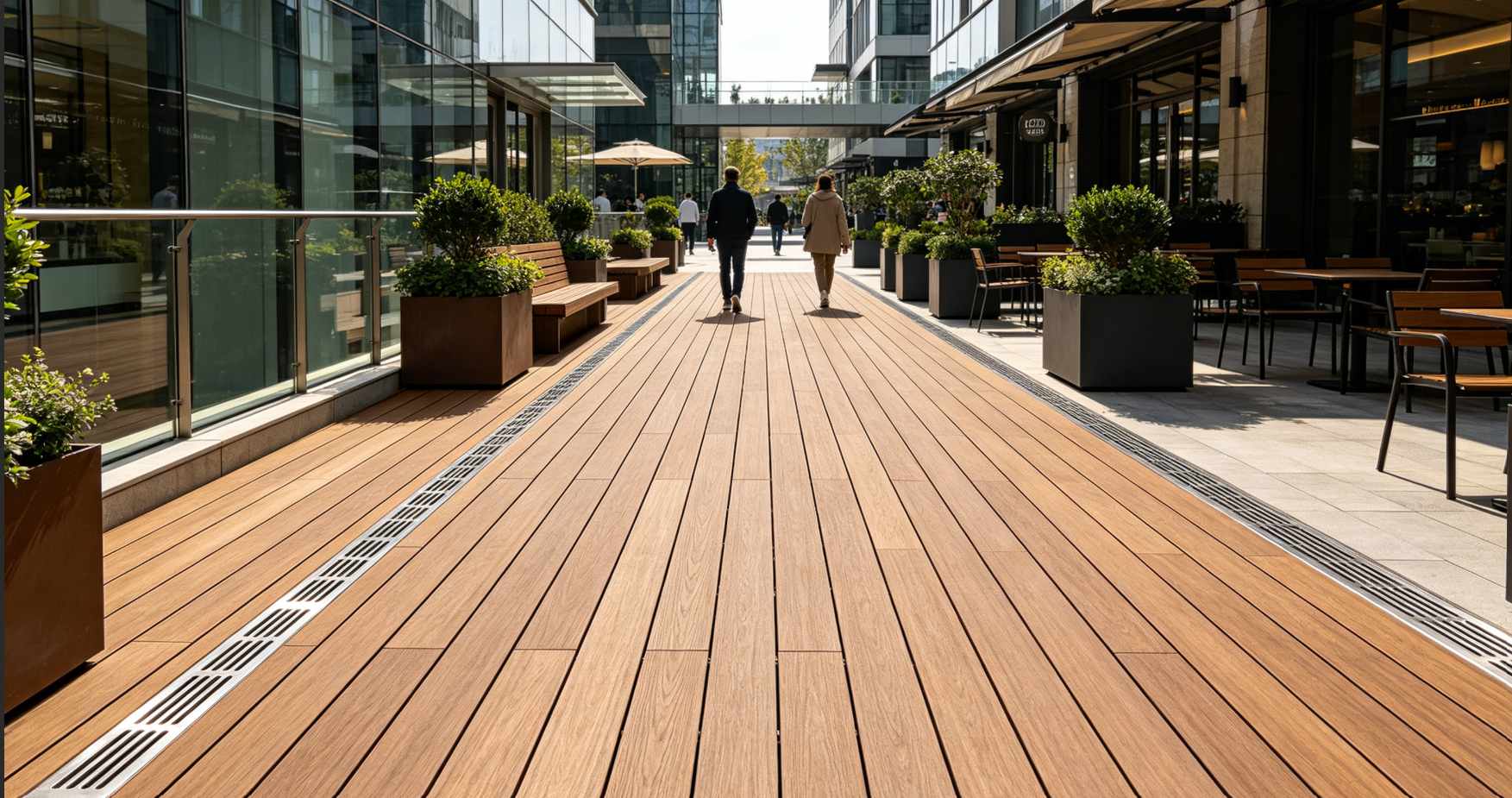
The right specification depends on where the floor will be sold. A bedroom programme, a rental renovation, and a hotel corridor do not create the same wear pattern.
- Residential rooms: focus on surface appearance, cleanability, comfort, and repeat colour.
- Rental housing: give more weight to wear layer, stain resistance, replacement availability, and installation speed.
- Offices and hospitality: check rolling loads, acoustic targets, slip needs, cleaning chemicals, and warranty scope.
- Humid locations: separate a waterproof surface claim from the moisture performance of the core and the installed floor system.
For every claim, ask three questions. What was tested? Which standard or method was used? Does the report name the same construction being quoted?
How to Check WPC Flooring Quality
Start with the approved sample. Then test the product that will actually ship. Review appearance, dimensions, flatness, edges, click fit, surface finish, backing, carton labels, and packing protection. Record the acceptance limit for each item before production starts. If a result fails, the batch should be held for review rather than mixed with accepted stock.
Tests and Documents to Request
- Water absorption or moisture-resistance data, with method and exposure time.
- Wear resistance and surface-abrasion results for the intended traffic level.
- Impact or indentation results where heavy furniture or commercial use is expected.
- Slip-resistance data where local rules or the project specification require it.
- Emissions documents for the destination market, with product and batch identification.
- A technical data sheet, packing list, inspection record, and warranty terms.
The useful detail is not a large number printed on a brochure. It is a traceable report that links the result to a product construction and a test date.
Check Co-Extrusion Technology When Buying Outdoor WPC Flooring Quality
For outdoor WPC flooring, co-extrusion technology is an important factor that affects long-term performance. High-quality outdoor WPC flooring commonly uses a co-extrusion layer, which is a thin protective polymer coating (usually PE or WPC-based material) applied to the surface of the board. This protective layer helps improve durability, appearance retention, and resistance to outdoor conditions.
When checking outdoor WPC quality, distributors should confirm whether the product uses full co-extrusion or partial co-extrusion. Full co-extrusion covers the entire board, including the top, bottom, and side surfaces, while partial co-extrusion usually covers only the visible surface. The choice depends on the installation environment, weather conditions, and project requirements.
A co-extruded WPC flooring system provides several performance benefits:
- Better Weather Resistance:The co-extrusion layer improves UV resistance, oxidation resistance, and colour stability, helping the flooring maintain its appearance for longer periods.
- Improved Water and Stain Resistance:The protective surface reduces water penetration and prevents common stains such as oil, juice, and paint from easily affecting the board. The surface is easier to clean and maintain.
- Higher Wear Resistance:The co-extruded surface is harder and smoother, providing better resistance against scratches and daily wear.
- Enhanced Slip Resistance: Surface textures on co-extruded boards can improve traction, especially in wet outdoor environments.
- Reduced Risk of Cracking and Deformation: Compared with traditional WPC flooring, co-extruded WPC has better resistance to temperature changes and thermal expansion.
For areas with frequent rain or high humidity, full co-extrusion is generally more suitable because boards without back-side protection may allow moisture to enter through exposed areas or gaps, increasing the risk of water absorption, mould growth, and deformation. In dry environments, partial co-extrusion can be considered when budget and application conditions allow.
Look for a Four-Stage Quality-Control Process
Reliable WPC flooring manufacturers can describe where a defect is found and who releases the goods.
Incoming Material Inspection
The factory checks core ingredients, additives, decorative film, wear layer, backing, and packaging materials. Incoming records should show supplier lots or internal batch numbers.
In-Process Inspection
During production, checks may include thickness, width, temperature, surface embossing, coating, and click machining. The point is early correction. A pallet of finished planks is a costly place to discover a tooling problem.
Finished-Goods Inspection
Inspect appearance, colour, dimensions, flatness, locking, surface defects, and carton information. A sample should be taken from different cartons, not only from the easiest carton at the top of a pallet.
Pre-Shipment Inspection
Before loading, confirm carton count, pallet condition, labels, photographs, inspection release, and container number. For a distributor, this record can shorten a claim investigation when damage appears at the destination.
How to Choose a Reliable WPC Flooring Supplier
Supplier selection is a risk decision. It is not a search for the lowest first-order price. Score the candidate against evidence that can be checked.
| Zone | Questions to ask | Red flag |
| Product | Is the specification complete and signed? | Only a photo and a price |
| Factory | Can capacity and process control be shown? | No production or inspection records |
| Testing | Do reports show method, model, date, and lab? | Generic report with no traceability |
| Consistency | How are repeat orders compared with the approved sample? | “Same as before” with no record |
| Export | Are packing, Incoterms, and documents clear? | Freight cost appears after payment |
| Support | Who handles technical questions and claims? | No named contact or response process |
Factory age and certificates are useful background signals. They do not replace batch records. A virtual factory tour, a pre-shipment inspection, and a small first order often reveal more than a polished presentation.
MOQ, OEM, Lead Time, and Landed Cost
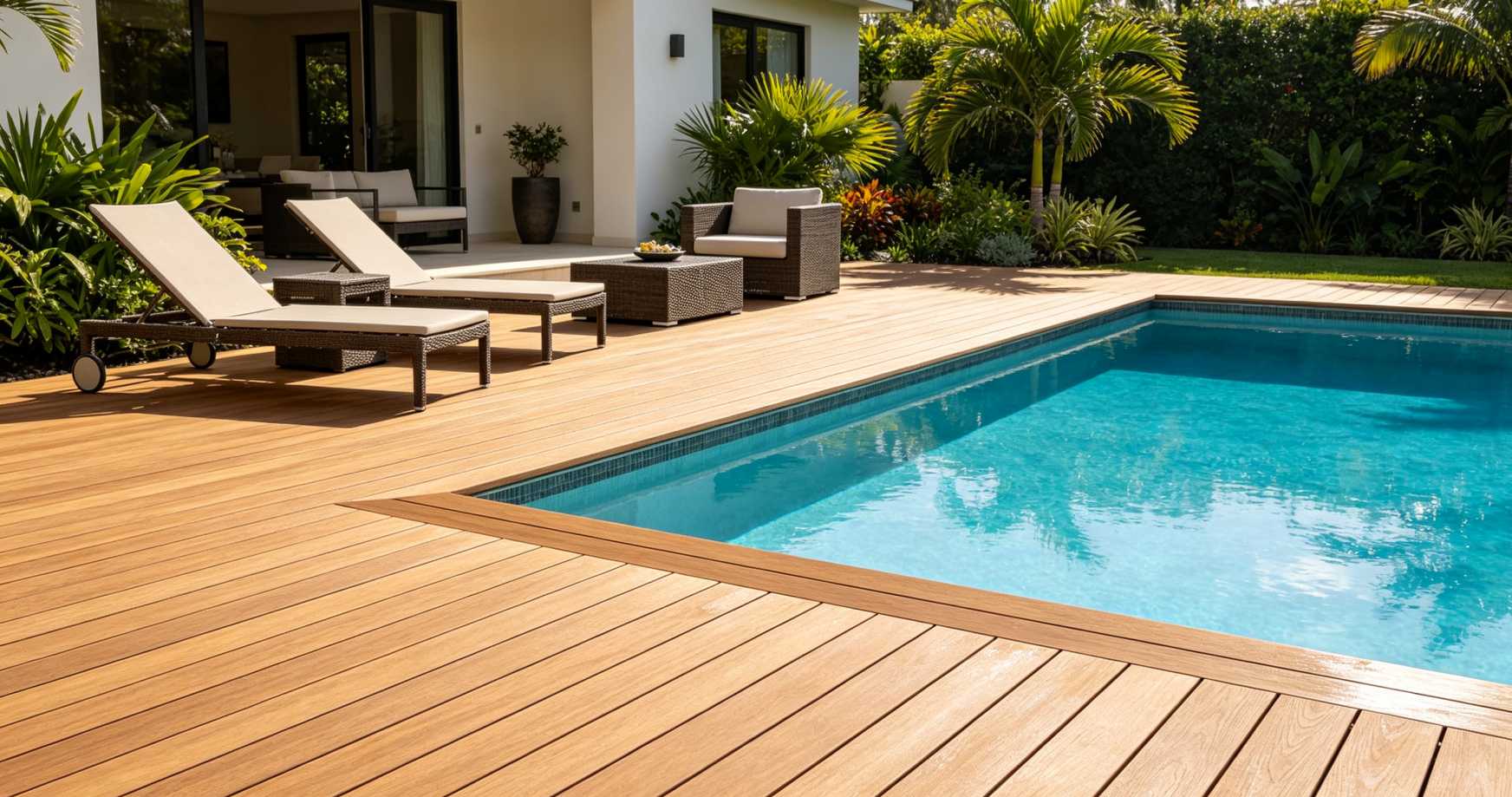
Standard products normally have a different MOQ from private-label or custom-colour programmes. Ask which parts are fixed. These include core formulation, plank size, click profile, print, carton artwork, barcode, and instruction sheet. Custom packaging can also add a plate, proofing, and approval stage.
Lead time should be split into sample approval, production, inspection, and loading. A short factory lead time does not help if a vessel booking or document correction adds two weeks.
Calculate landed cost with product, cartons, pallets, loading efficiency, freight, insurance, duties, local delivery, and a realistic replacement allowance. A slightly higher unit price can be cheaper when shade variation and damaged click edges are rare.
For distributors considering private label, ask for a written process covering artwork approval, ownership of the design, change control, and replacement policy. These details protect a catalogue long after the first shipment arrives.
Why Supplier Support Matters After the Sale
Installation guidance, spare cartons, photos of loading, and clear warranty rules help a distributor solve small problems before they become public complaints. A supplier that can provide technical files in the customer’s working language also reduces errors at the dealer and installer level.
Foshan Sincere Building Materials Co., Ltd. presents itself as an export-focused building-materials company established in 2007. It offers indoor and outdoor wall and floor products, serves overseas markets, and holds ISO quality, environmental, and occupational-safety certifications described on its company profile. Its product range also includes SPC flooring, indoor WPC fluted wall panels, and flexible stone. For a distributor, the practical next step is to request the current WPC specification sheet, sample, test documents, packing plan, MOQ, and lead-time confirmation for the target market.
Conclusion
A good WPC flooring purchase is built on repeatability. The product needs a clear construction. The quality checks need written limits. The supplier needs to show how an approved sample becomes a consistent shipment. When specifications, testing, packing, and claim handling are reviewed together, distributors can compare suppliers on business risk rather than on a showroom sample or a low headline price.
Foire aux questions
What Attributes Should Distributors Consider While Choosing WPC Floors?
The distributor should review the specifications of WPC flooring, its core construction, wear layer, click-lock, test results, batch uniformity, packaging, MOQ, lead time, and warranty offered by the supplier. The supplier needs to sign the technical sheet and maintain an approval record for the samples provided.
Is WPC Flooring Water-Proof?
Several WPC floors have either water-resistant or waterproof wear layer on their surfaces. However, it needs to be confirmed based on the core construction and testing procedure. Gaps at joints, perimeter edges, cuts, and the underlying substrate will continue to affect the floor installation performance.
What Is the Difference between WPC & SPC Floors?
WPC flooring typically utilizes a softer wood plastic composite core. On the other hand, SPC flooring uses a rigid stone plastic composite core. WPC flooring is usually selected for its comfort. SPC flooring is usually selected for its stiffness and moisture resistance.
How Do You Evaluate WPC Flooring Quality Prior to Bulk Orders?
Match the approved sample with the specification in writing. Examine more than one box. Test the dimension and click fit. See the test report. Ask for the documents about incoming, in-process, finished goods, and pre-shipment inspection. A sample order will reveal the issues before ordering a whole container.
Can a WPC Flooring Manufacturer Offer OEM Cartons?
Most of the WPC flooring producers can offer OEM cartons, stickers, barcode and instruction sheet. Make sure about the MOQ, the artwork, ownership of artwork, proofing period, and whether the same packaging will be used in the next order.


