

5 Common Problems After Installing Flexible Stone
2026-10-09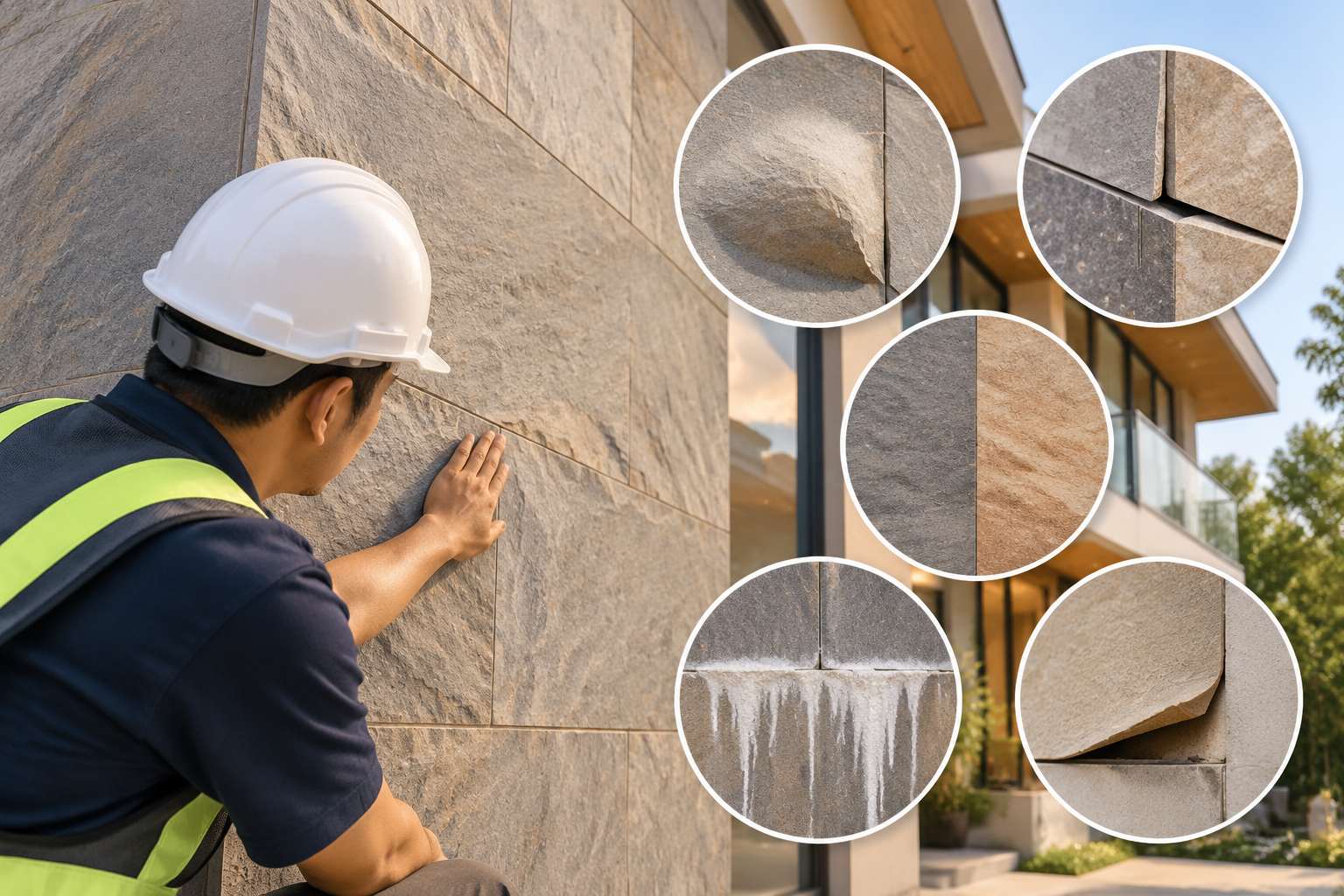
Pierre flexible can give a villa, commercial building, or feature wall a convincing stone finish with less weight than rigid cladding. Yet the finish is only as reliable as the wall preparation and installation details behind it. Bubbling, open joints, shade variation, staining, and edge lifting usually have a clear cause. This guide explains the five problems that appear most often after installing flexible stone and the practical fixes used by experienced installers.
Why do flexible stone problems appear after installation?
Most failures start before the first sheet is bonded. Moisture in the substrate, weak render, unsuitable adhesive, rushed alignment, or unsealed edges can remain hidden during handover. Heat and rain then expose the weakness. A professional repair begins with diagnosis, not with adding more adhesive over the visible mark.
1. Bubbling, hollow spots, or loose areas
The first sign is often a change in the way the wall sounds or looks. Start by identifying the visible symptoms before opening the affected area.
What it looks like
Parts of the surface sound hollow when tapped, rise slightly in warm weather, or develop a visible bubble. On a damp wall, the area may darken after rain and dry slowly.
Why it happens
Such problems can be caused by excess moisture, dust particles on the wall, uneven application of the adhesive, or the unprimed surface. Sheets installed using only a few lines of the adhesive can easily create air pockets since they will be affected by heat and water.
How professionals fix it
The affected area is mapped by tapping and marked beyond the visible bubble. Loose material is removed, the substrate is dried and repaired, and the adhesive is replaced with the specified exterior-grade system. Small isolated areas can sometimes be patched with a matching piece. If moisture is entering from a parapet, window sill, or leaking pipe, that source must be corrected first.
2. Open seams and lifting corners
Once the main sheet remains bonded but its edges begin to move, the repair focuses on seams, corners, and exposed perimeter details.
What it looks like
Seams widen, corners curl, or the top edge begins to detach. The issue is especially visible around windows, balcony edges, and projecting columns.
Why it happens
Flexible stone continues to move as the wall and the environment move. An adhesive that is too rigid or inappropriate, pressure that is not enough while installing the sheet, or the absence of a sealant at the end of the sheet allows water to seep through behind the sheet.
How professionals fix it
Any loose adhesive is stripped off, the bonding area is cleaned, and it is verified that the surface is flat. The sheet is then bonded to the wall with the recommended adhesive. Top exposed edges, windows, and pipe penetrations are sealed using a compatible sealant. The movement joint must be done according to the building detail and not sealed with a brittle substance.
3. Uneven color, visible patches, or pattern mismatch
Not every complaint is a bonding failure. Some walls remain firmly attached but look inconsistent because of batch, layout, or lighting decisions.
What it looks like
One section looks darker, lighter, or more red than the next. The pattern may also break at a corner or around an opening, making the wall look assembled from leftovers.
Why it happens
Mineral textures can vary between production batches. Mixing unopened cartons without a layout plan creates blocks of different shade. Strong sun and wet surfaces can make a small variation appear larger. Replacing one damaged piece from a later batch may create a new patch.
How professionals fix it
A dry layout is prepared before bonding. Pieces from several cartons are mixed across the elevation, and the pattern is aligned at the main sight lines. For an existing patch, the best repair may be to replace a complete visual section between corners or openings rather than one small piece. Future projects should approve a batch sample and retain spare pieces from the installed lot.
4. White marks, dark stains, or water tracks
Surface discoloration deserves a moisture investigation before any cleaning or repainting is attempted. The pattern of the mark often points to the entry route.
What it looks like
White powder appears along seams, dark vertical lines form below a sill, or the surface shows dirty tracks after rain. Salt deposits are common on new masonry and walls with rising damp.
Why it happens
Water can carry salts through the substrate or enter from an unsealed edge. Metal run-off, dirty scaffolding, and an unsuitable cleaning chemical can also stain the surface. Painting over the mark usually traps the cause instead of removing it.
How professionals fix it
The moisture flow will be checked from the highest level downward. Loose salts are removed once the wall dries; acid‑based washing should generally be avoided, and may only be performed upon written technical approval from the product system manufacturer. Parapets, sills, gutters and service openings shall have their waterproofing details repaired and resealed. If there is any contamination on the backing, the affected components may be replaced once the wall dries.
5. Cracks, wrinkles, or distortion around openings

Windows, doors, and columns concentrate movement, so these areas need a closer look than a clear section of wall.
What it looks like
Fine cracks appear near a window corner, or the sheet wrinkles around a curved column. Narrow strips beside a frame may pull away even when the main wall remains bonded.
Why it happens
Openings concentrate movement. Pieces cut too narrowly, sharp internal corners, uneven render, and poor planning of the pattern all increase stress. A flexible finish can follow a gentle curve, but it cannot bridge a moving crack or compensate for a hollow substrate.
How professionals fix it
The opening is checked for movement and water entry. Cracks in the base wall are repaired with the correct method, and the opening is replanned with wider, balanced cuts. Corners are formed without forcing the sheet, and the adhesive is pressed across the full contact area. Sealant at the frame is renewed where needed.
A professional inspection sequence
When a complaint is reported, the following order prevents wasted repairs:
- Photograph the issue in dry and wet conditions.
- Mark hollow, loose, stained, and cracked zones.
- Check the substrate, top edges, sills, and drainage paths.
- Confirm the product batch, adhesive, primer, and installation date.
- Repair the water or substrate cause before replacing the finish.
- Keep a retained sample for color and texture matching.
Reliable supplier
Foshan Sincere Building Materials Co., Ltd. supplies flexible stone and related architectural finishes for overseas projects. Its company information describes operations since 2007 and ISO9001, ISO14001, and ISO45001 management certifications. Buyers can review the company profile and the flexible stone product information before requesting samples, technical details, and packing information.
Conclusion
A flexible stone failure can be easily rectified if its true cause is determined. The following issues indicate their causes, i.e., bubbling may result from water or bad adhesion; lifting corners may occur due to movement and sealing; shade spots occur due to batching process; staining indicates pathways of water; cracking around openings results from details.
FAQ
The following questions address the repair and prevention issues most often raised after flexible stone installation.
Can bubbled flexible stone be repaired without replacing the whole wall?
Often yes. Small isolated bubbles can be removed and patched after the wall is dry and stable. Widespread bubbles usually indicate a substrate or adhesive problem that needs broader correction.
Why do flexible stone seams open after rain?
Water may enter through an unsealed edge, or the adhesive may not suit exterior movement. The seam should be opened, the substrate checked, and the detail resealed with compatible materials.
How can color variation be reduced?
Mix pieces from several cartons during dry layout, approve a production sample, and keep spare pieces from the same batch for later repairs.
Can flexible stone cover cracked exterior render?
Only after the render is stable and cracks are repaired. Flexible stone cannot stop an active structural crack from moving through the finish.


