

SPC Flooring Over Radiant Heat: What Installers Need to Know
2026-09-23
Revêtement de sol SPC works well with many radiant floor heating systems. Compatibility depends on more than the product being waterproof. Heat must pass through the plank and underlayment without getting trapped. The floor surface must stay inside a safe temperature range. A floating installation also needs room to expand and contract. In apartments, showrooms, hotels, and homes, these details can decide whether the floor stays flat or develops open joints and lifted edges.
Can SPC Flooring Be Installed Over Radiant Heat?
In most cases, yes. SPC flooring over radiant heat is practical. Its rigid stone-plastic core is relatively thin and stays stable in size. The thin rigid core can transfer heat well when the full flooring assembly has low thermal resistance.
That does not mean every SPC plank works with every heating system. Both the flooring and heating-system specifications should approve the assembly. Embedded hydronic systems are often suitable. Electric radiant floor heating needs closer attention to sensor control and heat distribution.
Many installers choose SPC because it feels solid underfoot and resists moisture. When the heat moves freely through the layers, the room warms evenly. If the product sheet lists radiant heat approval, the job becomes much simpler. Always double-check the paperwork before the first plank goes down.
What Is the Maximum Temperature for SPC Flooring?
Temperature is the first number to confirm. For many SPC flooring underfloor heating applications, a finished floor surface temperature of about 27°C or 80°F is a safe working limit. Some products allow a higher value, often around 29°C or 85°F. The product-specific installation sheet always takes priority.
“Floor surface temperature” is important here. Boiler water, cable, room-air, and thermostat temperatures are different measurements. A floor sensor is especially useful with electric systems. It responds to the temperature at the floor instead of only the room air.
Keeping the surface cool enough protects the locking edges. If the heat climbs too high, the planks can expand unevenly. That leads to gaps or raised corners later. Most manufacturers print the exact limit on the box or in the guide. Follow that number and the floor stays reliable for years.
Why Local Hot Spots Matter
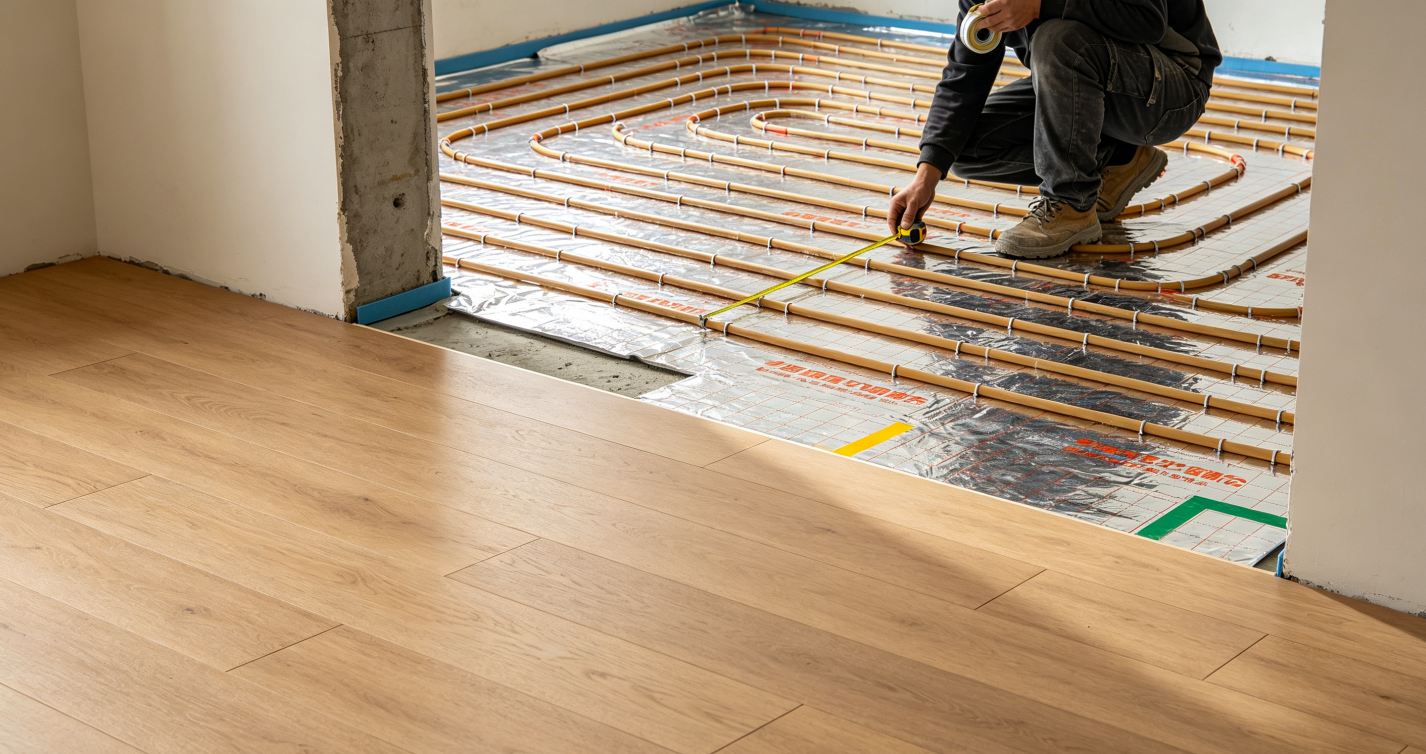
A thermostat can read normally while a thick rug, low cabinet, or mattress traps heat over one section. Large windows may also heat dark flooring in winter sun.
For that reason, radiant heat compatible flooring performs best with steady temperatures and sensible furniture placement. A room may feel comfortable overall while one covered section of the floor runs much warmer.
Installers often remind homeowners to avoid placing heavy rugs right after the heat turns on. Moving a bed or sofa a few inches can prevent a local hot zone. Dark-colored planks absorb more sunlight near big windows, so those areas need extra care. Simple habits like these keep the entire floor at the same safe temperature.
How Fast Should Radiant Heat Warm an SPC Floor?
A cold floor should not jump straight to full output after installation. Gradual heating lets the flooring, joints, underlayment, and screed respond together. A sharp thermal change can stress the locks.
There is no universal heating rate. Many installation instructions call for staged changes. Roughly 2–5°C per day is a useful planning range only when it matches the product instructions. The same idea applies when lowering the temperature. The temperature should also be lowered in stages; you should not turn off the underfloor heating system all at once. Large overnight or seasonal swings create more movement than a controlled step-down.
New heated concrete or screed should also be commissioned and dried before SPC is installed. Moisture testing still matters even though the SPC core itself resists water very well.
Start the system low and raise it slowly over several days. This gives every layer time to settle. Contractors who rush the first heat-up often see small gaps appear weeks later. Taking it easy at the beginning saves time and money later.
Underlayment R-Value for SPC Over Radiant Heat
The better question is not simply “Which underlayment is best?” but “How much thermal resistance does the whole floor add?”
For underfloor heating, a widely used design benchmark is a maximum total thermal resistance of about 0.15 m²K/W for the floor covering assembly, including SPC and underlayment. Lower resistance generally means faster heat transfer and less work for the heating system.
| Item | Practical Guideline |
|---|---|
| Finished floor surface | Commonly ≤27°C / 80°F unless approved otherwise |
| SPC + underlayment thermal resistance | Preferably ≤0.15 m²K/W |
| Underlayment | Thin, dense, low R-value, radiant-heat approved |
| Temperature change | Gradual, not an immediate full-power start |
| Perimeter expansion gap | Often 6–10 mm; follow the flooring specification |
A low R-value underlayment lets the heat rise quickly into the room. Thick soft pads act like a blanket and force the system to work harder. Choosing the right pad keeps energy bills lower and the floor more comfortable.
IXPE, EVA, and Attached Pads
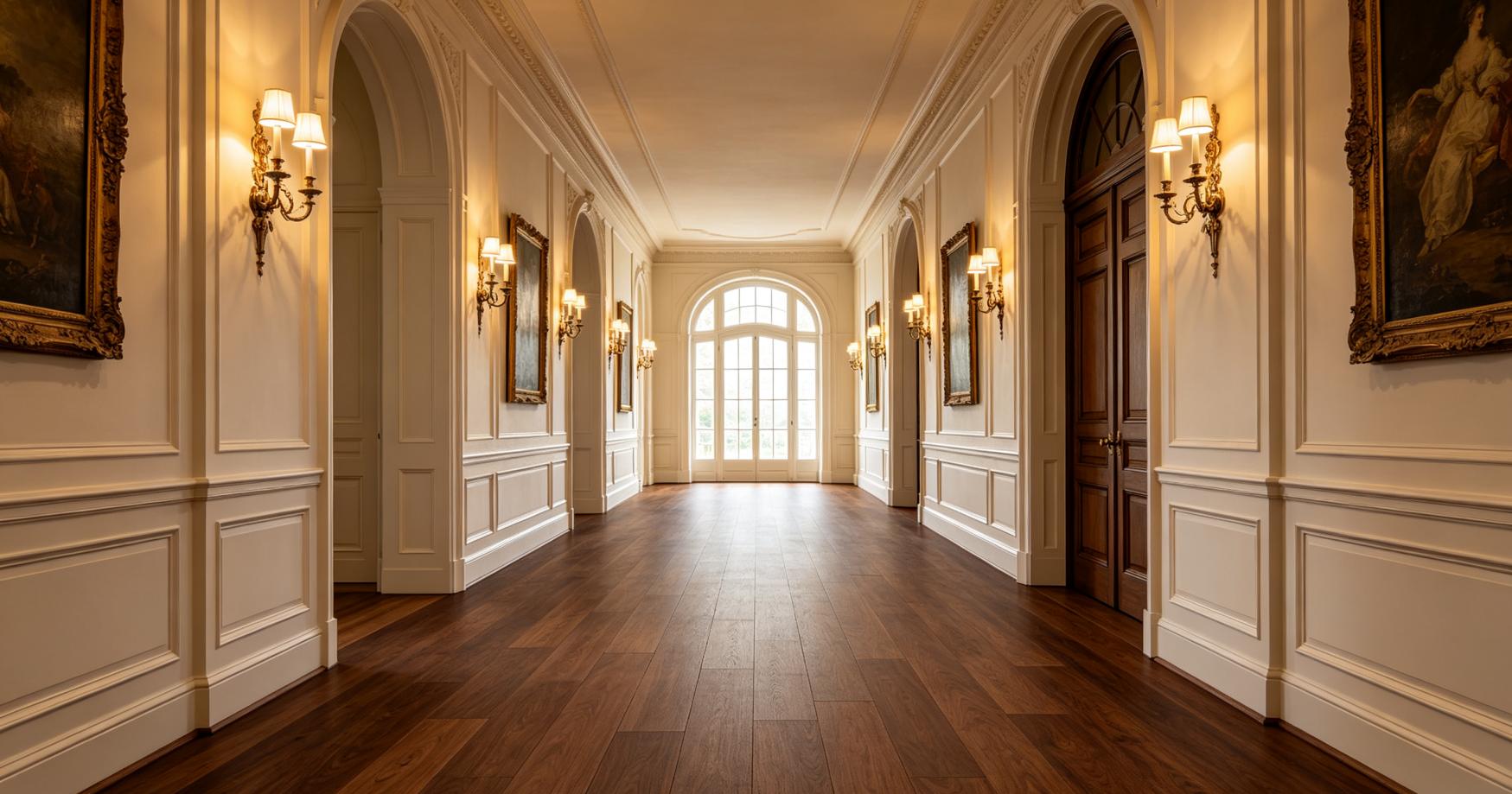
IXPE and EVA underlayment are both used beneath floating SPC flooring. Thickness, density, compression resistance, and tested thermal resistance matter more than the material name alone.
A thin low R-value underlayment can support the click-lock system while allowing heat transfer. A thick, soft acoustic pad adds insulation and may allow too much movement at the joints.
If SPC flooring already has a pre-attached underlayment, adding another pad is usually a poor choice unless the supplier approves it. Double underlayment can increase thermal resistance and create a softer base below the locking profile.
Many job sites now use the thin attached pad that comes with the plank. It saves time and keeps the total R-value low. When a separate pad is required, pick one that the flooring maker lists as radiant-heat ready. Density and compression strength protect the locks better than thickness alone.
How Much Expansion Gap Does SPC Flooring Need?
SPC is dimensionally stable, but it is not motionless. A floating SPC floor still expands and contracts as temperature changes.
Typical radiant-heat installations use a perimeter expansion gap in the 6–10 mm range. The exact figure depends on the product, room dimensions, layout, temperature range, and installation method.
Expansion clearance is normally required around:
- walls, columns, pipes, and door frames;
- fixed cabinets, islands, and built-in units;
- thresholds between heated and unheated rooms;
- long runs where a transition profile is required.
The gap should stay free to work. Grout, rigid sealant, or fixed trim can pin the floor. Skirting and transition moldings can cover the clearance without stopping movement.
Leave the gap open at every fixed object. In long rooms the floor may need a break strip so each section can move on its own. Covering the gap with baseboard keeps the look clean while the floor still breathes. Ignoring the gap is one of the fastest ways to create lifted edges after the heat turns on.
Hydronic vs Electric Radiant Heating Under SPC
Both hydronic and electric radiant systems can work with SPC, but they behave differently.
Hydronic radiant heat embedded in screed or concrete usually changes temperature more slowly. Electric systems can react faster. Embedded cables or approved electric systems may work well, but loose mats or films placed directly beneath floating SPC can create concentrated heat in some assemblies.
A floor-sensing thermostat and written product approval are especially important for electric installations. Fast response can be convenient, but temperature control becomes more important when there is less concrete or screed between the heating element and finished flooring.
Hydronic loops heat the mass of the slab first, so the rise feels gentle. Electric mats warm the surface more quickly and need tighter control. Always confirm that the chosen system appears on the flooring approval list. A floor probe wired to the thermostat gives the most accurate reading and protects the planks.
Installation Checklist for SPC Flooring Over Radiant Heat

Good performance starts before the first plank is clicked together. On a heated concrete subfloor, installers should check the full site condition, not only the finish material.
Before installation:
- verify that the SPC flooring is approved for the radiant system;
- check subfloor flatness, dryness, cleanliness, and structural condition;
- commission new heating and screed as required;
- record the permitted floor-surface temperature;
- confirm the combined SPC flooring R-value and underlayment R-value;
- plan perimeter gaps and transitions before cutting;
- restart heating gradually after the specified waiting period.
These checks are particularly important for floating and click-lock SPC flooring, where small site errors can place continuous stress on the joints.
A practical example is a large open-plan living area with underfloor heating extending into a corridor. If the corridor runs cooler or belongs to another heating zone, the transition point needs attention. Leaving the entire area as one tightly locked floating surface may restrict normal thermal movement.
Walk the site with a straightedge and moisture meter. Mark every door, pipe, and cabinet so the expansion plan is clear. Write down the maximum surface temperature and keep that note on site. After the floor is down, wait the required days before turning the heat on slowly. These simple steps prevent most of the problems that appear months later.
À propos de Foshan Sincere Building Materials Co., Ltd.
Established in 2007, Foshan Sincere Building Materials Co., Ltd. supplies high-quality indoor and outdoor wall and floor building materials for residential and commercial use. Its range includes SPC flooring, tiles, wall panels, flexible stone, and outdoor wall and floor products.
The company serves overseas markets across South America, Europe, Southeast Asia, the Middle East, and Africa and operates with quality, environmental, and occupational health and safety management certifications. Its broader building-material range can help distributors, contractors, designers, and project buyers source several surface materials for one project.
Conclusion
SPC flooring over radiant heat can be a strong choice when four details are controlled: floor-surface temperature, total thermal resistance, gradual heating, and expansion space. A 27°C / 80°F surface limit is a sensible starting point for many projects, while the SPC flooring and heating-system instructions remain the final authority.
Low R-value underlayment, a prepared subfloor, floor sensors, and correctly sized gaps help the heating system work without placing unnecessary stress on the floor. These details matter just as much as plank thickness or appearance when flooring is specified for a heated building.
Project conditions vary. Buyers comparing SPC flooring for radiant heat can review application examples or contact Sincere with the heating type, room size, subfloor, and performance requirements.
FAQ
Can SPC flooring be installed over radiant heat?
Oui. Many SPC floors can be used with hydronic or electric radiant heating when the product is approved for that application. The system must stay within the permitted surface temperature, and the floor needs the specified underlayment and expansion space.
What is the maximum surface temperature for SPC flooring?
About 27°C / 80°F is a common conservative limit for SPC flooring radiant heat installations. Some products permit temperatures closer to 29°C / 85°F. Use the exact limit stated for the flooring being installed.
What R-value is best for SPC flooring over underfloor heating?
Look at the combined thermal resistance of the SPC flooring and underlayment. For many underfloor heating designs, keeping the total at or below about 0.15 m²K/W supports efficient heat transfer. A thin, low R-value underlayment is usually preferred.
Does SPC flooring need an expansion gap with underfloor heating?
Yes. Floating SPC flooring needs expansion clearance even with a rigid core. A 6–10 mm perimeter gap is common, with transitions sometimes required in large rooms or between heated and unheated zones.


