
How Long Does WPC Outdoor Flooring Last? A Lifespan Guide
2026-11-20wpc outdoor flooring is commonly specified for outdoor decks, patios and semi-outdoor walkways because the boards combine a wood-like surface with a plastic core that resists rot and splitting. But how long it actually lasts is not a single number — it depends on the board build, the substructure underneath, the climate the deck faces and how the surface is maintained. This guide breaks down what determines the lifespan of wood plastic composite decking, what service expectations are realistic for residential and commercial projects, and what buyers should verify with a supplier before placing an order.
What Determines the Lifespan of WPC Outdoor Flooring
Material Build and Cap Layer
Every board starts with a compound. WPC outdoor flooring is typically made from wood flour combined with PVC, and the proportion and quality of that compound set the baseline for how the board behaves under load and under weather. Boards with a well-protected surface layer tend to hold their colour and texture longer in direct sun, while the core decides how much dimensional movement and moisture the board absorbs over the years. When comparing suppliers, ask for the composition in writing rather than relying on marketing terms.
Sun, Rain and Temperature Cycling
Outdoor flooring faces a daily cycle that indoor products never see: UV exposure that drives gradual colour change, rain that can sit in joints and grooves, and temperature swings that make boards expand and contract. None of these effects is unusual — they are the working conditions the material is designed for. They do, however, accumulate year after year, which is why boards on a south-facing deck often look different from boards in a shaded corner of the same project.
Substructure and Installation Quality
A large share of early failures has nothing to do with the board at all. The joist substructure carries the decking and keeps it draining; a typical installation uses around one 3-metre joist per square metre of deck area, with open gaps between boards so water can run through. If the substructure is uneven, undersized or poorly fixed, the boards above it can twist, trap water or work loose at the fixing points long before the material itself has worn out. Installation quality is therefore part of the lifespan, not a separate topic.
Typical Lifespan in Residential and Commercial Outdoor Use
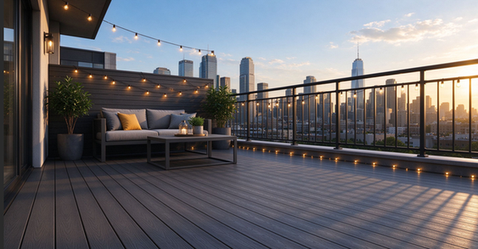
There is no single fixed service life that applies to every board, and a responsible supplier will tell you the same. In general industry practice, WPC decking specified with a sound board build and a properly drained substructure is expected to serve for many years — in many residential projects the boards are rarely fully replaced within the period they were originally specified for. Commercial applications such as boardwalks, pool decks and public areas carry higher traffic and heavier cleaning regimes, so they are typically evaluated with more conservative expectations and more frequent inspection. Two projects using the same material in different settings will age differently, and that difference is normal rather than a sign of a defect.
Put another way: the lifespan of a WPC deck is a range, not a number, and where a specific installation falls in that range is decided by the four factors above.
Factors That Shorten the Life of WPC Flooring
Standing water is the most common shortener. Joints and grooves that hold water for long periods create the conditions for algae and mould growth. Slope the deck so water sheds off, and keep the gaps between boards open and clear.
Blocked drainage and surface debris. Leaves, dirt and grime left on the surface hold moisture against the boards and accelerate visible weathering. Regular sweeping and occasional cleaning are the cheapest insurance a deck can have.
Heavy foot traffic and point loads. Furniture dragged across boards, concentrated loads near the edges and loose or improperly driven fixings all create local stress that shows up as grooving, dents or wobbly boards well before the material is actually worn through.
A poorly ventilated substructure. If the joist frame is not built to allow air movement and drainage, the underside of the deck works in a constantly damp microclimate, and the failure starts from below rather than from the walking surface.
How to Keep WPC Outdoor Flooring Lasting Longer
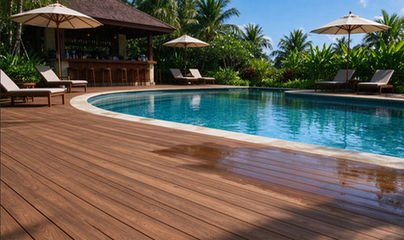
Most of what extends the life of a WPC deck is routine rather than specialised. Sweep the surface regularly and wash it with clean water and a mild detergent when it picks up grime. Keep the drainage gaps clear so water never sits in the grooves, and check the fixings and the substructure at the start of each season — a loose screw found early is a cheap fix, while the same screw found two years later may mean replacing boards. Keep heavy planters and furniture on boards that are adequately supported, and avoid dragging loads across the surface. None of these tasks is difficult, but together they are the difference between a deck that looks good for the full period it was specified for and one that starts looking tired several years early.
What to Ask a WPC Flooring Manufacturer Before You Buy
When a project is planned in years, the supplier you choose should be able to back every claim with documents rather than adjectives. A useful short list of questions covers the board build and its surface protection, the substructure accessories the manufacturer supplies with the boards, the quality-system certifications behind the production, samples before any order is placed, and the order process from deposit to delivery.
As an example of how these checks work in practice, Sincere Building, founded in 2007 and based in Foshan, supplies WPC outdoor flooring, interior wall panels, tiles, SPC flooring and related materials. The company holds ISO 9001, ISO 14001 and ISO 45001 certifications as well as customs AEO Advanced Certification, and holds registered trademarks in 18 countries. Its WPC floor range covers standard widths and thicknesses for outdoor and semi-outdoor use; standard products are typically shipped in around 15 days and tailored items in about 25 to 30 days, depending on sampling and production approval — these are estimates, not delivery guarantees. Standard samples are available on request, with a small fee plus courier charges on collect that can be credited against a following order, and minimum order quantities are defined in the quote.
Conclusão
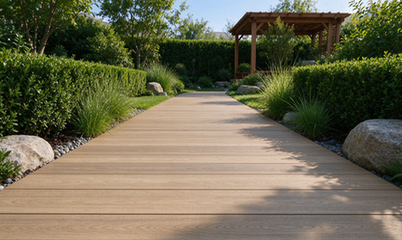
WPC outdoor flooring is a long-horizon specification, and the honest way to plan it is as a range rather than a single number: the board build, the substructure, the climate and the routine maintenance together decide where your project lands in that range. Before you commit, get the composition in writing, check the substructure details, and test samples under your own lighting. If the project also includes a matching Cerca WPC around the same property, specifying both from one supplier keeps the material tone and the installation sequence consistent. If you are comparing options, start with a sample request so the final decision is made on real boards rather than photographs.
Perguntas frequentes
Q: How long does WPC outdoor flooring last on average?
There is no single fixed number, and a responsible supplier will not promise one. With a sound board build, a properly drained joist substructure and normal cleaning, WPC outdoor flooring is expected to serve for many years, and in many residential projects the boards are rarely fully replaced within the period they were originally specified for. Commercial, high-traffic installations are typically evaluated with more conservative expectations and more frequent inspection.
Q: Does WPC outdoor decking fade over time?
All outdoor materials change under long UV exposure, and WPC decking is no exception, though a well-protected surface layer holds its colour noticeably better than untreated alternatives. The change is gradual rather than sudden, and it is worth allowing for it at the design stage: mid-tone boards tend to show less relative change than very light or very dark ones.
Q: Is WPC outdoor flooring waterproof?
The boards themselves resist moisture far better than timber and are not prone to rot, but a WPC deck is not a watertight system. Water can still sit in the grooves and joints, which is why drainage gaps, a sloped surface and a ventilated substructure are part of the installation. Keeping the gaps clear is what prevents algae and mould from taking hold.
Q: How can buyers verify WPC flooring durability before ordering?
Ask the supplier for the board composition in writing, the quality-system certificates behind the production and the substructure accessories that go with the boards, and request standard samples to examine under your own lighting before production. A manufacturer that runs its own production line should be able to explain how the boards are made and show where they are made.
Anterior: how-to-choose-a-wall-panel-manufacturer-a-complete-buyers-guide
Próximo : Nenhum


