
Why SPC Flooring Is Waterproof and Fire-Resistant
2026-06-04
SPC flooring is one of the most popular types of flooring used in apartments, hotels, shops, offices and modern homes. It is able to overcome two of the biggest fears that consumers have, namely that of water damage and that of a fire. In the kitchen, bathroom, basement, laundry room, rental property, and in shops and offices, floors are constantly exposed to splashes, cleaning products, moisture, large numbers of people and heavy wear and tear. As such, they need to be able to withstand all of these things without becoming swollen or hazardous.
SPC Flooring perform so well due to the Stone Plastic Composite structure. Unlike wood-based flooring products SPC Flooring do not contain fiberboard in the core of the product. The core of SPC Flooring is a strong and rigid composition made from a dense mix of limestone powder, PVC resin and stabilizers. This key ingredient in SPC Flooring provides Dimensional Stability, Moisture Resistance and superior Fire Resistance when compared with other floorcoverings on the market today.
When we say “waterproof” and “fireproof” to SPC flooring fans, they must be read correctly. Firstly, SPC flooring is 100% waterproof since it is made of solid board without wood fiber absorb water. Secondly, as to fire performance, instead of saying “fireproof”, we call it “fire-resistant” or “fire-retardant”. Even a high quality SPC floor can restrict flame spread and reduce smoke in case of fire and be in line with related tests. However, it is out of question that such indoor floor cannot replace building’s corresponding fire protection system.
What Is SPC Flooring Made Of?
SPC is short for Stone Plastic Composite. It is also known as Stone Polymer Composite Flooring. The name of this floor material is important as it already tells you how this type of flooring is different from laminate, hardwood or vinyl flooring.
The majority of SPC flooring is multi-layered and all the individual layers have a specific function. It is the combination of the individual layers and how they perform, that results in the overall characteristics of the flooring.
The Core Layer: The Main Source of Stability
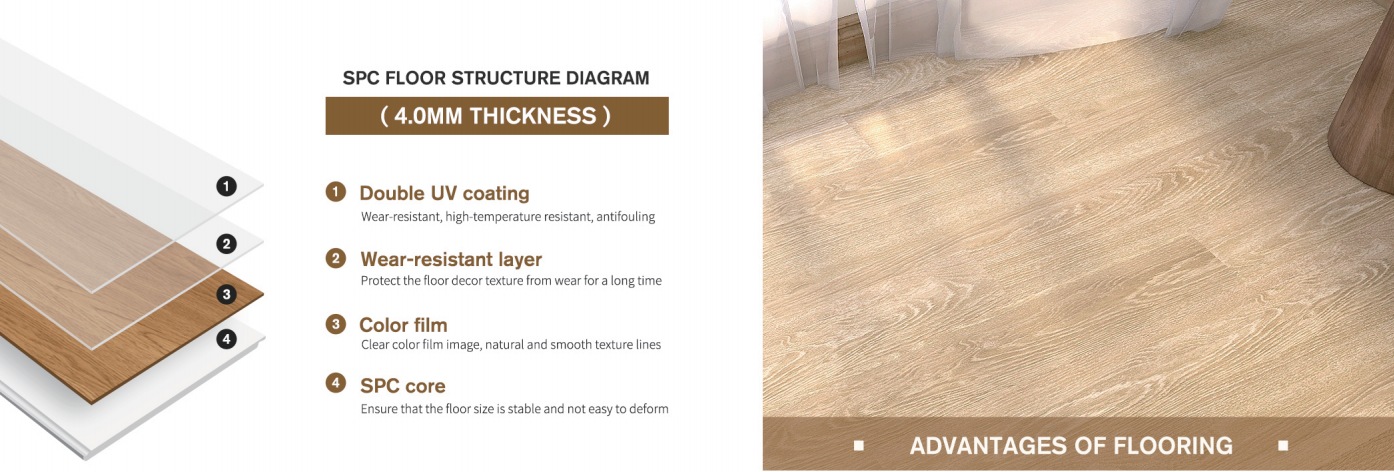
The SPC core is a thick, very stiff middle layer. Typically made up of limestone powder, PVC resin and stabilizers, the limestone powder gives the core rigidity and weight, the PVC resin binds the core together and enables flexibility, the Stabilizers are used to aid the board in maintaining its form during manufacturing, transport, installation and over the life of the product.
SPC flooring has a very hard core. This makes the flooring very firm to walk on and makes it also very suitable for areas with high traffic. Think of hotel corridors, shop entrances and the living areas in rental apartments. Such areas can receive thousands of footfalls a week. A soft or thin core can buckle, bend or even come apart under such immense pressure. Therefore, a high-density SPC rigid core has much more ability to resist such pressure.
The Surface Layers: Protection Against Daily Wear
Layers Above the Core: Decorative Film, Wear Layer and UV Coating. The decorative film is what creates the look of wood stone or tiles. The wear layer is what protects the printed surface from scratches and wear from footfall. The UV coating provides stain resistance and makes cleaning easier, giving the finished surface a high quality appearance.
Some SPC flooring products have a IXPE or EVA backing layer below the core of the board. This additional layer provides sound reduction, increased comfort underfoot and ensures a better engaging surface for the flooring planks on the sub floor.
A typical SPC flooring structure looks like this:
| Layer | Main Function | Buyer Benefit |
|---|---|---|
| UV coating | Surface protection | Easier cleaning and better stain resistance |
| Wear layer | Anti-wear protection | Longer service life in busy rooms |
| Decorative film | Visual design | Wood, stone, or tile appearance |
| SPC rigid core | Strength and waterproof stability | Less swelling, warping, and deformation |
| Backing layer | Sound and comfort support | Quieter walking and better underfoot feel |
Why Is SPC Flooring 100% Waterproof?
Water is usually the fastest way to ruin flooring that is not suitable. Laminate flooring with a fiberboard core can swell at the edges. Hardwood flooring can cup, crack or change color. The lowest quality of vinyl flooring can peel or separate at the backing when it becomes wet.
SPC flooring is designed to avoid problems with moisture absorption, since the core of the floor does not absorb water in the same way as other types of flooring.
No Wood Fiber Means Less Swelling
The waterproof feature of SPC flooring mainly comes from what it doesn’t contain. SPC flooring does not use MDF, HDF or wood fiberboard as the core structure. The stone plastic composite core of SPC flooring is dense and non-wood, therefore water cannot seep into it. It won’t cause flooring to swell like most laminate flooring do.
Waterproof SPC flooring is the perfect option for:
- Kitchens where oil, water, and food spills are common
- Bathrooms outside shower zones
- Laundry rooms with washing machine moisture
- Basements with higher humidity
- Rental apartments that need low-maintenance flooring
- Retail stores where daily cleaning is frequent
Most household accidents involving water will no longer be a cause for worry for homeowners. This also reduces potential complaints for project buyers especially during move in. Some accidents happen in areas where there are chances water may not be cleaned up immediately until several hours later.
Waterproof Does Not Mean Poor Installation Can Be Ignored
SPC flooring is waterproof as a single plank, but a complete waterproofing floor solution is only provided by a correct and complete installation. This includes ensuring that all connections to wall surfaces, as well as locking joints, door thresholds and subfloor surfaces, are properly water-sealed. When used in bathrooms for example, it is fine for water to occasionally splash around the bathroom sink area but should always be avoided for long periods of time around toilets, shower areas and external wall edges.
A better installation usually includes:
- A flat and clean subfloor
- Correct expansion gaps
- Tight click-lock joints
- Proper edge sealing in wet rooms
- Moisture checks for concrete subfloors
- Careful cutting around pipes and door frames
Where good quality of a product and good installation come together. Even a stable SPC plank needs to be treated with care in wet areas.
Why Is SPC Flooring Fire-Resistant?
What we call fireproof SPC flooring in online search functions is more accurately termed fire-resistant SPC flooring. In building materials fire-resistant SPC flooring is designed to resist ignition and to slow the spread of flame. Furthermore, fire-resistant SPC flooring reduces the contribution to a fire of the flooring compared to highly combustible materials. That doesn’t mean the flooring acts as a magical fire barrier.
The fire-resistant properties of a gasket are due to a combination of the core material and the production formulation.
Limestone Helps Reduce Combustibility
The limestone powder in the SPC core is an inorganic mineral component. This means that it does not burn such as wood. In a very compact SPC core it is possible to reduce a lot the amount of combustible material contained in a plank of flooring.
One of the many reasons SPC rigid core flooring is chosen for commercial interior spaces is due to its ability to provide good flame spread control. Unlike other types of flooring that may pose problems in hotel rooms, offices, classrooms, apartment corridors and many other commercial interior spaces, this flooring provides designers and contractors peace of mind by comparing flooring products with safer properties.
PVC Resin and Fire-Retardant Additives Matter
The PVC used in flooring naturally has a better fire-resistance than most common plastics. However, the final fire-resistance of a flooring is determined by the complete formula. Also high-quality SPC flooring contains fire-retardant additives.
For commercial projects, it is not sufficient to rely on sales promises such as “fireproof” for your flooring. For your export and engineering projects it is more meaningful to request a fire resistance report.
The exact rating can vary by product structure, thickness, backing layer, and test method. That is why project buyers should check the report before bulk ordering.
SPC Flooring vs Other Flooring Materials
It goes without saying that there are plenty of alternative indoor floor coverings available to SPC flooring. The correct floor covering is dependent on factors such as budget, intended use of the room, local weather, plus desired level of maintenance. We have outlined a comparison table below for SPC flooring and some of the alternative floor coverings available on the market.
| Flooring Type | Water Resistance | Fire Resistance | Best Use |
|---|---|---|---|
| SPC flooring | Excellent | Good when properly tested | Homes, hotels, offices, stores, apartments |
| Laminate flooring | Weak to medium | Depends on core and coating | Dry bedrooms and living rooms |
| Hardwood flooring | Low in wet areas | Natural wood is combustible | Premium dry interiors |
| WPC flooring | Good | Depends on formulation | Comfortable residential spaces |
| Ceramic tile | Excellent | Excellent | Wet rooms and heavy-duty areas |
A crossover flooring product, SPC flooring is warmer underfoot and quicker to fit than a tile such as laminate, more waterproof than a laminate floor and more stable than many of the soft vinyl floor coverings currently available on the market. For large installations the click-lock system makes for quick work of fitting individual flooring planks. This makes SPC flooring ideal for rental properties in order to speed up changes between tenancies. For retail and hotel applications the benefit of SPC flooring is that it can mean less downtime for businesses during refurbishment.
Where Waterproof SPC Flooring Works Best
You should choose flooring for how you use a room most. For wet and dirty rooms with a lot of footfall, SPC is perfect.
Kitchens and Dining Areas
There is risk of water drops, of splashing of cooking oil, of stains from food, of scraping from chair legs and of constant cleaning with water and detergents. The waterproof SPC flooring is always ready to face these loads and is easy to wipe with a dry cloth even after spills of water and detergents of everyday household, without swelling. A wood look SPC floor provides the warm sensation of a wood floor and has not the cold feeling of a ceramic tile floor.
Bathrooms and Laundry Rooms
SPC flooring can be used in dry areas of bathrooms, powder rooms and laundry rooms. SPC flooring can be used around baths with vanities, baths with sinks and washing machines as long as it is installed correctly. Interiors of showers and wet areas where there is constant standing water of water are best completed with tile or other fully sealed wet-area systems.
Basements and Ground-Floor Rooms
SPC flooring is more resistant to moisture than other types of flooring such as wood-based floors. However, basements tend to have higher humidity than other parts of older buildings and even some newer ones in rainy climates. Prior to installation of any flooring, it is always a good idea to inspect the subfloor for signs of moisture, cracks and uneven areas.
Hotels, Offices, and Retail Stores
A practical option for commercial waterproof flooring for guest rooms, small offices, showrooms, change rooms, coffee shops, restaurants and retail shops would be to use SPC flooring. The areas mentioned can withstand foot wear, suitcases with wheels, moving of furniture, regular cleaning. A thicker wear layer is recommended for these projects.
How to Choose High-Quality SPC Flooring
Not all SPC floors are created equal. Although initially a low-cost product may look acceptable in a sample, after a few months of use many weak points become apparent: a loose locking system, brittle core, color deviations, wear on the surface or a strongly unpleasant odor.
Check the Core Quality
A good SPC core should be hard and dense, but not brittle. When evaluating samples, it is helpful to pull on the edge of each sample to see if it breaks. Also press down on the sample to see how tightly the click is. Evaluate the plank for flatness. Check to see if the plank bends easily or if it chips too easily. For very large jobs, also ask about the raw material control and batch to batch consistency.
Review the Wear Layer
The wear layer is important for long-term surface life. Residential spaces may not need the same wear layer as a busy hotel corridor. Commercial projects should choose a specification that matches the expected traffic. If a showroom floor will receive customers every day, a stronger wear layer can reduce scratches and visible wear.
Ask for Test Reports
For B2B buyers product documents also are part of the risk control. A serious SPC flooring supplier is able to provide necessary quality information such as fire resistance, water resistance, wear resistance, formaldehyde emission and production test results.
Working With an SPC Flooring Supplier
Foshan Sincere Building Materials Co., Ltd. is manufacturer supplier of indoor and outdoor building materials. Main products of Foshan Sincere Building Materials include SPC flooring, tiles, wall panels and more, such as indoor WPC fluted wall panels, flexible stone and so on, for floors and walls in residential, commercial, hotel and other Hospitality properties. A supplier with wide range of building materials related products for contractors and distributors.
SPC flooring supplier from Foshan China with experience of exporting building materials to overseas markets. As main supplier of waterproof flooring with modern look and convenient installation method. Our client, who is renovating apartments, showrooms, hotels, shops, etc. and combining different type of materials for interior design, will benefit from one supplier who can provide a range of finish materials, including SPC flooring, for complete project.
Conclusion
Why is SPC flooring waterproof and fire-resistant? SPC flooring is made of a stone plastic composite core and does not absorb water, unlike most wood-based flooring. This is why SPC flooring is ideal for kitchens and bathrooms and other areas of the home that are prone to moisture. In addition, SPC flooring is also fire-resistant. This is due to the flooring’s dense mineral-based core as well as the PVC resin used in its production. In addition, some SPC flooring also contains fire-retardant additives. SPC flooring is ideal for kitchens and bathrooms as well as other areas of the home such as basements and for multi-unit dwellings like apartments. It is also commonly used in hotels, offices and stores.
This evaluation considers factors important to the buyer, and they are not limited to a single claim. Important factors are the core density, wear layer, click system, surface coating, backing layer, fire rating, and the reliability of the supplier. A good SPC floor is supposed to look good, easy to install, durable, able to withstand moisture, resistant to wear and tear from heavy use, and it must be supplied with documentation that supports its claimed characteristics.
FAQs
Is SPC flooring really 100% waterproof?
The SPC plank itself is waterproof. The rigid stone plastic composite core does not absorb water like a wood fiberboard. However, proper installation around the perimeter, joints, doors and wet-room edges is still required.
Can SPC flooring be used in bathrooms?
SPC flooring can be used in the dry part of bathroom, such as in the bathroom outside the shower, in powder room and around sinks. SPC is not to be used as part of a full shower floor installation. It is intended to be used as part of a complete wet-area installation which can be designed to withstand water.
Is SPC flooring better than laminate flooring for wet areas?
SPC flooring is better suited for wet areas as it does not have a wood fiber core like laminate flooring for example. Should moisture penetrate the core of laminate flooring it can cause the flooring to swell or even lift.
What should commercial buyers check before ordering SPC flooring?
For commercial buyers other key characteristics to test include core density, wear layer thickness, click-lock strength, surface finish, fire rating, water resistance, batch color consistency, packaging and supplier’s experience in exporting products.


