
PU Stone vs. Natural Stone: A Practical Buyer Guide
2026-06-26
A wall with a rough stone texture can immediately make a plain surface feel warmer, heavier and finished. We apply a stone texture to hotel corridors, restaurants, villa entrances, shops and retail displays as well as to living rooms where the TV wall requires some extra finish. But the question remains: which material are we going to use to create this finish?
PU Stone vs. Natural Stone is a project decision. Natural stone has real mineral texture and brings long lasting value to your building. PU stone panels are lighter, allow for faster installation, are easier to transport and offer much more flexibility for your decoration. For contractors, importers, designers and for project buyers this decision is influenced by the wall structure, budget, time frame, weather and how close the finish will be viewed and touched.
What Is PU Stone?
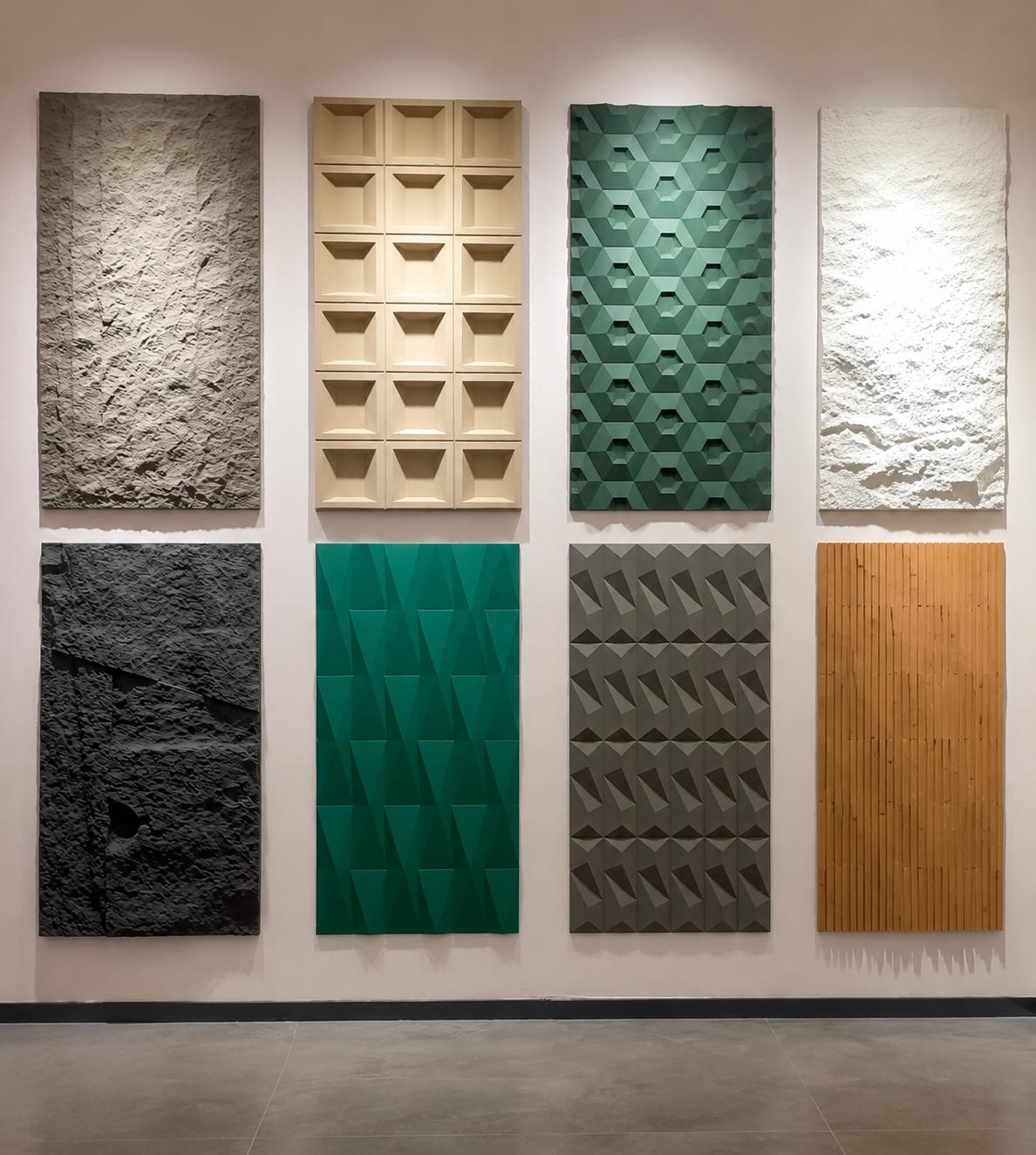
PU stone panels are made from Polyurethane- an artificial stone which mimics the look of real natural stone, these panels are generally molded in shapes & sizes, then painted with surface color and coating to give the raised 3D textured look, the good quality PU stone panels have the real look & feel with features like rough edges, layered cracks, Stacked stone look & feel, mushroom stone texture, look of cement stone and last but not the least a real stone skin.
Don’t be fooled by thinking this is quarried rock. Decorative wall cladding made from PU stone panels are made to look as natural as real stone but without the weight. High quality PU stone panels can weigh as little as 4-6kg per square meter, making them light enough for one person to easily carry, cut and fix. Many also have waterproof properties, and also offer UV resistance, fire resistance, low temperature resistance and also have an anti-aging surface finish.
What Is Natural Stone?
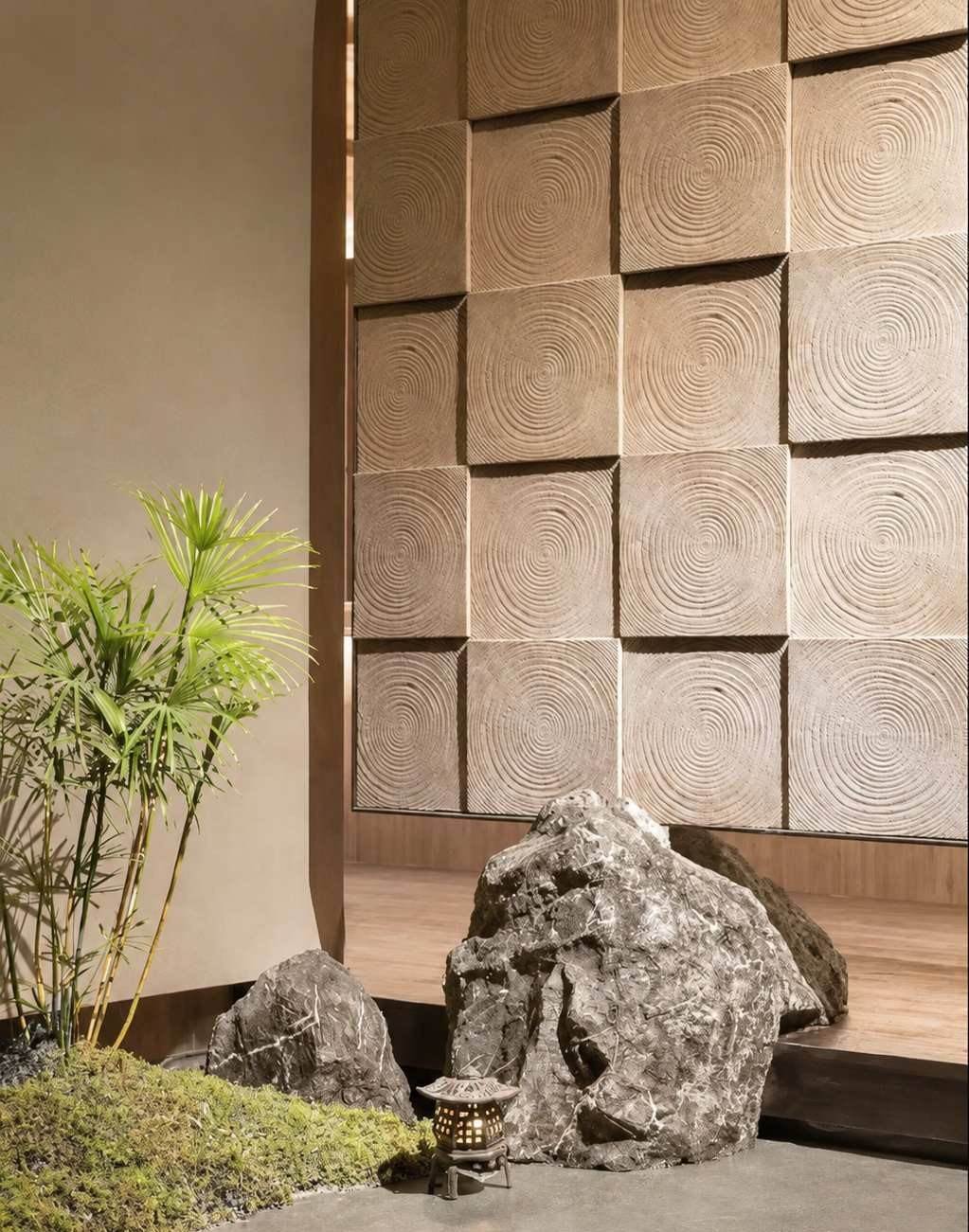
Natural stone is quarried from the earth and then sawn into large slabs, tiles, blocks or even stone veneer panels. There are many natural types of stone, including marble, granite, slate, limestone and sandstone to name a few. All natural stone products have their own characteristic veins, pores, color movement and texture and feel to their surface. These characteristics are what make stone so popular for luxury villas, architectural landmark buildings, boundary walls and also as premium exterior and interior facades for high-end homes.
Incorporating natural stone into your design has many limitations. The stone is extremely heavy and therefore very difficult to cut. Once cut it is expensive to transport long distances and will need to be fitted by an experienced stone fixer. Other factors to consider are the structure of the wall, the waterproofing required, the mechanical fix, the cost of labor, and the necessary safety checks.
Quick Comparison: PU Stone vs. Natural Stone
Materials chosen for appearance can affect many other criteria, including transport, site handling, construction speed, load on the walls, ease of repair, and maintenance.
| Factor | PU Stone Panels | Natural Stone |
| Weight | Light, often around 4–6 kg/㎡ | Heavy and may need stronger support |
| Look | Realistic molded stone texture | Real mineral texture and natural touch |
| Installation | Can be cut, glued, nailed, or screwed | Needs skilled cutting and strong fixing |
| Cost | Often lower total installed cost | Higher material, shipping, and labor cost |
| Maintenance | Simple daily cleaning | May need sealing or special care |
| Best use | Feature walls, hotels, shops, restaurants | Luxury facades, landscapes, floors |
Appearance and Texture
Most of our customers looking for a stone-look wall panel are looking for a lot of depth and shadow in the stone and a lot of texture to the surface so that it is not flat. Both MDF and natural stone can create this look but they create it in very different ways.
Real mineral character
Natural stone has unique natural texture and feel. The natural stone characteristics such as the stone’s veins, cool feel to the touch, small holes in the stone, changes in color and more all come from the natural stone itself. Because of this, one batch of stone may not look exactly like another. Some types of stone require sealing and must be cleaned with certain care.
Realistic stone effect
PU stone panels are cast in stone textures, so they may feature to show cracks, rises of layers, broken edges, etc. Stacked stone-look patterns are included as well. A PU stone panel is not meant to bring a mineral feel to a space. As a decorative element it is used in a restaurant feature wall, hotel corridor, apartment living room or retail display. The main characteristics of PU stone panels are the visual impact, light behavior, the uniformity of the surface and the ease of application.
Weight and Site Handling
The weight of the wall cladding is often an important factor when choosing a suitable material. In comparison to real stone PU stone is relatively light, meaning it is easy to transport through elevators, staircases, narrow corridors and through upper floors. For example, a single worker is able to carry several panels at a time. On-site cutting also exerts less pressure than cutting through real stone, meaning that access to the walls is not a problem.
Common scenarios include:
- Apartment renovation where wall load is limited
- Hotel corridor upgrades finished floor by floor
- Restaurant remodeling during a short closure period
- Retail store decoration inside a shopping mall
- Villa exterior accent walls where full stone weight is unnecessary
There are still applications for natural stone when the surrounding structure is suitable. However on lightweight partition walls, old masonary, timber basis or board systems PU stone panels are often an option to reduce risk and work load.
Installation and Work Speed
One of the major differences between PU Stone and Natural Stone is how they are installed. Natural Stone is normally cut professionally, leveled, grouted/ fixed mechanically or a combination of both and in some cases walls may require to be reinforced prior to fixing. Due to weight of Natural Stone and the fact that once cut it can be difficult to make adjustments, mistakes can be very costly.
PU stone is more forgiving. Many of the PU stone panels can be cut on site, the panels can be set up in different staggered patterns and fixed using construction adhesive, screws or nails, depending on the fixings base. Any nail holes or joints can be touched up with matching filler. As the panels are rotated during installation and no repeated patterns are used, the wall will have a very natural look.
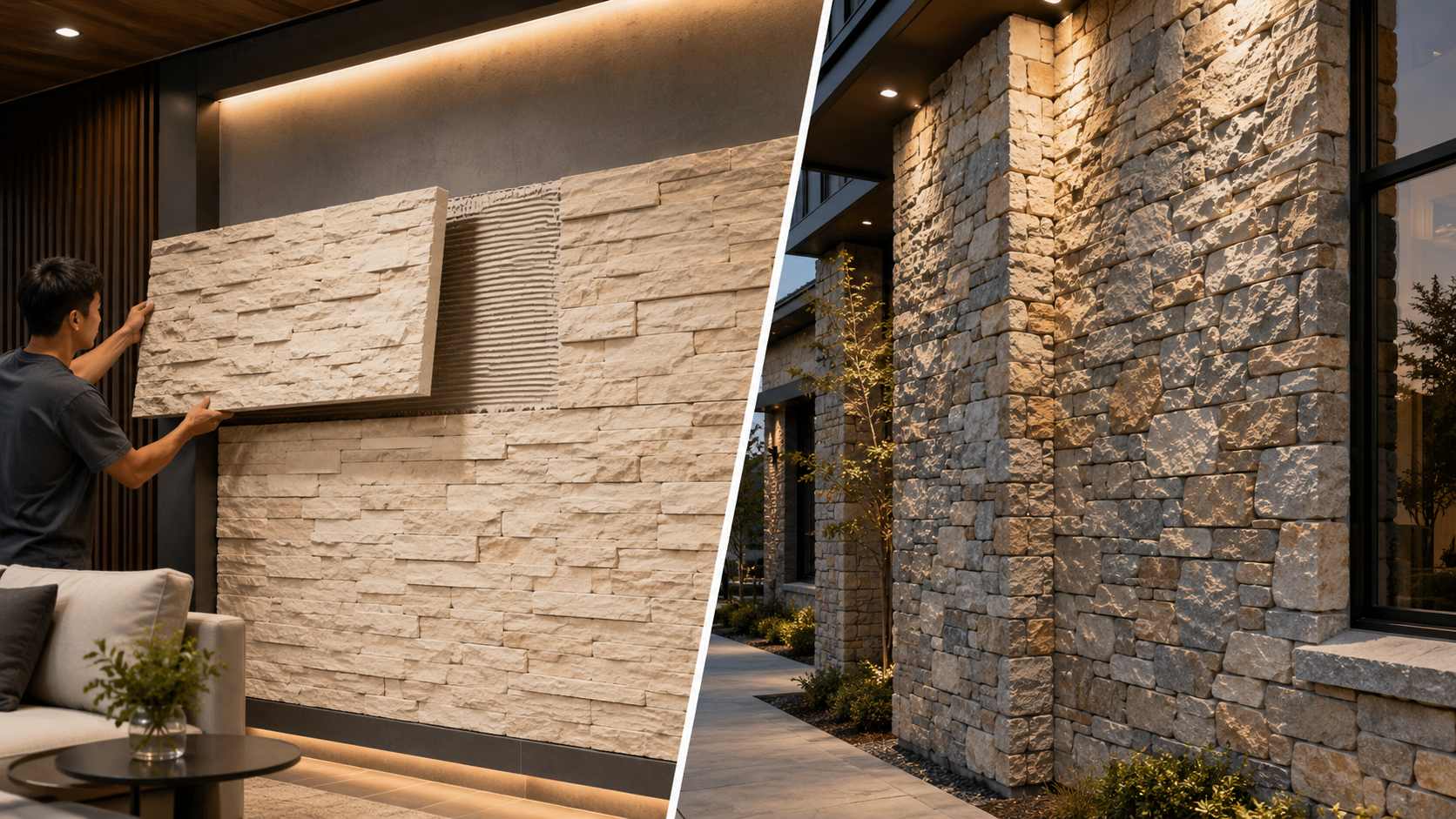
Below is a general guide on how to install PU stone. This will cover flatness testing, panel placement, cutting around corners/sockets, applying adhesive, fixing with screws/nails where required and stone joint repair.
Cost: Look at the Full Project
Instead of just comparing panel pricing, it is more important to compare the total installed cost. This includes the cost of shipping, handling, cutting to size, installing into the wall, fasteners, labor, waste, potential repair work and ongoing maintenance.
PU stone panels are not always the cheapest decorative wall panels in terms of price per item, especially when a high-quality finish is required. However, the fact that PU stone panels are light weight greatly reduces the pressure of transport. Also, the fast installation of the panels reduces the required labor. Lastly, the panels are very easy to cut which reduces waste to a minimum.
Even in premium projects, natural stone can retain value when it’s used where its authenticity will be appreciated and lightweight stone panels are used for faster and cost-sensitive application.
Durability and Outdoor Use
PU stone and natural stone can both be good materials for interior design and construction. However, there are certain conditions they have to meet. High-quality PU stone has to fulfill several criteria, for example waterproofness, resistance to UV rays, fire safety, the stability of coatings and anti-aging properties. For exterior wall covering with PU stone, it is important that the underlying wall is flat and solid. The joints must also be well-sealed in order to prevent water entering.
Natural stone is very durable however not all natural stones are the same some are more porous than others and will require sealing. Some panels are heavier than others and put a lot of stress on the fixing system for long term, especially if the structure has not been properly prepared.
PU stone is a suitable alternative for decorative exterior accent work. For paving, heavy-use flooring, structural stonework and heritage-style buildings however natural stone is the safer option.
Best Applications for Each Material
Once you know the intent of the wall, choosing the right material is a breeze. For TV background walls, sofa walls, hotel corridors, restaurant feature walls, retail display walls, showroom decoration and old apartment renovation, using PU stone is a great idea. Such wall is meant to have texture to it, to be worked on quickly, to be light enough to handle on one’s own and to have minimal down time.
Natural stone is more suitable for luxury facades, garden walls, outdoor pavement, hotel entrance floors, high-end gates of villas and all other places where a natural mineral look is desired. In certain villa exterior design projects, both materials can be combined. The natural stone is used near the ground or at the entrance, while the PU-stone is used on higher accent walls where the weight of the natural stone is less of an issue.
How to Choose the Right Wall Cladding Material
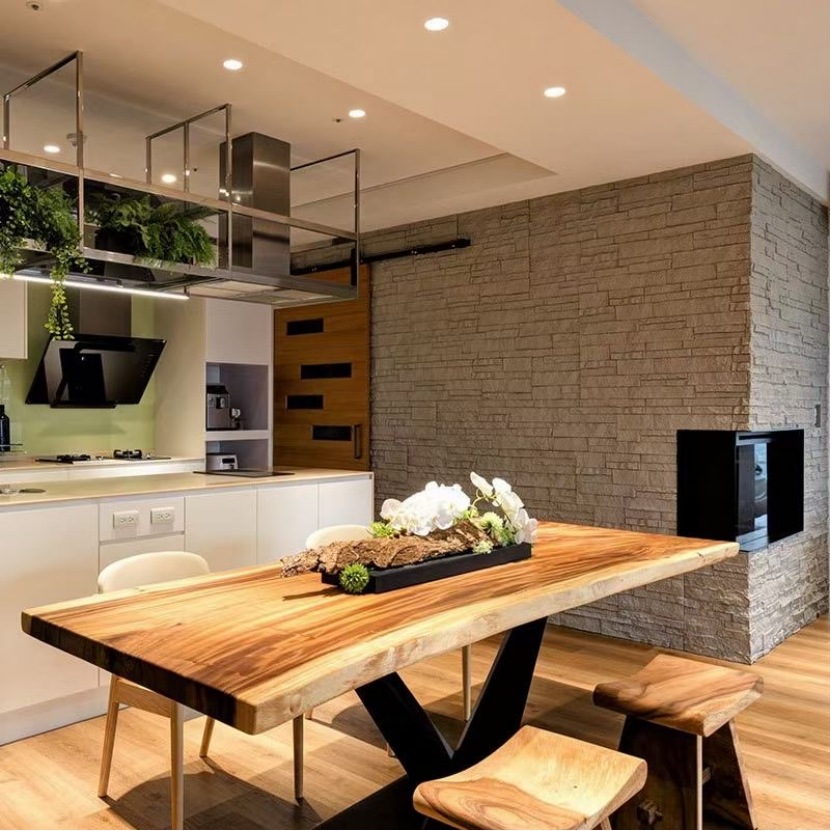
There is no single winner for every project. PU stone panels are best for projects that require a natural stone look without the heavy weight of real stone. This makes them suitable for indoor decorative walls, commercial wall decoration, fast renovation solutions, upper floor construction, and many other projects where transport and labor need to be kept simple.
Natural stone is the best choice for projects where you require to achieve a natural mineral texture and/or long-term stone value and/or a heavy-duty performance. Natural stone is very suitable for high-end villas, public buildings, garden landscapes and other projects where the material will be touched from time to time or will be walked on or inspected closely. It is recommended to check several items before you place an order of natural stone, such as the condition of the wall, the thickness of the panels, the coating of the surface, the fire and moisture requirements, the method of installation, the color of the sample and the delivery time frame.
Foshan Sincere Building Materials Co,Ltd. as a PU Stone Supplier
Foshan Sincere Building Materials Co,Ltd. is founded in 2007, located in Foshan, a big building materials base in China. Sincere is specializing in indoor and outdoor wall and floor decorative materials such as wall tiles, wall panels, SPC flooring, flexible stone, outdoor wall coverings and PU stone for decoration.
For buyers purchasing PU stone panels a wider material range is useful, for example a hotel renovation requires stone-look wall panels for the corridors, SPC flooring for the guest rooms and outside wall covering for public areas. The company supplies to international markets in South America, Europe, Southeast Asia, The Middle East, Africa and other countries worldwide.
Conclusion
Is it PU Stone or Natural Stone for your project? Project needs must be the deciding factor. Natural stone offers a unique quality and character which cannot be replicated with any man-made product. It is ideal for clients seeking an authentic mineral look and a luxurious, long-lasting finish. PU stone, on the other hand, is lightweight stone panels that can be finished to create a realistic stone effect. It is ideal for projects requiring fast installation, minimal handling and cost-effective construction where a decorative stone effect is required.
For the TV backdrop walls, hotel corridors, restaurant feature walls and retail spaces and also many of the accent walls in the many of the villas throughout the region, the PU Stone Panels are an excellent alternative to natural stone providing the look and feel of natural stone without the weight of the actual product. For use on high-end facades, landscapes, floors and other stonework that requires the natural look and feel then the real stone is still the better option.
FAQs
Is PU stone better than natural stone?
PU stone is perfect for a lightweight wall decoration, fast installation and a cost effective solution. Natural stone is better for a project where you really need the look and feel of a real mineral, a high end look and the project will be subject to heavy wear and tear over a long period of time.
Can PU stone panels be used for exterior walls?
Yes. PU stone panels can be used for selected exterior wall decoration when the product has waterproof, UV-resistant, and anti-aging performance. Wall flatness, fixing method, and joint sealing must be handled carefully.
Does PU stone look like real stone?
Good PU stone panels mimic the appearance of real natural stone. This PU panel has a textured surface with impressions of stone cracks and layers to provide it with a realistic appearance. Even though it has a very realistic look, the feel of the product is however different from a natural mineral stone.
Is PU stone cheaper than natural stone?
For many projects PU stone will have a lower Total Installed Cost than natural stone, because it is lighter, easier to transport, faster to install and cut to size than natural stone. In contrast the cost of natural stone is increased by quarrying, cutting, transportation, higher skilled workforces and fixed method.
Where are PU stone wall panels commonly used?
PU Stone Wall Panels are mainly used for decorating TV background walls, Sofa Walls, Hotel Corridors, Restaurant Feature Walls, Retail Shop Displays, Showrooms, Villa Entrance Walls and also for accent Walls outside of a building.


