

How to Inspect Flexible Stone Before Shipment
2026-10-16
Though the container still has not arrived, something needs to be done now. Inspection of flexible stone prior to shipment is extremely important. All kinds of texture and backing problems can be corrected easily while products are being manufactured. But once the merchandise is shipped, all these problems will become very expensive freight claims and will delay the projects. You will also have hard discussions with your customers. Always compare the goods to the sample you have approved and specifications.
When Should Flexible Stone Be Inspected
The window for a useful inspection is quite small. It is best to start when production is finished and most goods are packed, but the container is still empty. At this stage, an inspector can pull cartons from the back of the warehouse. They can also open material from various pallet levels. If problems appear, you can ask for replacements without holding up a truck at the gate.
For the first order, one visit might be not enough. A fast inspection during the middle of manufacturing process can help to reveal problems with color shade variation or cutter which is working out of square. But the final visit has another purpose. It is necessary to control the actual content, labeling, number of pieces, and shipping itself.
Lock the Inspection Standard Before Opening Cartons
Start by looking at the paperwork. Phrases like “first quality” sound good on a quote, but they give an inspector nothing real to measure. The same issue happens with terms like “close to sample.” You must define how close is acceptable. Also, consider what light you will use and if the standard applies to one sheet or the whole lot.
Review the Order Documents
Prepare a complete inspection pack that includes:
· the purchase order and product specification
· the approved physical sample or signed sample photographs
· the agreed color and texture range
· sheet dimensions, thickness, backing, and finish
· carton quantity, pallet plan, and labeling requirements
· required test reports and shipping documents
· written defect limits and sampling plan
Natural texture variation is a big part of why people like this material. However, it also leads to many arguments. The acceptablerange reference board showing maximum / minimum acceptable shade and texture variation shall be confirmed and signed before mass production, not only at preshipment inspection stage. Without preapproved variation range, colorrelated disputes are highly likely.
Choose a Practical Sampling Method
The sampling process should be a bit of a challenge for the factory. You must pull cartons from different pallets. Take them from the bottom and the top. Also, pick from every recorded batch. If all the samples are already sitting by the desk, the choice was not random. An AQL plan can help set the sample size, but you still need common sense. A tiny speck on the surface is not the same as a wrong color code or repeated delamination.
Verify Product Identity, Quantity, and Batch Control
Start by checking the identity before considering the aesthetics. Similar beige and grey travertine-looking materials may be stocked next to each other in the warehouse. In case the label is copied from the wrong work order, the entire batch sent by the factory to the country may be completely wrong.
Match Codes, Finishes, and Batches
Check the product name and color reference against the purchase order. Look at the texture direction, finish, and sheet size too. Carton markings must match the material inside the box. If there are several batches, record how many cartons belong to each one. Also, note where they are located on the pallets.
Two different batches might both look okay on their own. However, they can look terrible if they meet in the middle of a wall. Record the quantities for each batch clearly. If mixing them is necessary, the installer will need a plan to blend them or use spare sheets from both groups.
Count Cartons and Pieces
Count everything in layers. Start with pieces in an open carton, then cartons on a pallet, and finally the total pallets. Do not forget to include agreed spares and display samples. Ten pallets might look full, but that means nothing if several cartons are missing a sheet.
Measure Dimensions, Thickness, and Geometry

Measuring Flexible Stone
All dimensional tolerances for length, width, squareness and thickness must be clearly defined in purchase specification, there is no universal industrywide tolerance for flexible stone panels.
Measure Length, Width, and Thickness
Use a tape measure, a square, and a thickness gauge. These should be clearly named in your report. Document exact readings. Just listing checks on a sheet of paper is evidence of someone’s effort but it provides no documentation of results.
Make measurements at each corner and in the middle of the thickness. Measuring only in the middle can lead to false readings from thinner edges or backing that is non-uniform throughout the sheet. There is no universal “correct” thickness of flexible stone. Only specification of the order is important.
Check Squareness, Edge Straightness, and Flatness
Check diagonals to see if the sheets are out of square. Place the sheets on a clean, flat surface. Don’t press them down hard. Check for twists in the corners, waves or heavy creases. Next, place two sheets edge-to-edge to ensure that the joint stays straight.
A wide, soft curve might flatten out after unpacking. However, a sharp wave usually stays. You can tape a few suspect sheets to a wall and shine a light along the surface. This grazing light is very tough on defects. It reveals bumps that you cannot see on a flat warehouse table.
Inspect Color, Texture, and Surface Condition
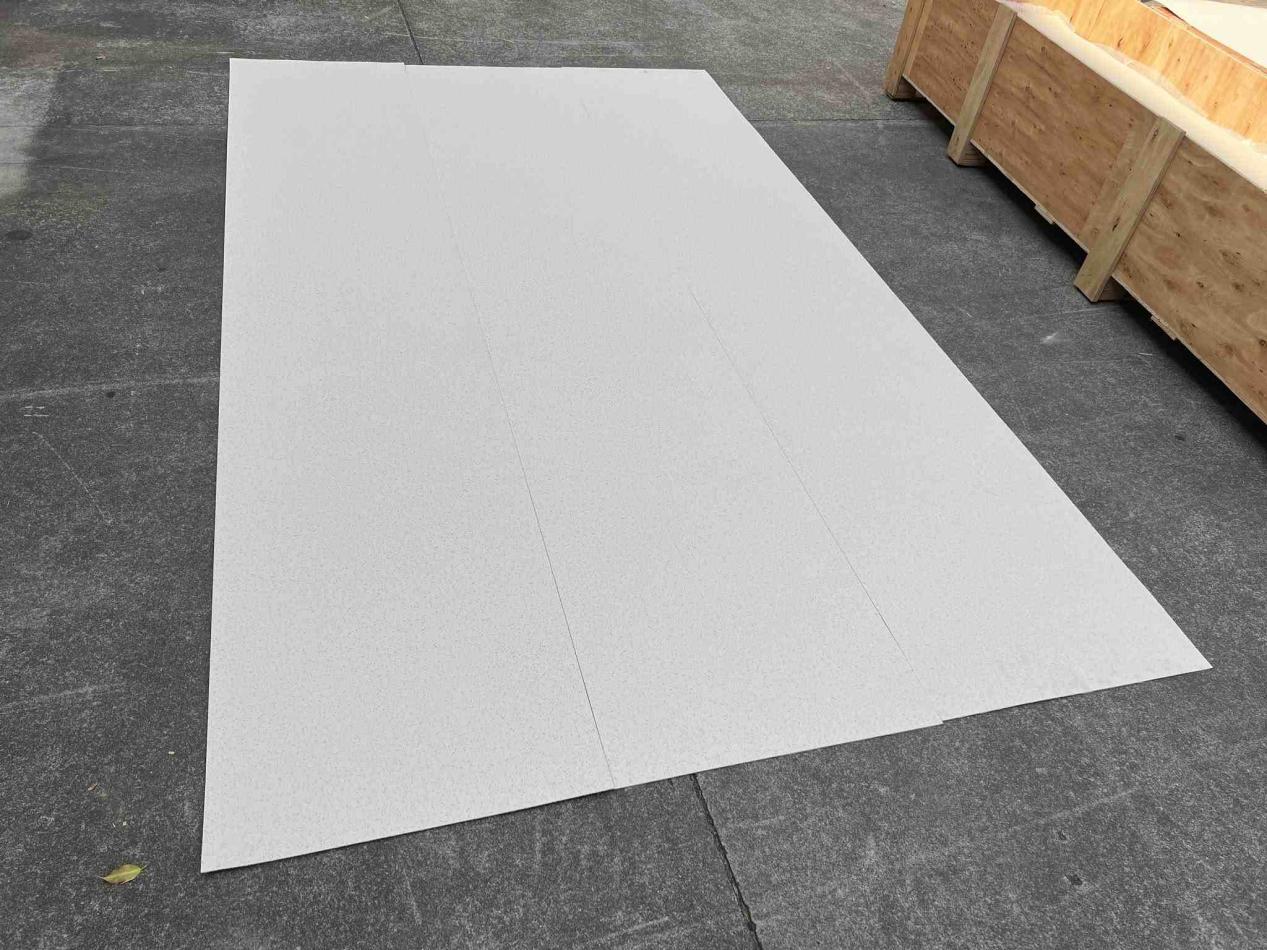
Inspect Flexible Stone
Checking color requires some distance. If you look too closely, you might focus on tiny grains and miss a larger problem. Step back a few meters. A color difference that is hard to see between two small pieces might create a dark band across a large building facade.
Build a Daylight Layout
Lay out representative randomlyselected sheets (not fullquantity of the whole batch) on flat floor for drylay check, simulating realinstallation orientation. Evaluate under indirect natural daylight; calibrated standard light source is an acceptable alternative when natural light is insufficient. Note color shift may occur under different light sources. This takes more time than looking at one sheet, but it answers the most important question: will the whole batch look like one uniform surface?
Do not expect every sheet to be an exact clone. That can make stone look fake. Instead, watch out for sudden color jumps or repeated patterns. Also, look for any small group that falls outside the signed range. These are the pieces that an installer cannot hide.
Look for Visible Defects
Examine the face of the stone from a normal distance and then up close. Look for:
· cracks, pinholes, or missing surface material
· scratches, oil spots, glue, or water stains
· broken corners and rough or crushed edges
· streaks in the coating or uneven gloss
· deep folds that do not go away when the sheet is flat
Every photo of a defect needs context. Take one picture of the whole sheet and another close-up with a ruler. Include the batch and carton details. A dramatic close-up can be misleading if you don’t know how big the mark actually is.
Check Backing, Flexibility, and Layer Bond
Always turn the sheet over. Many buyers only look at the front, but the back is where problems like dry mesh or resin gaps appear. This backing is what holds the sheet to the adhesive and the wall.
Inspect the Reverse Side
Check the back of sheets from several different cartons. The backing should be smooth and even. There should be no loose fibers, resin voids, or dust. Make sure the backing material is exactly what was agreed upon in the sample.
Pay close attention to the edges. This is where backing separation usually starts. If it begins there, it will likely get worse during shipping or installation.
Run a Controlled Bend Check
Make sure the test piece is at room temperature. Bend it slowly around a round object at the agreed radius. Never fold it sharply like a piece of paper. Check the front for fractures and the back for whitening or split mesh.
This test should be agreed upon before the inspection starts. Different textures react differently to bending. A good test proves the sheet can handle the required curve without any surface breaking or layer separation.
Review Cartons, Pallets, and Labels

Indoor Applications of Flexible Stone
An ideal product may become defective even before reaching the construction site because of vibration, pressure and moisture. Therefore, export packaging is an essential component of the product itself.
Inspect Inner and Outer Protection
Open a finished box. Are the faces of the stone rubbing together? Is there room for the corners to move? If the carton bends when you lift it, it is too weak. Rolled sheets must stay at the correct diameter. If they are rolled too tight to save space, they may end up with permanent creases. Flat packs need full support across the entire bottom.
Pallets must be strong and meet all export rules. Check for proper strapping, plastic wrap, and edge guards. If the buyer asked for a plywood cover or moisture protection, make sure it is there.
Verify Shipping Marks
Every box should show the product code, color, batch, and size. It should also list the quantity and project reference. Labels on the pallets must stay visible even after they are wrapped. If labels are wrong, the right stone might end up at the wrong building site.
Inspect Container Loading
Inspector cannot stay on-site for full loading duration in most real‑world scenarios. Record pallet ID photos before container loading, document empty‑container status, loading mid‑stage photos and final seal number.
Step inside the empty container first. Look for holes in the roof or old water stains. Smell for dampness and check the floor for sharp nails. Take a photo of the container number before any pallets go in. Then, record how the pallets are blocked and braced. These photos are your best defense if the cargo arrives damaged.
Flexible Stone Inspection Checklist
After checking these eight areas, the buyer can use the data to make a final decision about the shipment.
Decide Whether to Release, Rework, or Reject
The report should be clear enough for a buyer who was not there to decide. List all measurements and organize defects by type. Simple phrases like “factory will fix it” are not enough. You must state exactly what will be replaced and how it will be verified. Photos of the corrected goods must be part of the final record.
You should stop the shipment if you find the wrong product, delamination, or major batch issues. Missing quantities or poor packing are also reasons to wait. Small, isolated problems can be fixed through rework. Always check these points again before the doors are closed. Verbal promises are never a substitute for real inspection evidence.
Foshan Sincere Building Materials as a Flexible Stone Supplier
Foshan Sincere Building Materials Co., Ltd. provides various finishing products, including flexible stone, to global buyers and distributors. The company began operations in 2007. It holds several management certifications such as ISO9001, ISO14001, and ISO45001. These details are available in their public records.
Buyers can look into the company’s history and browse the flexible stone catalog. The company website also offers an article center with technical advice. You can send project inquiries through their contact page. However, you should always confirm the specific details and inspection plans for your individual order before production starts.
Conclusion
A good pre-shipment inspection for flexible stone will consider all aspects of the issue starting with the first documentation and ending with the inspection of the last container according to the established regulations. A good report should contain accurate numbers and pictures. It is definitely better to spot an error in the factory than to see it after the cargo has been unloaded from customs.
FAQs
What is the most important reference during flexible stone inspection
The signed specification sheet and the approved physical sample serve as references. Website pictures and general description cannot be used to determine color and texture.
How many flexible stone sheets should be inspected
The quantity of samples will depend on the order volume and AQL. You have to choose samples from different batches and pallets to make an objective assessment of the quality.
Should flexible stone be bend-tested before shipment
Yes, if such property is required by the project. Apply a consistent method to assess the reaction of the surface and the backing when bending.
Which defects should stop a flexible stone shipment
Defects like incorrect color, delamination, cracks, and extremely poor packaging should be the reasons for preventing the shipment of such goods. They have to be corrected before the goods will be shipped.
Can a third-party inspector check flexible stone
Yes, you can invite the third party inspector. You have to give him/her the approved samples, the purchase order and list of criteria before visiting the factory.
Prev : None


