
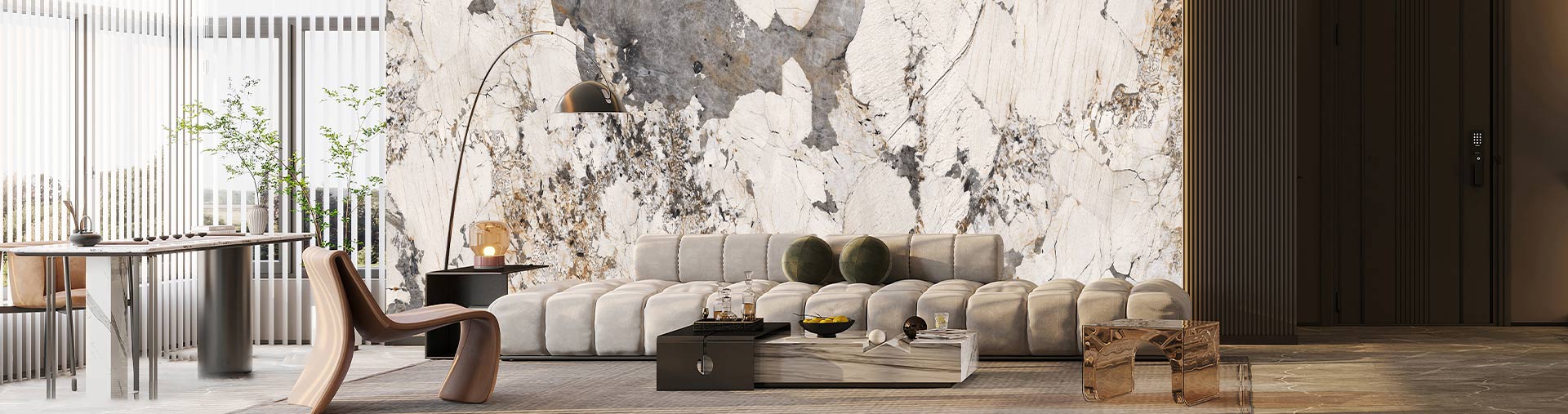
Flexible Stone for Large Projects: Packaging, Shipping and Handling Guide
2026-11-05The flexible stone makes different demands of a wall in an urban single villa and of five buildings. As applied in sample scale, these MCM 3–5 mm sheets are light weight, quick-to-fix and easy to transport. In volume, accessible features also make them weak: a packaging error, an overworked rack or damp installation window can squander an entire compartment of material. This guide covers how flexible stone is packaged and protected at the factory, transported by sea freight and handled on site while concluding with the order parameters that can keep a large job on schedule.
Why Large Projects Put More Stress on Flexible Stone
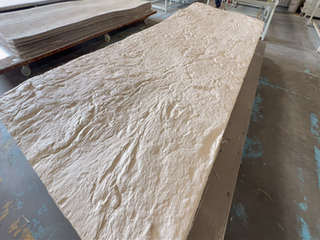
The material is a modified composite (MCM) constructed from natural soil, rock dust and recycled mineral feed with genuine bendability along with fire resistance & water resistance. That’s why it takes home façade awards. This is also part of the reason why logistics are much more relevant for flexible stone compared to a similar ceramic cladding. Ceramic tile is rigid, so it takes a beating; 3 mm flexible stone sheet doesn’t. If dropped or stacked edge down it will crease, chip on corners and gather surface marks.
With large projects, all of those risks are multiplied. We can manufacture it in formats such as 1200×600 mm, where each sheet will be a long lever arm when unloaded. There’s a minimum of 500 m² on standard mixed orders and 1,000 m² for custom-texture ones, which in larger projects can mean containerized or staged deliveries instead of one neat delivery. You are introduced to a delay or two that increases the sensitivity of site storage conditions, stacking discipline and the installation weather window; where once they were merely material issues now become scheduling problems.
How Flexible Stone Is Packaged and Protected at the Factory
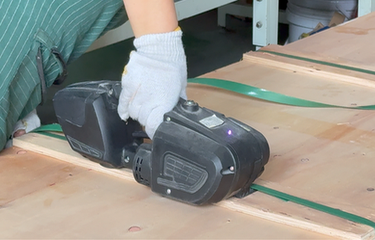
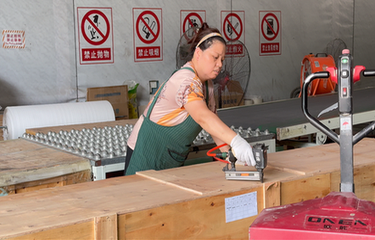
After passing regulatory checks, as well as appearance inspection and dimensional measurement, finished sheets are checked via performance spot tests just before being packed. According to the order specifications, sheets are flat-stacked and protected with stretch film before being consolidated for loading into a container. Factory packs are for the journey that material will actually take and not a showcase shelf.
For larger projects, the packaging conversation can begin earlier on at order level. CAD construction drawings & 3D visual pre-views are provided on custom orders, and a dedicated technical consultant will track the file from drawing to production. The order size raised or reduced up to but no more than ten per cent prior to production. Materialrelated costs will apply for changes beyond these conditions. Getting the packing list right at this stage is one of the most cost-effective ways to prevent damage.
Loading and Sea Freight for Large Volumes
The commercial flow is 30% deposit to start production. After factory production and quality inspection are completed, full balance payment shall be settled prior to sea shipment. Upon receipt of full final payment, we will arrange billoflading release promptly after vessel departure, subject to carrier’s documentissuing schedule.
Lead times range from 15 days for standard products to 25 -30 days with sample confirmation on custom pieces. Standard samples are shipped charged and deducted from the order; custom require a tooling deposit.
The material itself has one freight advantage built in. The sheets are 3–5 mm thick, and their lightweight construction allows a container to carry more cladding area than an equivalent solid-stone load. On the Arab villas project that SINCERE supplied, this was partly why the sea-freight budget held: the sheets were thin and light, while the finished facade would still read like natural stone.
Handling, Stacking, and Storage on Site
Once a container is opened, care moves to the site team and the rules are simple but harsh. Sheets are thin and light, thus easy to manipulate and easier still to damage; unload with two people for large formats and stack flat on solid underlayment. Keep stack height low and avoid placing heavy loads on top.
Store dry and keep surfaces clean. If they are not removed before installation, dust and debris from construction will become incorporated into the finish on their front faces. On a multi-phase site, sheets for later phases should not be left leaning against a wall for long periods while earlier phases cure.
Installation has two hard windows. Ambient temperature must range from 5 °C to 40 °C, followed by no direct exposure of sheets to rain for at least 48 hours for outdoor applications (for peeling as well as alkali reversion.) Installation shall be suspended during heavy rain, snow or strong wind conditions.
Use the double-sided full-coverage adhesive application method, applying adhesive to both the wall surface and the back of the flexible ceramic tile. Use a notched trowel to spread the adhesive into uniform ridges, maintaining an adhesive layer thickness of approximately 1–3 mm. Install the tiles from bottom to top, aligning them with the reference lines. After positioning each tile, gently tap or press it with a rubber mallet or tapping board to remove trapped air, ensure full adhesive coverage, and achieve complete bonding between the tile and the wall surface.Corners shall be completed to design drawing i.e. with scalloped, close-fitting or 45-degree joints.
Planning the Order: MOQ, Lead Time, and Custom Support
Commercial parameters should be lined up for buyers before the drawings are finalized and production has started. For standard products, multiple designs are to be mixed in one single order: depending on the design.
On the support side, a big project includes CAD construction drawings, 3D visual previewing, access to one dedicated technical consultant and remote assistance from the tech engineers during installs. Expected service life of our flexible stone panels is 15 years for exterior applications, subject to proper substrate preparation, qualified adhesive, correct installation and local environmental conditions. This is not an unconditional warranty.These terms are business-as-usual at building materials companies and should be verified in writing during the RFQ phase, as there is no place for a verbal agreement on such an expansive facade program.
Conclusion
Flexible stone simplifies work on difficult facades through its flexibility, lightweight construction, and ease of installation. This side of the material is where it gets easier. It’s in the chain that runs from factory floor to finished wall — and it is a long one, where most large projects actually live or die, with each link having exactly one obvious way for failure. Pack flat, ship after inspection, stack low and dry, and install within the required weather windows. Do that, and the thin sheet forming around a site corner is identical to what was examined at the factory.
If you would like to have something of a guide for what the full chain looks like on an entire facade, check out the Arab villas project and discuss your program delivery with the team behind it. To see what a finalised chain looks like on an entire facade, the Arab villas project is for reference to consult your own program’s packaging and schedule.
FAQ
Q: How is flexible stone packed for export?
Every batch is subject to visual inspection, dimensional measurements and random performance checks before the sheets are stacked flat (thickest on bottom), banded in stretch film and assembled for container-loading. As the sheets are thin, light and need to be kept flat throughout handling, transporting and storage on site, the pack list is designed accordingly.
Q: How much area fits in one container?
The figure is confirmed with your drawings and mix rather than quoted from memory since it varies depending on the sheet format packaging specification for you order. What you can count on, irrespective of formats is the light weight 3–5 mm sheets load more cladding surface area per container as opposed to solid stone which is a primary freight advantage.
Q: What storage conditions do we need at the site?
Keep the stack horizontal and low on a flat surface, and keep it dry and free from construction debris. During installation, maintain an ambient temperature of 5–40 °C. After exterior installation, protect the surface from rain for at least 48 hours.


