
4mm vs 6mm vs 8mm SPC Flooring: Choosing the Right Thickness
2026-09-04
Thickness is the first thing many consumers take into account when choosing SPC flooring. A belief that the thicker a plank the better is quite widespread among consumers, but there is much more to the thickness of SPC flooring than just that.
What should be considered in order to find the proper thickness for a certain room? Room specifics, traffic volume, subfloor type, personal preferences, budget limitations – these are some factors to consider. A 4mm SPC floor works well for many homes. On the other hand, an 8mm SPC floor offers clear perks for busy shops or offices.
This guide looks at 4mm, 6mm, and 8mm SPC flooring. We will explain how these sizes change the way the floor feels, lasts, and installs.
What Does SPC Flooring Thickness Really Mean?
Before you compare sizes, you should know what the numbers actually represent.
SPC flooring, or stone plastic composite flooring, is a tough material built in several layers. A standard SPC flooring plank usually has:
- A UV protective coating
- A tough wear layer
- A decorative film layer
- The main SPC core layer
- An attached underlayment or soft backing
The total thickness is the sum of all these parts. But remember, a thicker plank does not always mean it is stronger. The density of the SPC core and the quality of the wear layer matter just as much. The locking system and how it is made also play huge roles.
For example, two planks might both be 6mm. However, one might perform better if it has a denser core or a better surface.
4mm vs 6mm vs 8mm SPC Flooring Comparison
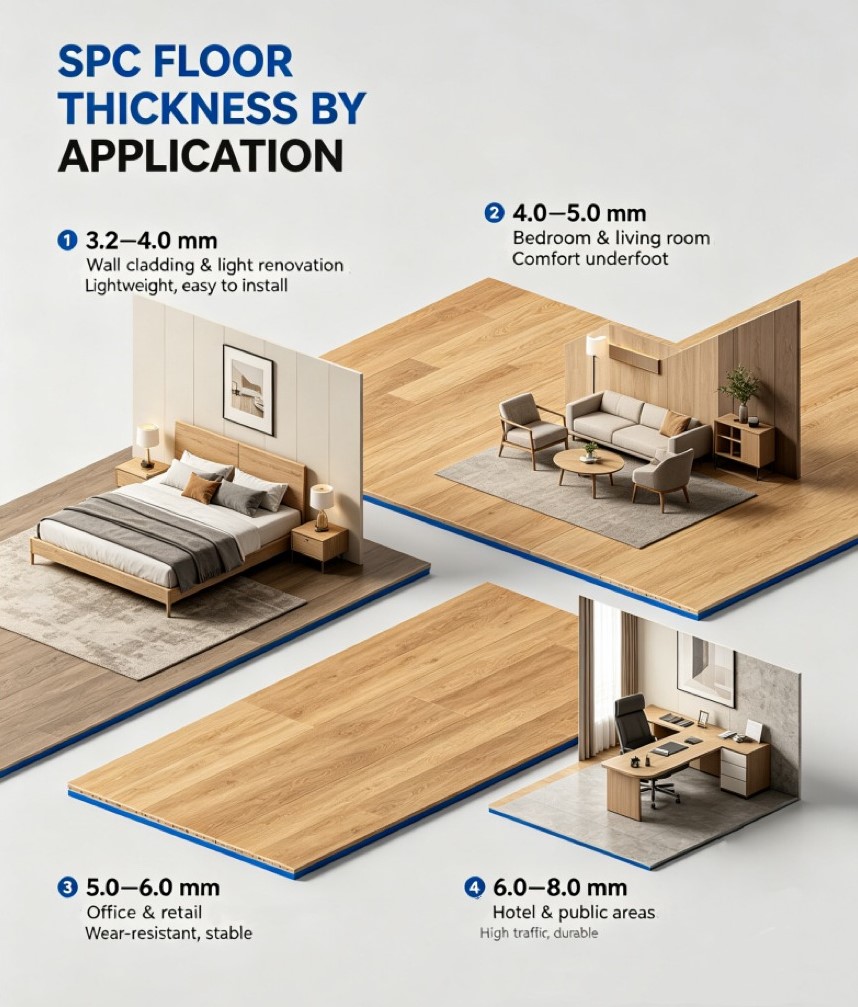
Each thickness serves a unique goal. Knowing these differences helps you pick the right product for your project.
| SPC Flooring Thickness | Main Advantages | Recommended Applications |
| 4mm SPC flooring | Low cost, light, easy to set up | Bedrooms, flats, rental homes |
| 6mm SPC flooring | Great balance of strength and comfort | Houses, offices, hotels |
| 8mm SPC flooring | Very stiff, resists heavy hits, feels solid | Big stores, busy buildings |
4mm SPC Flooring: A Practical Choice for Budget-Friendly Projects
4mm SPC flooring is a thin and light option. It is a top pick when you need to save money or want a simple installation.
Because it is light, moving the boxes is much easier. If your subfloor is flat and the room does not get too much traffic, 4mm SPC flooring will do a great job.
Common places to use it include:
- Guest bedrooms
- Small apartments
- Home offices
- Fix-up projects with low door clearances
Consider the fact that thin floors are less bouncy than thick planks. Thin floors do not cover up any inconsistencies in the underlying subfloor as much as thick planks do. If there are any inconsistencies in your underlying floor, this will affect the locking mechanism in the long term.
6mm SPC Flooring: The Balanced Option for Most Applications
Many people find 6mm SPC flooring to be the perfect middle ground. It mixes durability with a fair price and a nice feel underfoot.
Compared to the 4mm version, this extra thickness gives you:
- More stability across the room
- Better noise control
- A softer feel when walking
- Better protection against dropped items
This size works for almost any setting. You can use it in:
- Main living rooms
- Busy kitchens
- Professional offices
- Boutique hotels or cafes
For most homeowners, 6mm SPC flooring is the best investment. it gives you extra strength without making the installation too hard or expensive.
8mm SPC Flooring: Designed for Higher Performance Requirements
8mm SPC flooring is built for tough environments. The thick core makes the floor very stiff and stable.
It is the go-to choice for spots that face a lot of daily abuse, such as:
- Large corporate offices
- Busy shopping malls
- Public hallways
- High-end hotel lobbies
The perks of 8mm SPC flooring are clear:
- It handles heavy impacts very well
- It feels as solid as real stone or wood
- It supports very heavy furniture without stress
- It blocks out more sound when used with a good backing
However, you don’t always need the thickest plank. It costs more to buy and ship. It can also create height issues at doorways. If your space is small or quiet, a thinner option might actually be better.
Is Thicker SPC Flooring Always Better?
The short answer is no. The “best” thickness depends entirely on your specific needs.
A big mistake is looking only at the thickness and ignoring how the floor is built. You should look at several things at once:
- Foot traffic: Busy paths need a tougher build.
- The subfloor: Rough floors need a thicker, more forgiving plank.
- Your budget: Thicker usually means a higher price per square meter.
- The room’s use: A bedroom has different needs than a hotel lobby.
- Height limits: Sometimes a thick floor won’t let the doors swing open.
A 4mm SPC floor is plenty for a quiet bedroom. But for a busy shop, you will be much happier with 6mm or 8mm SPC flooring.
Which SPC Flooring Thickness Is Best for Different Projects?
To choose correctly, think about the daily life of the room.
Residential Applications
For a standard home, 4mm to 6mm SPC flooring is almost always enough. Bedrooms don’t see much action, so 4mm is a smart way to save. For kitchens and hallways where kids or pets run around, 6mm SPC flooring offers better peace of mind.
Commercial Applications
Business spaces need more muscle. Offices and shops should look at 6mm or 8mm SPC flooring. These areas deal with rolling chairs, heavy shelves, and constant walking, so the extra core strength is vital.
Wholesale and Large-Scale Projects
If you are a builder or a seller, you have to look past the thickness. You should check:
- The density of the core
- The thickness of the wear layer
- How well it resists water
- How easy the click system is to use
- The reliability of the supply chain
Good SPC flooring suppliers will offer a range of sizes to help you meet different market needs.
Factors More Important Than Thickness in SPC Flooring Quality
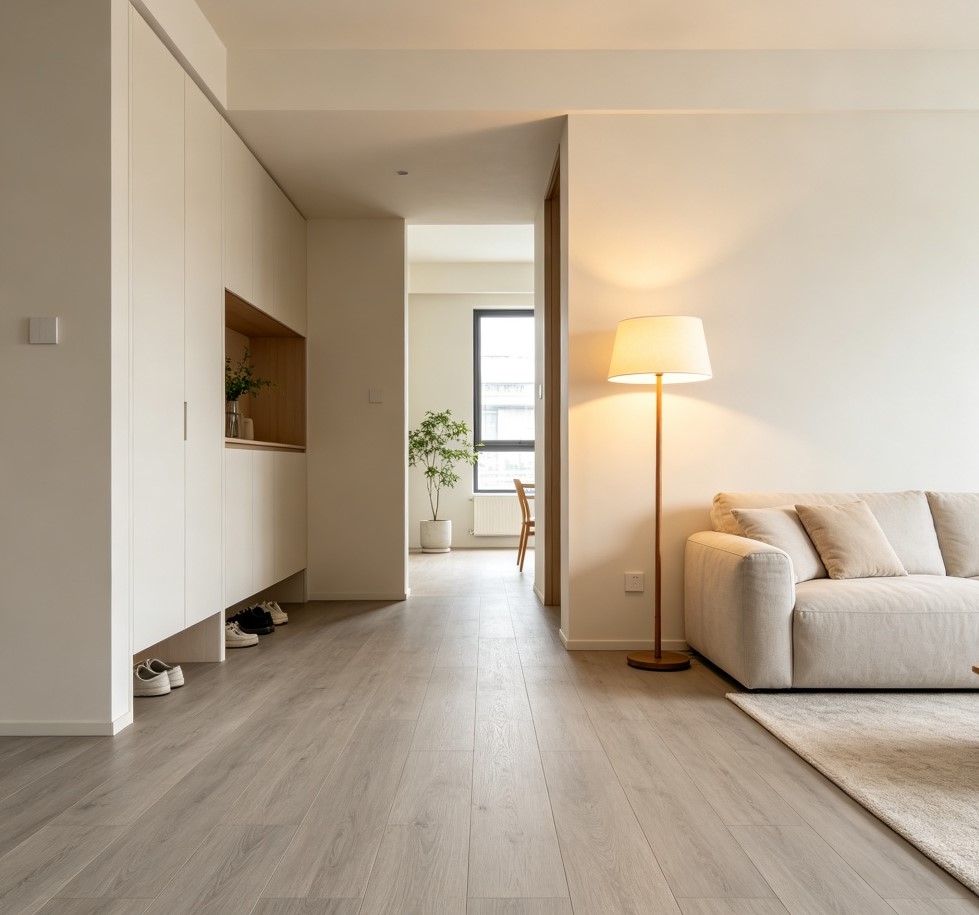
While thickness is easy to see, these other features define the quality of the floor.
Wear Layer Thickness
This is the clear shield on top. It stops scratches and stains. A thick wear layer is the real secret to a floor that stays looking new in a busy office.
SPC Core Density
The core is the heart of the plank. A dense core ensures the floor stays flat and does not warp when the weather changes or when heavy items sit on it.
Click Lock System
A high-quality locking system keeps the planks tight. This prevents gaps and makes sure the floor stays waterproof and beautiful for years.
Waterproof Performance
SPC flooring is waterproof and can easily handle water stains in both home kitchens and commercial settings.
About Foshan Sincere Building Materials Co., Ltd.
Foshan Sincere Building Materials Co., Ltd. is a reputable manufacturer of SPC flooring. We specialize in the production of quality floors for domestic, commercial, and heavy-duty construction projects.
Our professionals manufacture quality SPC floors which are waterproof, stable, and easily installed. With a wealth of experience in the manufacturing of SPC floors, we boast a vast selection of designs. We collaborate with our distributors and contractors to supply appropriate SPC floor designs.
If you are looking for SPC floor designs or particular thicknesses, we can help you get the most suitable SPC floor designs for your markets.
Conclusion
Thickness is an important part of SPC flooring, but it is not the only thing that matters. The right choice depends on your room, your traffic, and your budget.
For most houses, 4mm and 6mm SPC flooring provide great value. For commercial jobs that need to last, 6mm and 8mm SPC flooring are usually the better path.
Always look at the core density and the wear layer too. By checking the whole product, you will find an SPC flooring solution that lasts a long time.
FAQs About SPC Flooring Thickness
1. Is 8mm SPC flooring better than 6mm SPC flooring?
It depends on the room. 8mm SPC flooring is stiffer and great for very busy shops. However, 6mm SPC flooring is often a better value for homes and small offices.
2. What is the best thickness for SPC flooring?
There is no single “best” size. Homes usually do well with 4mm to 6mm. Commercial spaces with lots of people often need 6mm to 8mm for the best results.
3. Is 4mm SPC flooring durable enough for residential use?
Yes, it is. If your subfloor is flat and you choose a good wear layer, 4mm SPC flooring works perfectly in apartments and bedrooms.
4. Does thicker SPC flooring reduce noise?
Thicker planks feel more solid and can help dampen sound. However, the padding underneath the floor actually does most of the work for noise reduction.
5. What should buyers check besides SPC flooring thickness?
You should always look at the core density, the thickness of the wear layer, and the quality of the click system. Choosing a trusted SPC flooring supplier is also very important.


