
WPC Fence and the Best Siding for Harsh Weather
2026-08-14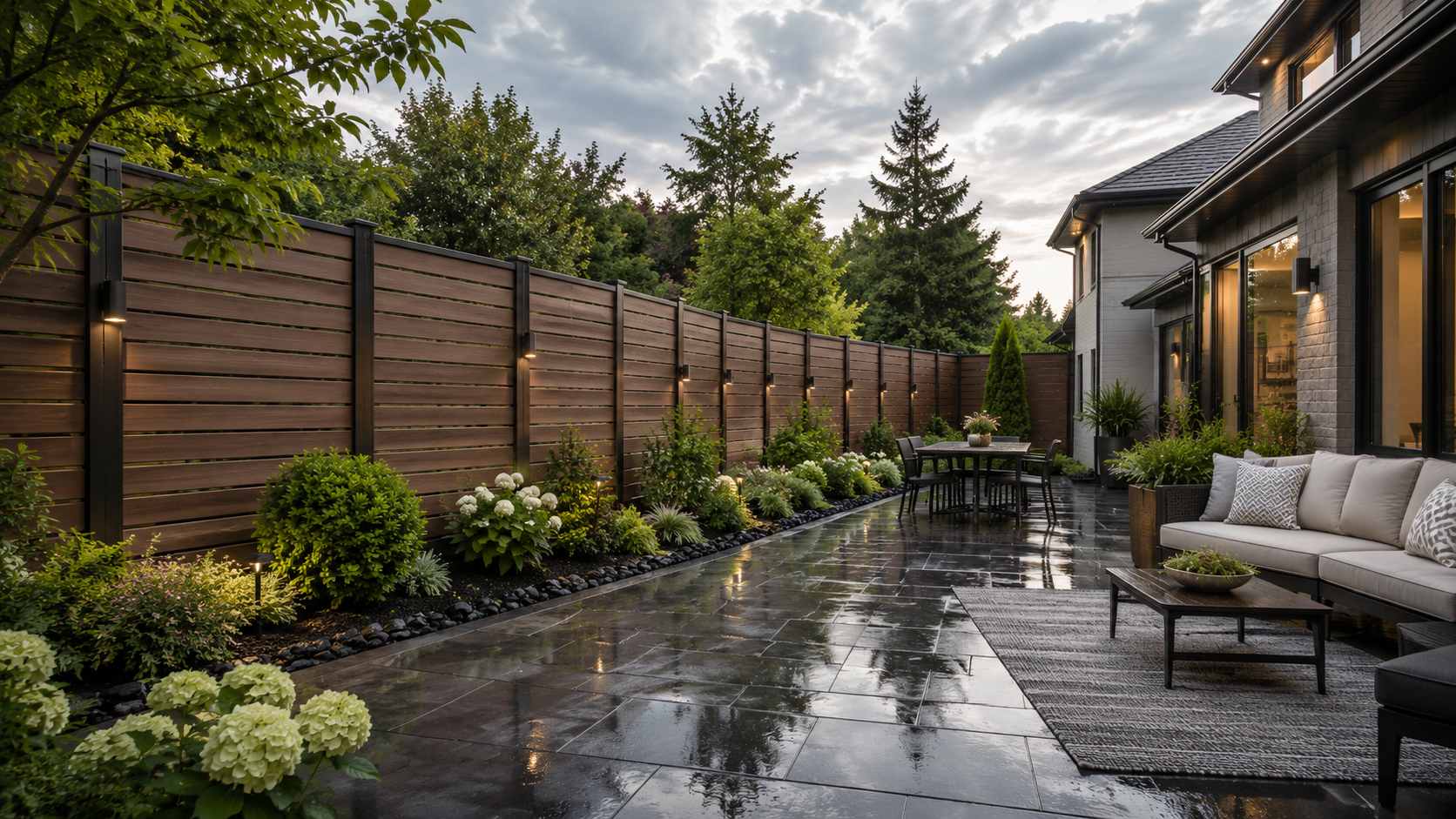
Exterior materials often fail because of steady wear, not one big storm. Rain seeps into joints. Sunlight weakens finishes. Salt attacks hardware. Seasonal movement loosens fasteners. The best siding materials for harsh weather must handle moisture, temperature shifts, decay, and basic care.
سياج من الخشب والبلاستيك المركب systems and WPC wall cladding get chosen when people want a wood look without the constant work of real timber. They use similar composite technology but fill different roles. Fence panels set boundaries. Composite siding finishes exterior walls. Choice depends on climate, structure, installation, and local building rules.
What Harsh Weather Demands from Exterior Materials
The durable exterior should function as an overall system, and not as separate panels. The flashing, ventilation, drainage, fasteners and the state of the substrate largely determine the longevity of the structure.
التحكم في الرطوبة
It may get forced inside the building through cracks. Slower drying in the tropics and coastal areas results in increased risks of mold growth, swelling, corrosion, and decay. Water-resistant characteristics allow the material to repel water from its surface as well as release the moisture that is stored behind the material.
Waterproof composite siding material is not very porous when compared to the solid wood. Nevertheless, moisture may still have an impact on its mechanical properties after some time of its contact with moisture. Water-resistant composite siding for the exterior wall must have proper drainage.
UV, Heat, and Seasonal Movement
Strong sunlight changes color and raises surface temperature. UV resistant wall panels use stable pigments and additives to slow aging. Yet every exterior finish shifts over time.
Cold climates bring freeze-thaw stress. Coastal sites add salt and wind pressure. The material needs proper framing, post spacing, fasteners, and expansion gaps. Temperature effects, moisture, UV resistance, freeze-thaw performance, biodeterioration, and fire behavior all matter when exterior WPC products are checked.
How WPC Performs Outdoors
Wood plastic composite mixes wood powder or plant fiber with polymer and processing additives. The mix keeps much of timber’s warm look while cutting direct water contact with the fiber.
Composite Structure and Surface Protection
Unlike natural wood, WPC fences do not usually have any tendency of decay, cracking, or attack from termites. But the effectiveness is dependent on the fiber content, polymer quality, additives, manufacturing processes, and other environmental conditions. Some studies show that fungi could easily go through the natural wood due to moisture and cracks present on its surface.
The co-extrusion of the product will provide protection in the form of a cap around the core. The cap would increase stain resistance, fade resistance, and cleaning capability of the façade, terrace, poolside, and roadside fences.
Natural wood can work well outdoors. It usually needs coating and repair. WPC fence panels mostly need washing rather than sanding and repainting. Mild detergent, water, and a soft brush are usually enough.
| مادة | Weather performance | Routine care | Main consideration |
| خشب طبيعي | Depends on species and coating | Regular staining or painting | Can warp, rot, or split |
| WPC fence and cladding | Strong moisture and decay resistance | Washing and inspection | Needs expansion and drainage details |
| Metal siding | Strong and non-combustible | Cleaning and coating checks | Salt can attack edges and fasteners |
| Fiber cement | Strong against heat and impact | Paint and joint inspection | Heavy panels need sound support |
| حجر مرن | Lightweight exterior finish | Cleaning and joint checks | Relies on substrate and adhesive quality |
No material wins every comparison. WPC composite siding fits projects that seek a wood-look finish, low upkeep, and less weight than masonry.
Choosing Materials for Different Climates
Img.Use of WPC Fencing in Restaurants.webp
Two buildings in the same city may face very different exposure. Selection should rest on the actual site, not a broad climate label.
Coastal and Humid Locations
Metal parts are subject to deterioration by salt even if the panels resist moisture. For a WPC fence in coastal areas, one needs rust-proofing fasteners, waterproof post bases, and design elements that prevent standing water. Rinsing will aid in salt removal.
For exterior walls, WPC wall cladding can create a lasting wood-look finish on villas, cafés, and resort buildings. Flexible stone is another choice when a thin, light stone look is needed. It can cut structural load and transport weight.
Hot, Sunny, or Cold Locations
In strong sun, capped WPC exterior panels and lighter colors can cut visible fading and heat buildup. Ventilation behind cladding helps release heat and moisture.
In freeze-thaw climates, meltwater must not collect at board ends, rails, or the bottom of a wall. Panels need room to move. Fasteners should not clamp them so tightly that expansion causes buckling. The chosen formula and installation guide must match the project’s temperature range.
Where WPC Fence and Wall Cladding Work Best
It is most effective when its purpose is defined. The fence is no substitute for a structural wall. Similarly, decorative facings do not function as a weather barrier underneath.
Residential and Landscape Projects
A WPC privacy fence is appropriate for moisture-prone backyard gardens, pool areas, courtyards, and other gardening boundaries where wood would require repeated painting. Wood-grain finishes can conceal equipment and nearby surroundings.
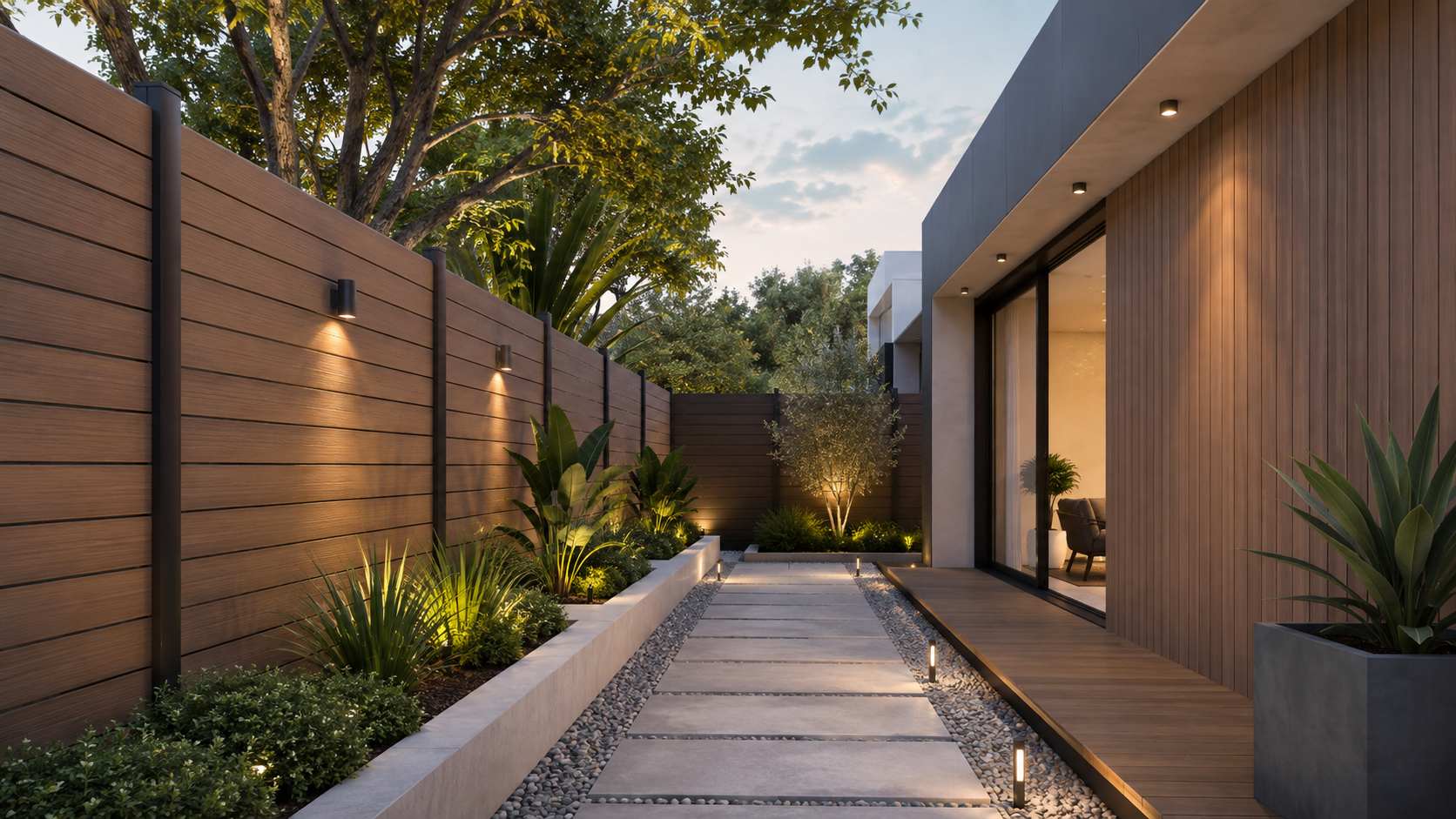
Outdoor WPC wall panelings are ideal for highlighting entryways, balconies, and covered patios. In many cases, the use of the panels on selected walls will add much more interest than using them on all walls.
Commercial and Hospitality Projects
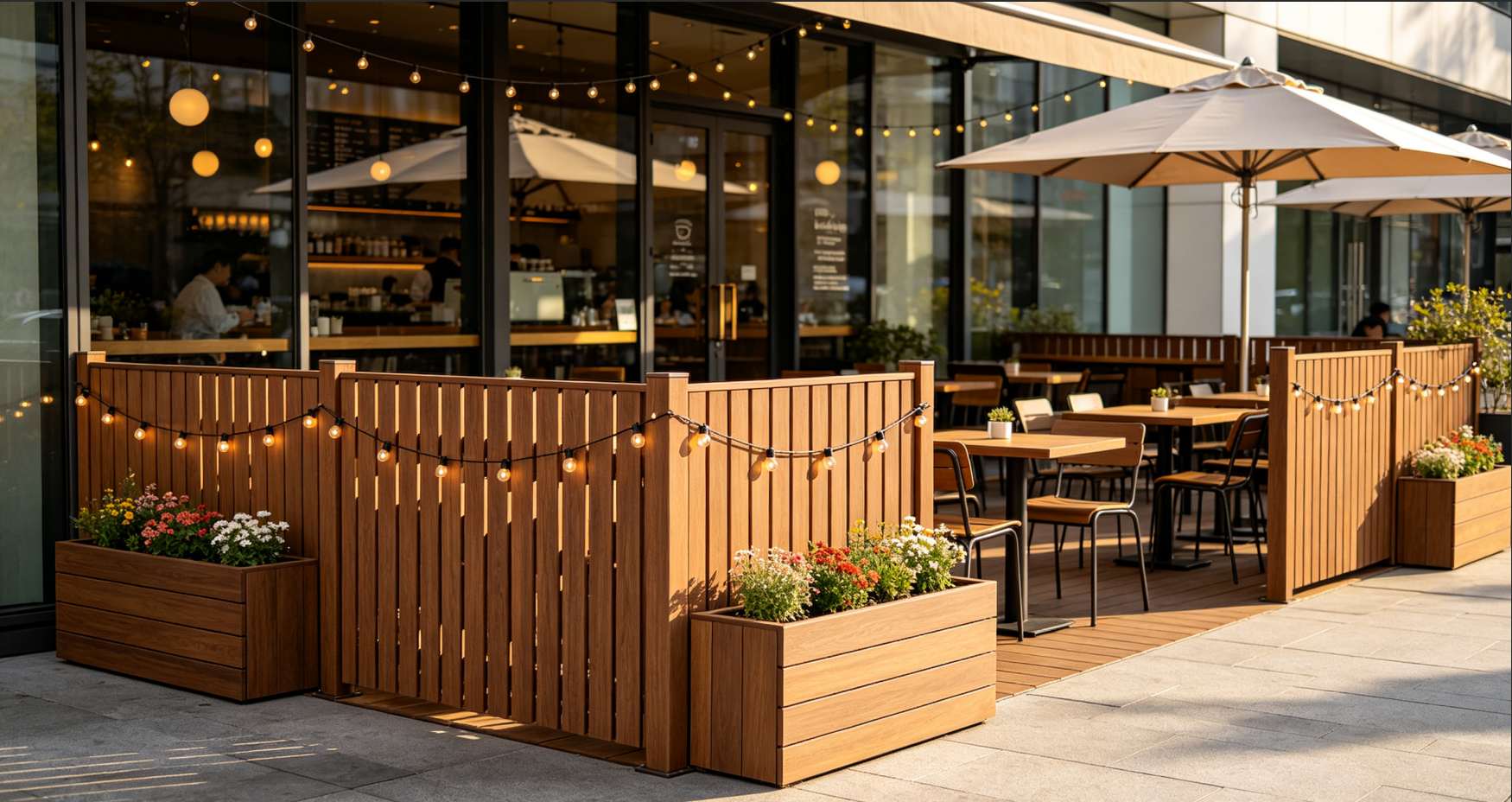
Restaurants, hotels, shops, and office courtyards need finishes that can be cleaned without frequent repainting. WPC fence panels can separate dining areas or hide service zones. Cladding adds warm lines beside concrete, glass, tile, or render.
Installation Details That Protect Service Life
Good material can still fail when water, movement, and wind loads are ignored. Before ordering, the supplier and installer should review elevations, openings, post foundations, and the accessory list.
Key checks include:
- Use flat, stable framing or a properly prepared substrate.
- Keep lower edges clear of soil, mulch, and standing water.
- Follow the stated expansion gaps at ends, joints, and corners.
- Select fasteners for the local moisture and salt exposure.
- Add flashing above doors, windows, and horizontal transitions.
- Provide airflow and drainage behind cladding where required.
- Approve color and texture from a daylight sample.
For fence projects, posts and bases deserve special attention. A moisture-resistant panel cannot make up for a loose foundation or corroded connection.
Foshan Sincere Building Materials Co., Ltd. as a WPC Fence Supplier
Established in 2007, شركة فوشان سينسير لمواد البناء المحدودة is a provider of indoor and outdoor building material for walls and floors such as WPC fencing, outdoor WPC products, flexible stones, tiles, wall panels and flooring among others. It exports to South America, Europe, Southeast Asia, the Middle East, and Africa. The company has registered its brand name in 18 countries and ISO 9001, ISO 14001, ISO 45001 and AEO advanced certifications.
WPC fence buyers can discuss more than the panel itself. Reviewing them before production helps buyers confirm accessories, packing, visual consistency, and installation needs.
Useful information for the project inquiry would include the country of installation, the total area, height of the fence needed, site conditions, preferred finish, delivery times, and test/certification information. This will ensure that the supplier has the ability to provide an accurate material list and quotation.
خاتمة
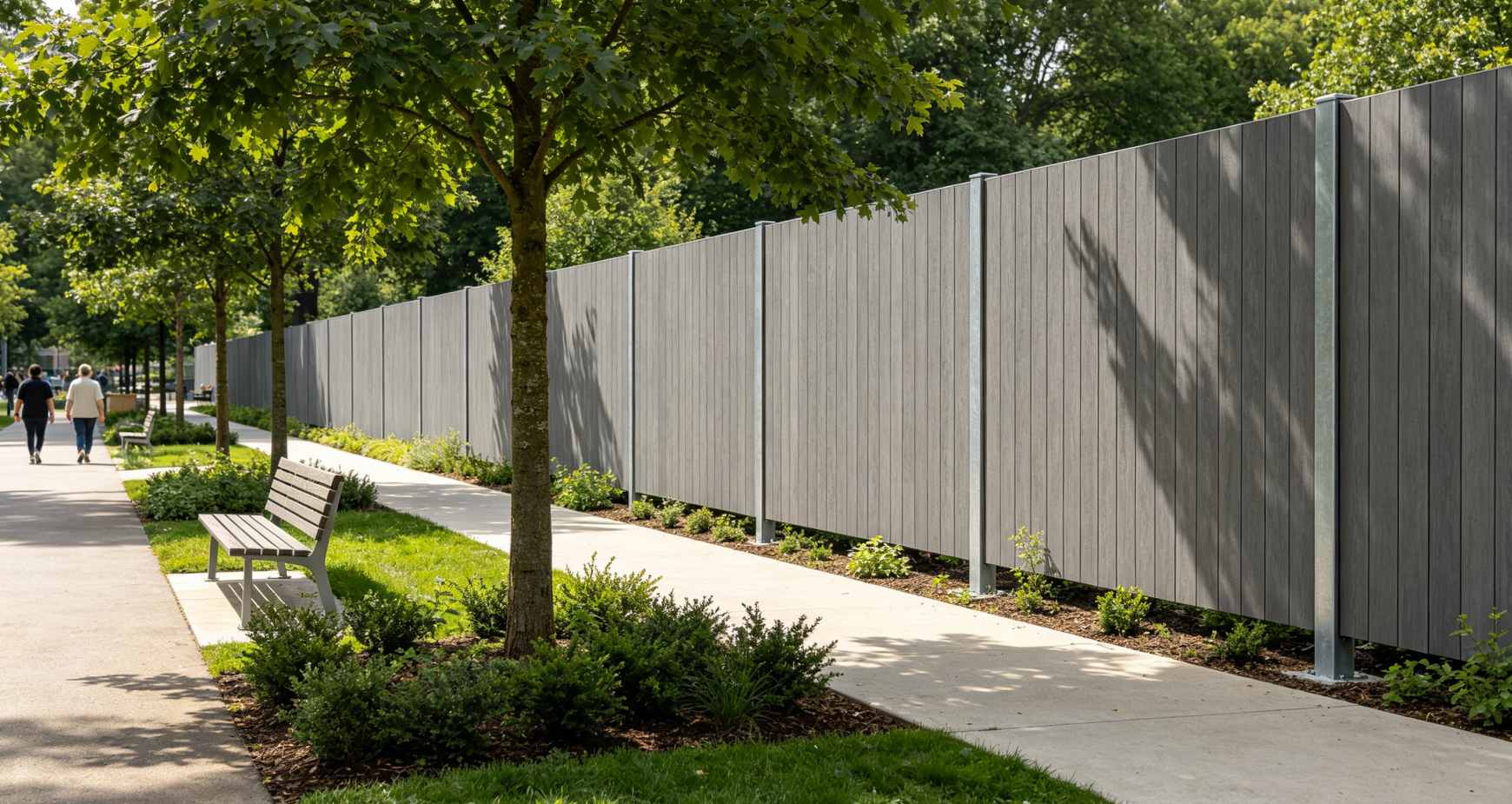
WPC fence panels and WPC wall cladding would be good options for extreme weather conditions where water-resistant properties, wood-like look, and easy maintenance are key considerations. They do not replace all exterior materials. Coastal projects may require upgraded fasteners, while cold climates require careful drainage considerations.
The optimal choice is made by the appropriate combination of the above factors. Before comparing prices per square meter, it is worth comparing samples, technical information, accessories, and vendor support.
الأسئلة الشائعة
Can WPC fence withstand bad weather?
Yes. A well-designed WPC fence will cope with rain, high humidity, sun exposure, and seasonal variations in temperature better than an untreated wooden fence. Performance is also dependent on the design, post structure, fasteners, drainage, and wind conditions.
What is the best siding material for rainy climates?
There is no single answer for every building. WPC wall cladding, fiber cement, flexible stone and PU stone can all perform well as part of a drained wall system. For a wood appearance with less routine coating, WPC composite siding is a strong candidate.
How should a WPC fence supplier be evaluated?
Check material composition, surface treatment, test data, color consistency, accessories, packing, installation guidance, and experience with the destination climate. Review a sample and complete bill of materials before confirming a project order.


