

Outdoor WPC Decking Gaps: A Practical Installation Guide
2026-08-28
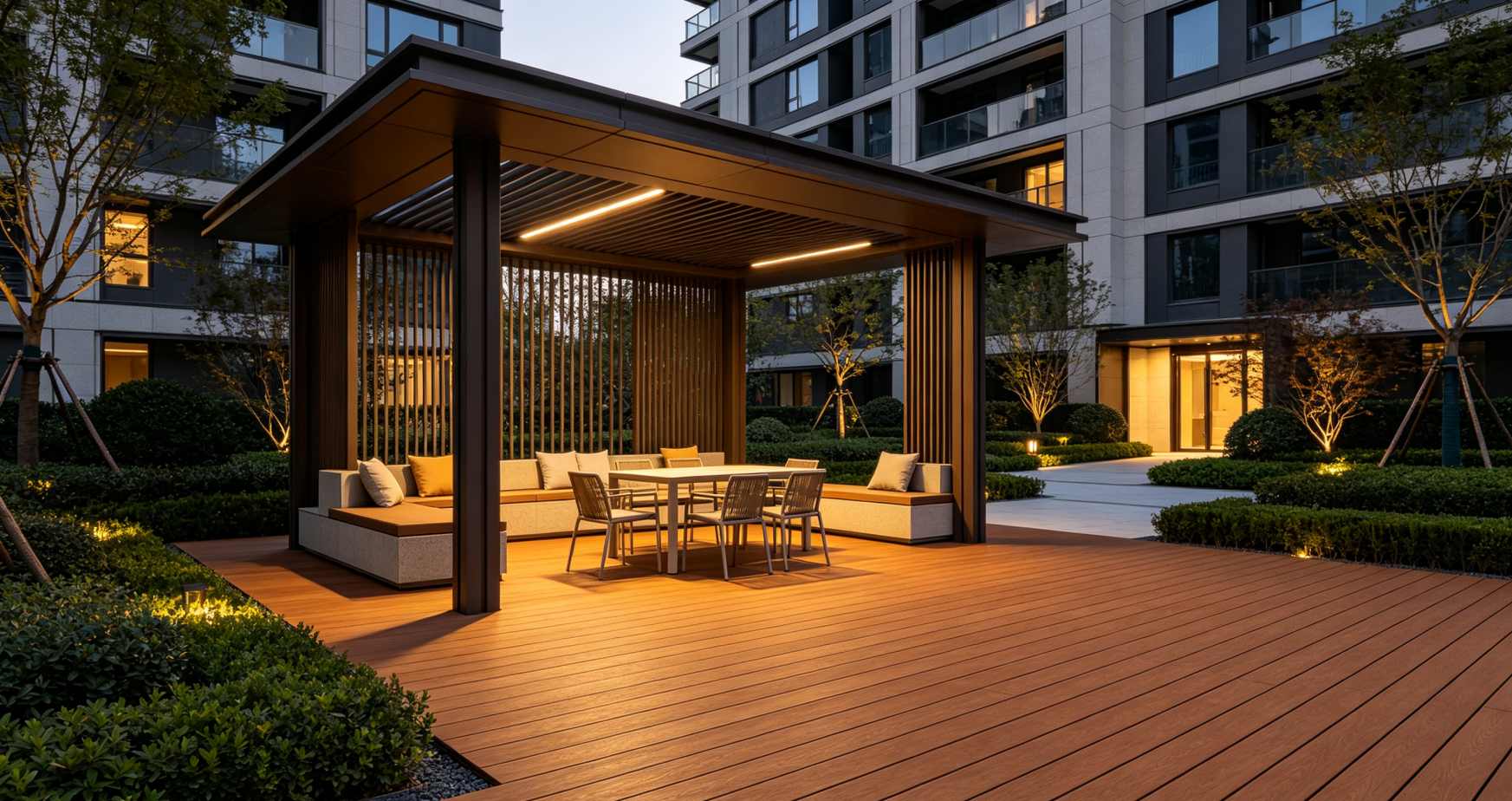
Outdoor WPC flooring handles rain, traffic and changing weather, but it is not dimensionally fixed. Heat makes composite boards grow, while cooler conditions let them contract. Across a long deck, that movement can close joints, press boards against walls or leave uneven seams. Correct WPC decking expansion gap planning matters as much as drainage and fastening.
There is no single gap for every project. Board composition, length, installation temperature, clip system and nearby fixed structures all affect the answer. The useful question is not simply “How many millimeters?” but “Where does the board need room to move?”
Why Outdoor WPC Flooring Needs Expansion Gaps
أرضيات خشبية مركبة من الخشب والبلاستيك combines wood-based material with plastic resin and additives. It offers consistent dimensions and lower routine maintenance than untreated timber, but temperature still affects the board. Movement is often more noticeable along its length than across its width.
A well-planned outdoor WPC decking installation leaves space for thermal movement, drainage and ventilation. Side gaps let water pass through, end gaps give long boards room to move, and perimeter gaps keep decking from pushing into walls or columns.
When spacing is too tight, board ends can press together, edges may push against masonry, and seams can become irregular. Too much spacing is not ideal either; wide gaps collect debris and look unfinished. Keeping the gaps clear is also important because trapped leaves, seeds and dirt can restrict drainage.
How Much Expansion Gap Should WPC Decking Have?
For early planning, many composite decking systems use a few millimeters between adjacent boards and a larger clearance at fixed structures. Exact figures must still come from the installation guide for the selected board and fastening system. Published installation requirements vary between products, which is why one universal number can create problems on site.
| Gap location | Practical planning range | Main purpose |
| Side-to-side between boards | about 3–6 mm | Drainage and width movement |
| End-to-end butt joint | about 3–6 mm | Lengthwise thermal movement |
| Board end to wall or post | about 6–13 mm | Clearance from fixed structures |
| Large deck zones | Project-specific | Control movement on long runs |
These figures work as planning ranges rather than universal specifications. Some hidden clip systems control side-to-side composite decking spacing automatically, while butt joints and wall clearances still need careful measurement. Current manufacturer guidance shows common side and end gaps around 3–5 mm, with larger clearance where decking meets a solid structure.
Temperature Changes the Required End Gap
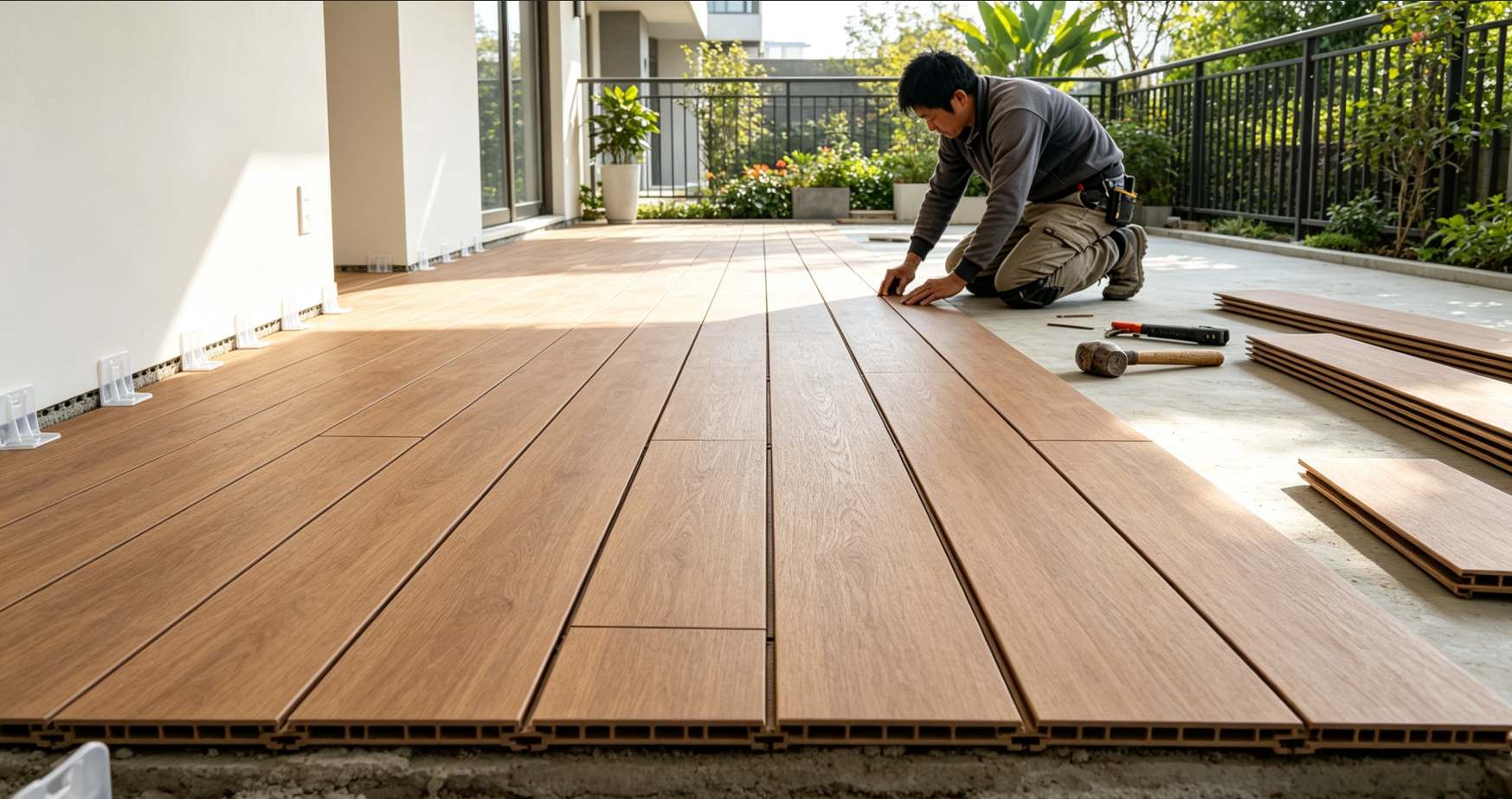
WPC decking installation temperature matters because the board is already expanded or contracted when it is fixed. A board installed on a cold morning has more potential to grow when summer heat arrives. A board fitted during hot weather starts closer to its expanded condition. Published composite installation instructions therefore commonly increase end spacing in colder conditions.
Cold-Weather Installation
Below roughly 10°C, end-to-end clearance deserves extra attention. Composite installation guidance commonly calls for a larger gap in colder weather than at warmer installation temperatures. For preliminary planning, 5–6 mm is a useful range to check against the supplier’s chart, not a replacement for the product-specific requirement.
Store boards flat and let them reach site conditions before final cutting. Use the same spacer at each joint to keep seams consistent. Long runs become difficult to correct when some joints are nearly closed while others are noticeably wider.
Mild and Hot-Weather Installation
At moderate temperatures, many systems use end gaps around 3–5 mm. During hot-weather installation, the initial end gap may be smaller because the boards are already warm and expanded. Boards should never be installed tightly together; the published warm-weather minimum still applies.
Direct sun also matters. Deck boards can become considerably hotter than the surrounding air, especially on open, unshaded surfaces. A sunny rooftop may therefore behave differently from boards measured in shaded storage.
| Installation condition | Gap approach |
| Below 10°C | Check the larger end-gap value in the supplier guide |
| 10–30°C | Use the system’s standard end-gap range |
| Above 30°C or strong sun | Use the warm-weather minimum; do not close joints |
Board Length Matters More Than It Looks

Thermal movement accumulates along a board. A 4 m board has more potential total movement than a 2 m board made from the same material under the same temperature change. Long WPC decking board runs therefore need careful end planning.
Look at the full run rather than treating every joint as an isolated 3 mm or 5 mm detail. Several restrained butt joints can build up movement. Breaker boards, transition lines or shorter runs can make large areas easier to manage.
Butt joints also need proper support and fastening. A correctly sized expansion gap cannot correct an unsupported seam or weak substructure. Installation guidance consistently treats spacing, framing and fastening as connected details rather than separate tasks.
Expansion Gaps by Installation Area
Different outdoor areas expose WPC flooring to different combinations of heat, water and structural restrictions. A shaded balcony and an open pool deck should not be detailed in exactly the same way. Outdoor WPC flooring is commonly used on balconies, terraces, gardens, patios, pool surrounds and commercial outdoor spaces, but site conditions should guide the installation method.
الشرفات والأسطح
Balconies often have walls on several sides, making perimeter clearance critical. Keep board ends away from masonry, parapets and door thresholds, and keep drainage outlets open.
Rooftops add strong solar exposure, wind and waterproofing details. Long uninterrupted runs deserve extra review, and the support frame must not block roof drainage or future access points.
Garden Decks and Patios
Garden WPC decking often has more open edges but longer continuous runs. Keep the substructure away from standing water and leave airflow below the deck. Around planters, columns, steps or outdoor kitchens, treat each solid object as a perimeter condition instead of cutting boards tightly around it.
This detail is easy to miss. A board that looks neatly fitted against a planter in cool weather may have nowhere to move after hours of summer sun.
Pool Surrounds and Wet Areas
Poolside WPC decking needs clean side gaps so splash water can drain. Leaves, sand and debris should not pack the joints. Surface grip also matters where people regularly walk with wet feet. Sincere’s outdoor WPC flooring range includes water-resistant and anti-slip characteristics suited to outdoor floor applications.
A neat 3–6 mm joint only works if it stays open, so routine cleaning should include gaps around drains and high-splash zones.
Common WPC Deck Installation Mistakes
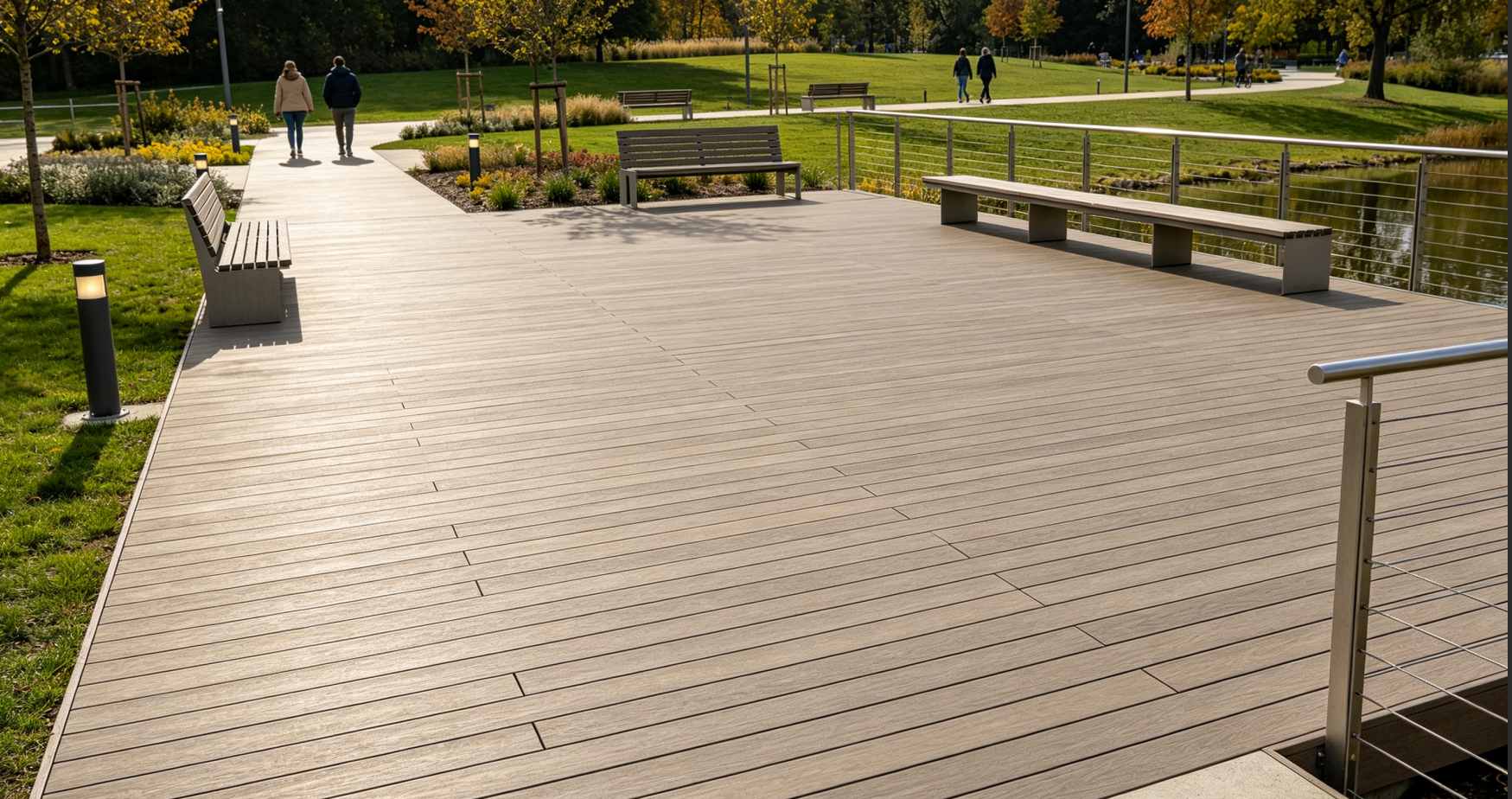
Many spacing problems begin during layout. Common errors include:
- using one gap size without checking installation temperature;
- cutting boards tightly between two walls;
- ignoring extra movement on longer boards;
- letting construction waste fill drainage gaps;
- forcing the final rows into place;
- mixing clips or fasteners that create uneven spacing.
Keep the WPC flooring installation guide on site before the first board is fixed. Measure the actual board length, check the installation temperature and mark fixed objects before cutting. Small layout corrections are far easier than lifting a finished deck.
Foshan Sincere Building Materials Co., Ltd. as an Outdoor WPC Floor Supplier
شركة فوشان سينسير لمواد البناء المحدودة، founded in 2007, supplies indoor and outdoor wall and floor materials for international projects. Its range includes outdoor WPC flooring for applications such as gardens and balconies, with features including water resistance, wear resistance, wood-look finishes and anti-slip performance.
The company serves markets across South America, Europe, Southeast Asia, the Middle East and Africa and holds ISO 9001, ISO 14001 and ISO 45001 certifications.
For distributors, contractors and project buyers, samples, application references and direct technical communication are useful before ordering. Confirming board dimensions, WPC decking spacing requirements, clip details and installation conditions before shipment can prevent costly changes on site.
خاتمة
The right outdoor WPC flooring expansion gap is not one universal number. Side spacing, end joints and wall clearances perform different jobs, while installation temperature and board length change the movement that must be allowed.
As a working approach, 3–6 mm is a common planning range for board joints, with a larger 6–13 mm clearance near fixed structures. The exact figures should always match the selected WPC decking system. Cold-weather installation generally needs more end allowance than warm-weather installation, while long runs, rooftops, enclosed balconies and wet areas need closer attention.
Good spacing helps a deck drain properly, move without pressure points and keep straighter joints through seasonal changes.
FAQs About WPC Decking Expansion Gaps
How much gap should I leave between WPC decking boards?
Many outdoor composite systems use roughly 3–6 mm between boards, but the correct WPC decking spacing requirement depends on the board profile, clips and installation temperature. Use the supplier’s installation chart for the final figure.
Does WPC decking expand in sunlight?
Yes. Heat causes WPC board expansion and contraction, and decking exposed to direct sun can become warmer than the surrounding air. Open terraces, rooftops and other unshaded decks therefore need careful temperature checks during installation.
Should WPC decking touch a wall?
No. Outdoor WPC flooring should not be cut tightly against a wall, post or other fixed object. A perimeter expansion gap gives the board room to move and also supports drainage around edges.
Does board length affect the WPC decking expansion gap?
Yes. Longer boards can accumulate more total lengthwise movement under the same temperature change. Long runs should be planned with correct butt joints, fixed-object clearance and, where appropriate, transition or breaker-board details.


