
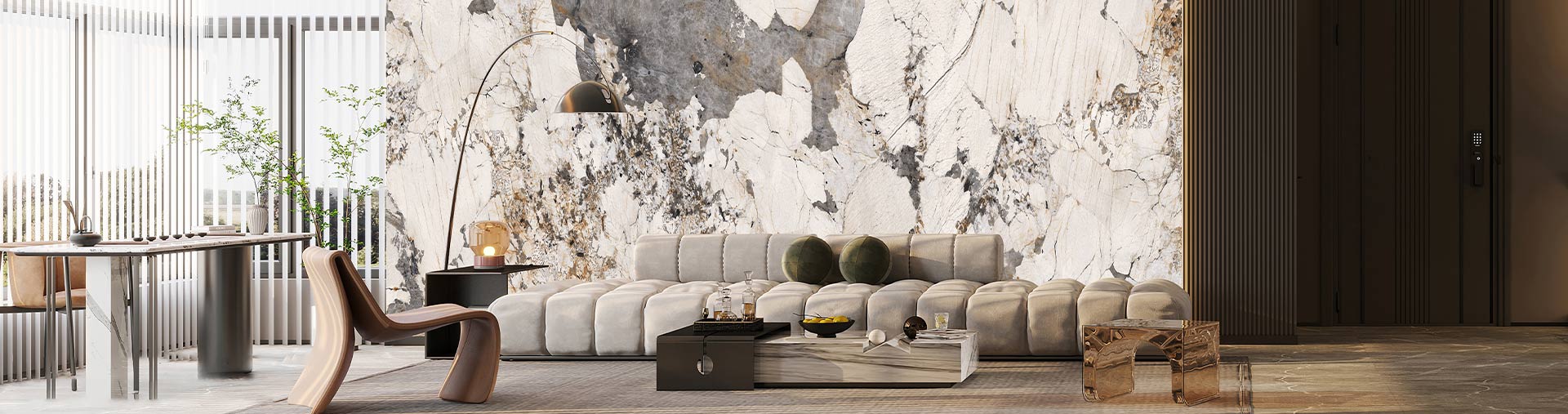
Why Villas Choose Flexible Stone Exterior Walls
2026-09-29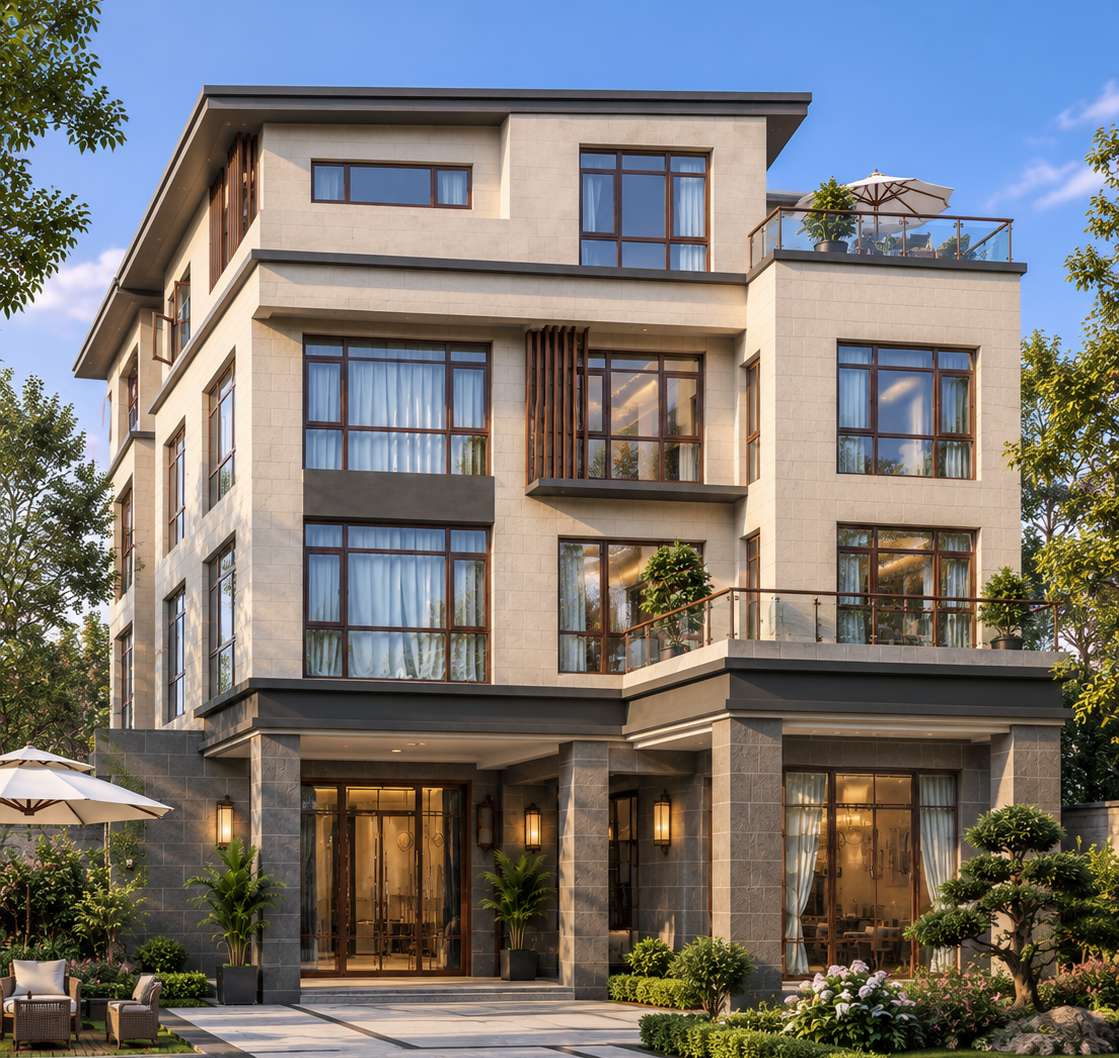
Гибкий камень has turned into a smart pick for villa exterior walls. It delivers a stone-like look without the heavy weight, tough handling, and stiff limits that come with thick masonry. For a villa owner the choice goes beyond looks. It also covers wall load, weather exposure, details around windows, repair work, and how the facade will hold up after several wet and hot seasons.
What is flexible stone for villa exteriors?
Flexible stone is a thin decorative wall finish. It starts with a textured mineral surface that bonds to a flexible backing. The material can bend over gently curved surfaces. Workers can cut it on site with everyday tools. Unlike a thick stone slab, it moves with small wall shifts instead of fighting them like a brittle layer.
For outdoor use the material still needs a proper backing, exterior adhesive, sealed joints, and a solid base. A decorative sheet by itself cannot fix damp masonry or poor drainage. The finish only works well when the wall underneath is ready and dry.
Why are more villas choosing flexible stone?
The short answer is clear. Flexible stone mixes a premium stone look with lower wall weight and simpler detailing. It fits renovation jobs where the old structure cannot carry thick stone cladding. It also cuts down on hard work around openings, corners, and curved design features.
Stone appearance without a heavy facade
Natural stone can pile on a lot of dead weight. This happens especially when a villa uses thick pieces across several walls. Flexible stone stays much thinner. Transport, lifting, and handling become easier. This matters a lot on a renovation where the original wall was built for paint or render, not masonry.
The lighter finish also lets installers work from smaller scaffolds. Fewer workers are needed to move each piece. The chance of cracked corners during handling drops as well. Owners notice the difference right away when the crew can finish the job with less strain and less risk.
Better fit for curved and detailed architecture
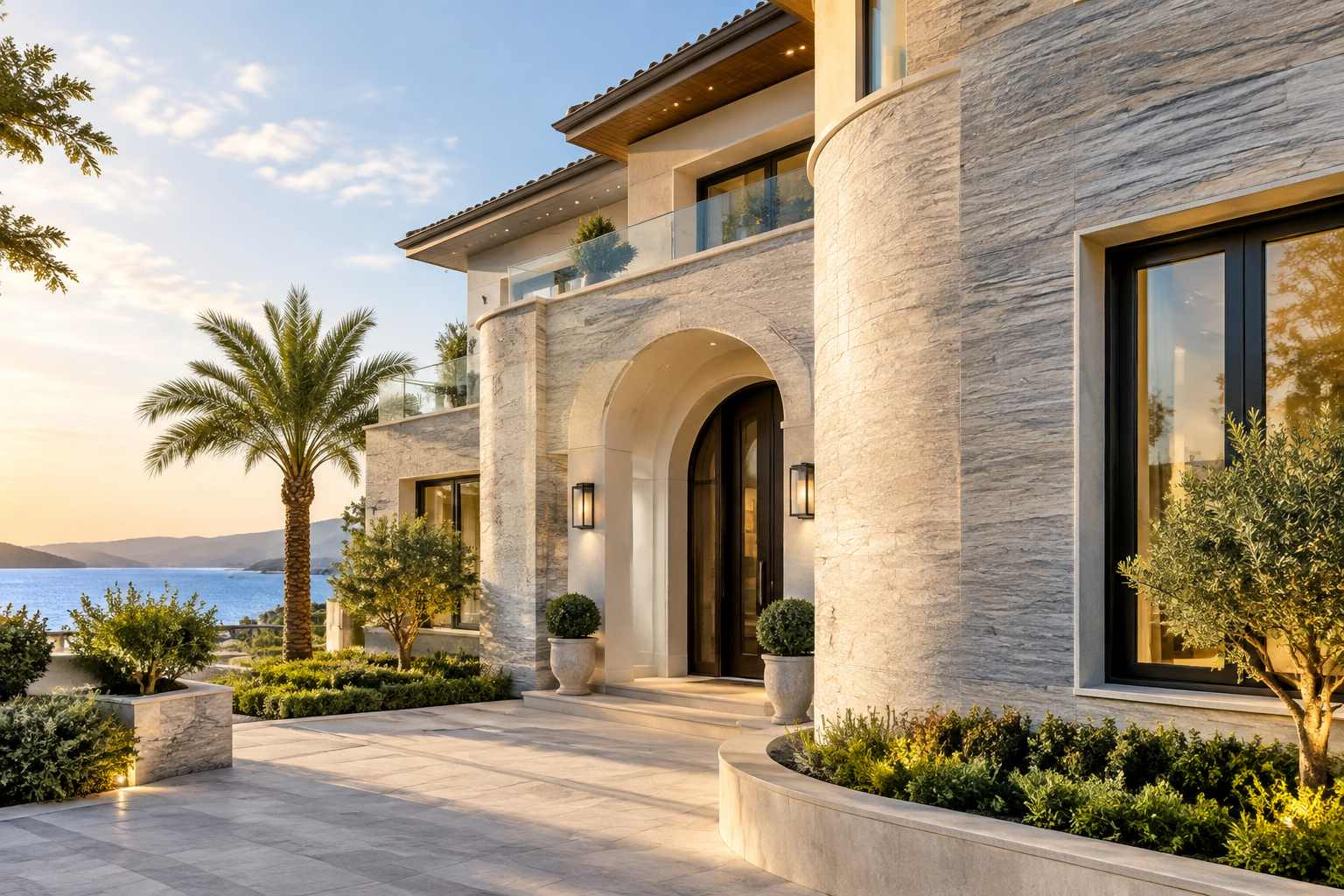
Villa elevations often show round columns, arched entryways, bay windows, and stepped parapets. Rigid stone forces many small cuts and visible joints in these spots. Flexible stone can follow a gentle curve. This creates a more continuous pattern across the facade.
Designers often place it on entrance columns and feature walls for this reason. They do not cover every surface with the same texture. A careful stone band around a doorway can look more real than a heavy cladding system full of awkward joints. The result feels planned and polished rather than forced.
Faster renovation with less demolition
On a repainting project, removing the old finish can create dust, noise, and disposal costs. If the existing render is stable, the wall may only need cleaning, leveling, priming, and localized repair before the new finish is installed.
That does not mean every wall is ready. Hollow render, active leaks, salt deposits, and loose paint must be dealt with first. Flexible stone follows the condition of the substrate; it does not hide a structural or moisture problem for long.
Easier handling at openings and corners
Windows and doors are where exterior cladding projects often lose time. Flexible stone can be trimmed around frames and bent or carefully formed at outside corners, reducing the number of narrow offcuts.
The clean result depends on planning. Installers should dry-lay the pieces, keep the pattern aligned at the sill and head, and use compatible corner detailing. A random cut beside a window can make an expensive facade look improvised.
A practical option for hot, wet, and coastal climates
Villa facades face repeated wetting, strong sun, temperature changes, and airborne dirt. Flexible stone is attractive in these conditions because a thin finish can accommodate minor movement better than a rigid veneer, provided the adhesive and protective coating match the exposure.
Coastal projects need extra care. Salt, wind-driven rain, and metal fasteners can shorten the life of a facade if the system is not specified for the site. Ask for exterior test data, installation limits, and maintenance instructions instead of relying on a color sample.
Flexible stone vs natural stone for a villa facade
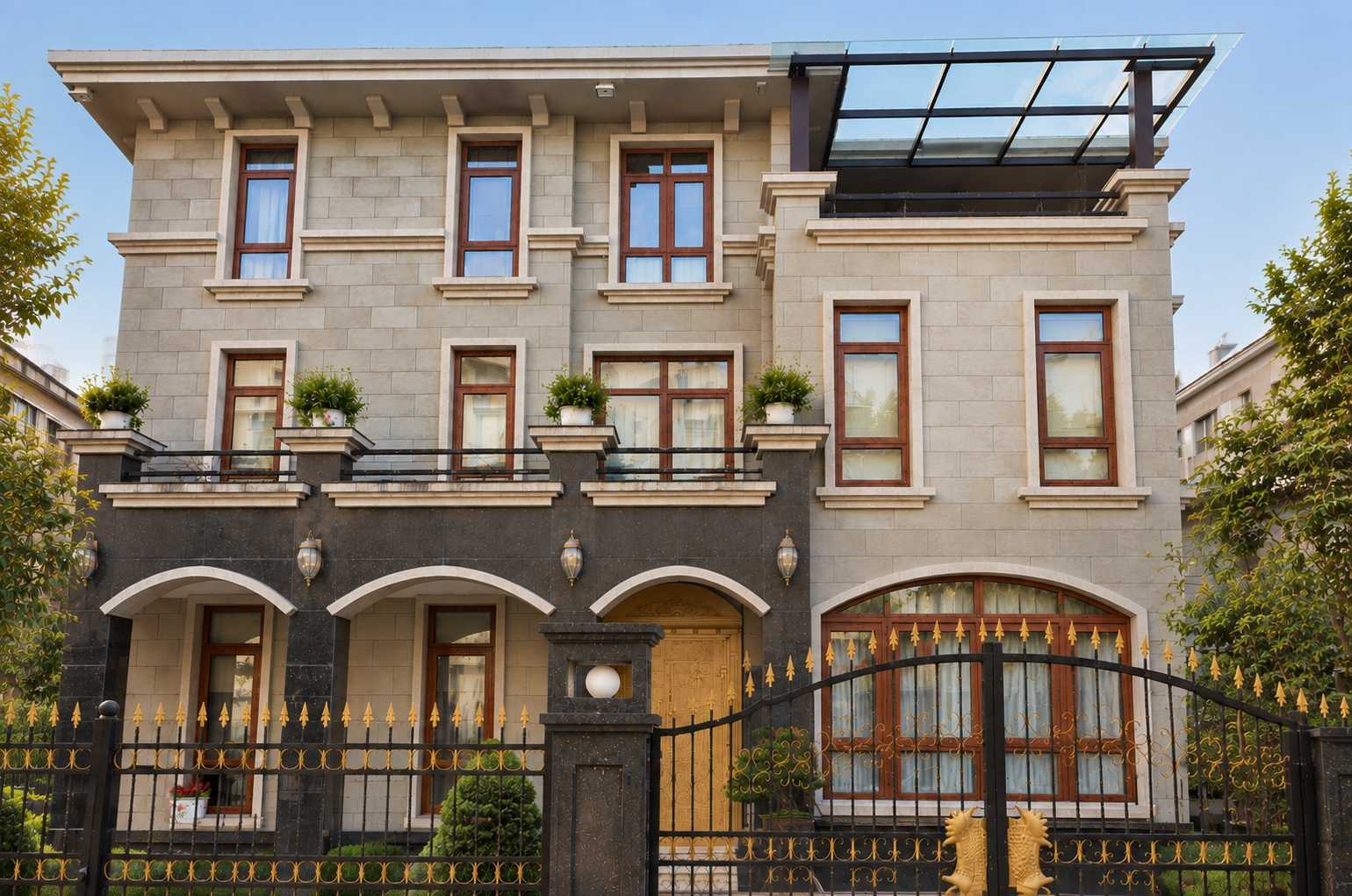
The right choice depends on the building and the project schedule. Natural stone remains valuable for monumental work and very high-impact areas. Flexible stone often makes more sense when the wall needs a lighter, faster, or more adaptable finish.
| Decision point | Гибкий камень | Natural stone cladding |
| Нагрузка на стену | Low compared with thick slabs | Higher; structure may need review |
| Curved details | Can follow gentle curves | Requires shaped pieces or many cuts |
| Обработка сайта | Rolls or light sheets are easier to move | Heavy pieces need careful lifting |
| Renovation speed | Often faster after substrate preparation | More setting, cutting, and anchoring work |
| Joint planning | Thin joints can be laid in a continuous pattern | Larger joints and movement details are common |
| Обслуживание | Check coating, joints, and bonded areas | Check anchors, joints, and stone movement |
How should flexible stone be installed outdoors?
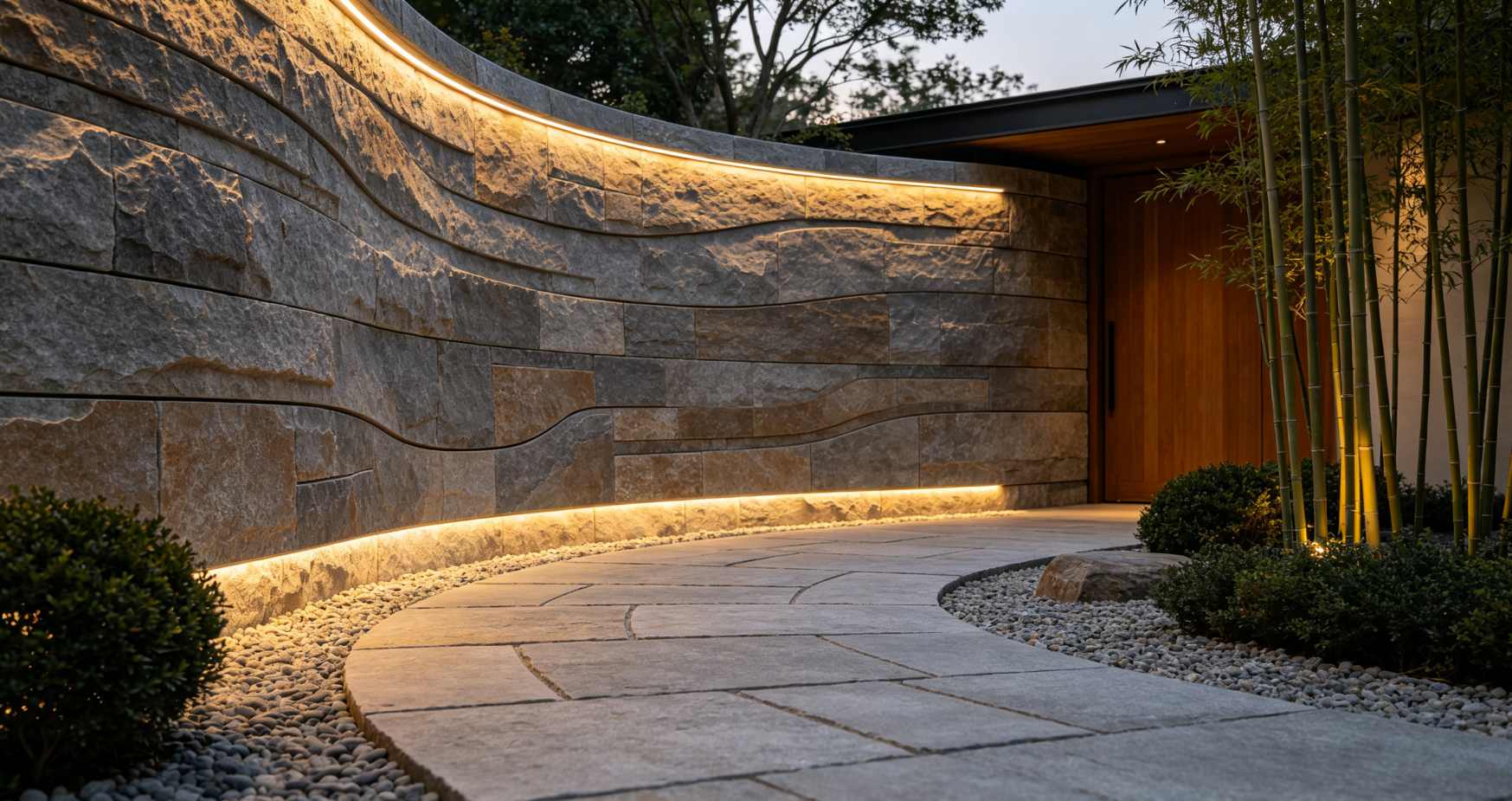
Exterior flexible stone installation is a system, not a single product. A reliable sequence looks like this:
- Inspect the wall.Check for hollow render, cracks, rising damp, leaks, and weak paint. Mark areas that need removal or repair.
- Prepare the surface.Clean dust and grease, level sharp ridges, and allow repair mortar to cure. The surface should be dry and stable.
- Plan the layout.Start from the most visible elevation. Dry-fit around windows, corners, plinths, and service penetrations before applying adhesive.
- Use the specified adhesive.Exterior-grade adhesive must match both the substrate and the flexible stone backing. Apply it evenly; missed contact points can create hollow areas.
- Press and align each piece.Work from the reference line and keep the pattern consistent. Wipe adhesive from the face before it skins over.
- Seal vulnerable details.Treat joints, top edges, sills, corners, and pipe openings according to the system instructions so rain cannot enter behind the finish.
- Protect and inspect.Keep the wall dry during curing. Check for lifted edges, open joints, stains, and pattern breaks before scaffolding is removed.
What goes wrong when installation is rushed?
Most failures start behind the visible surface. A damp wall can push salts into the finish. Uneven adhesive can leave voids where water sits. An unsealed parapet edge can send rain behind the cladding. These problems may appear months after handover, when the installer is no longer on site.
What should villa owners check before buying flexible stone?
Do not compare samples by color alone. Request a written product and installation file covering:
- exterior application limits and recommended climate;
- sheet thickness, size tolerance, and backing construction;
- water absorption or water-resistance test information;
- adhesion, weathering, freeze-thaw, and UV-related data where relevant;
- compatible primer, adhesive, joint treatment, and protective coating;
- batch shade control and replacement-piece policy;
- cleaning method and expected maintenance intervals.
Sample boards should be viewed outdoors at different times of day. A warm indoor light can hide shade variation that becomes obvious on a sunlit facade.
For a villa renovation, measure each elevation separately. Record windows, doors, balconies, columns, and areas that will remain painted. This produces a better material allowance than multiplying the total floor area by a single percentage.
Choosing a reliable flexible stone supplier
Foshan Sincere Building Materials Co., Ltd. has supplied architectural surface materials since 2007, including flexible stone and wall finishes for overseas markets. Its public company information describes ISO9001, ISO14001, and ISO45001 management certifications. Buyers can review the company background through the Foshan Sincere Building Materials company profile and compare related flexible stone applications. For projects that combine facade and interior finishes, the supplier also provides wall panel solutions and other building surface products.
The practical test is the quotation package: clear specifications, sample approval, packing details, production lead time, inspection records, and installation guidance. Those documents make it easier for a distributor, designer, or villa contractor to control risk from sample to final wall.
Заключение
More villas are choosing flexible stone because it answers several project problems at once: lower wall weight, easier work around curves and openings, faster renovation, and a convincing stone finish. Its performance still depends on the wall condition, exterior adhesive, edge sealing, and site workmanship. When the full system is specified and inspected, flexible stone can give a villa a durable facade with fewer handling and detailing constraints than heavy stone cladding.
Часто задаваемые вопросы
Is flexible stone suitable for exterior villa walls?
Yes, when the product is rated for exterior exposure and installed on a sound, dry substrate with compatible adhesive, sealed details, and the specified protective finish.
Does flexible stone look like real stone?
High-quality flexible stone uses a textured mineral surface and varied patterns to create a stone-like appearance. Viewing approved samples outdoors is the best way to judge color and texture.
Can flexible stone be installed over old render?
It can be installed over old render only when the render is firmly bonded, clean, level, and free from moisture problems. Hollow or cracked areas must be repaired or removed first.
Is flexible stone better than natural stone for every villa?
No. Natural stone may suit heavy monumental designs, while flexible stone is often a better fit for curved details, lighter renovation walls, and projects with tighter handling or installation limits.
What should a buyer ask a flexible stone supplier?
Ask for exterior test data, substrate and adhesive requirements, batch control, packing details, sample approval procedures, lead time, replacement policy, and written installation guidance.
Предыдущая: wpc-flooring-buying-guide-for-distributors
Следующий : why-does-mold-grow-behind-waterproof-wall-panels


