
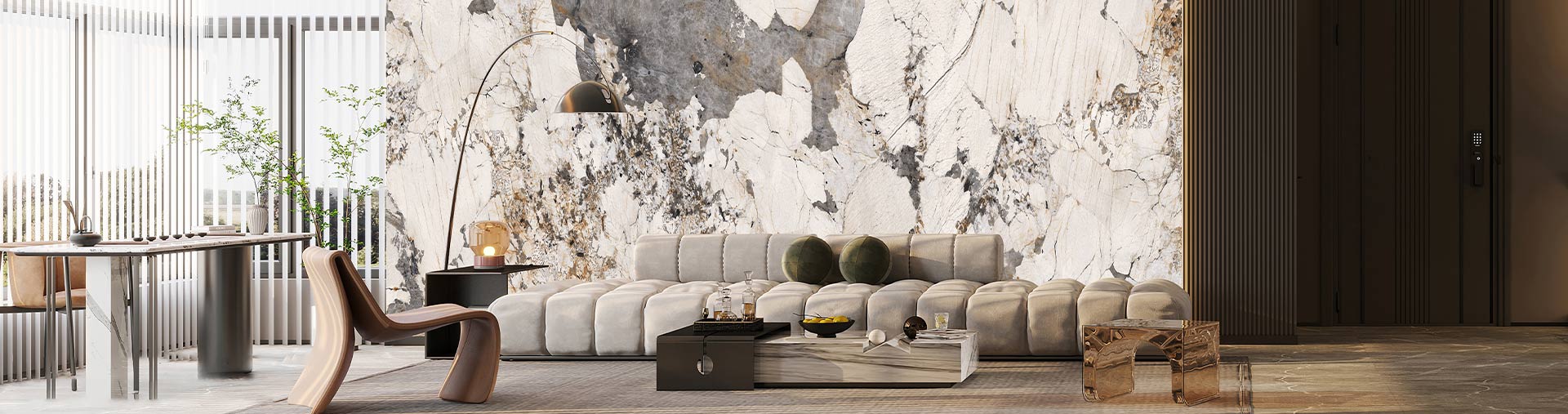
Why Flexible Stone Bends Without Breaking
2026-08-06
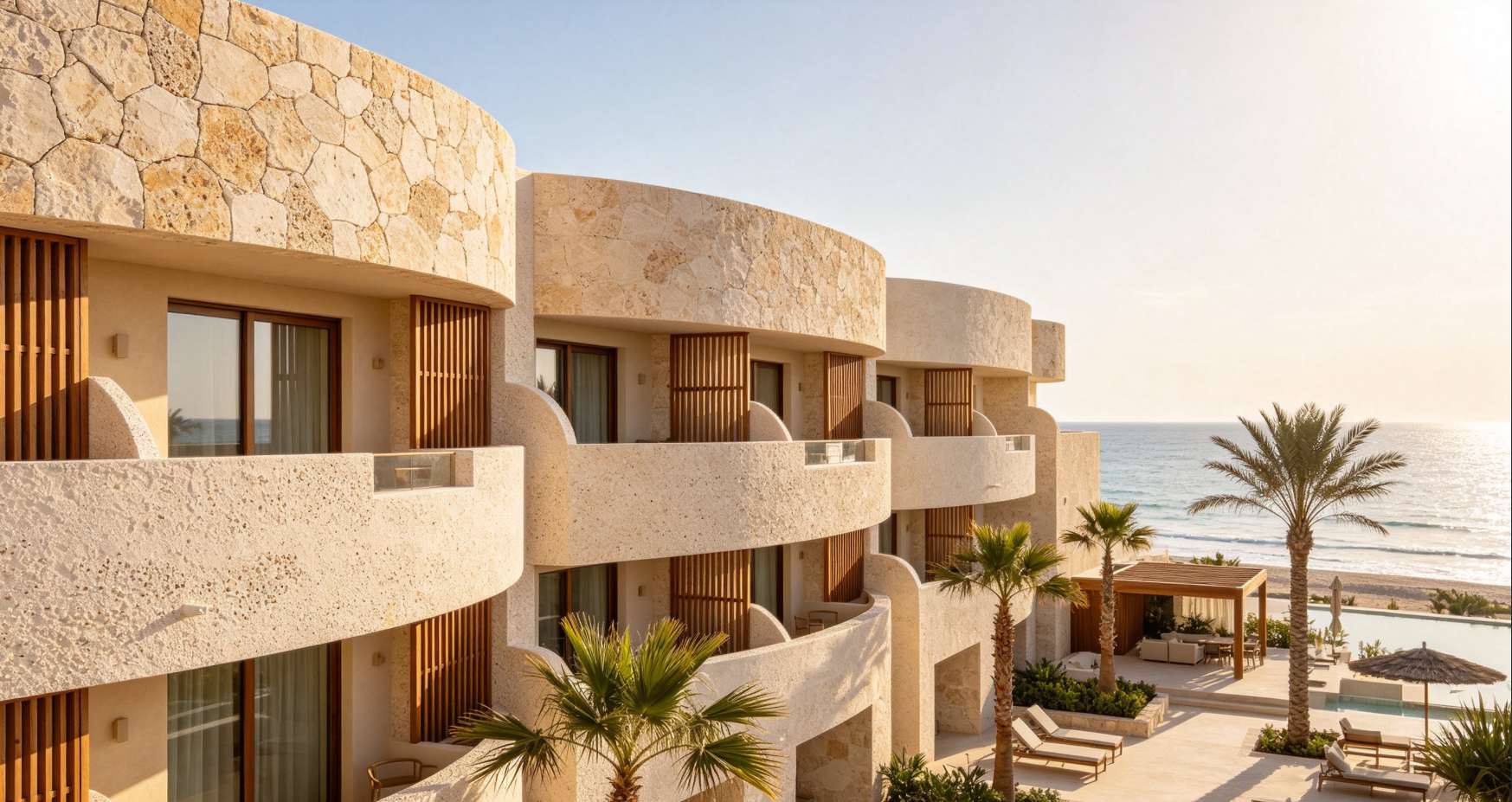
Stone is usually linked with weight, hardness, and brittle edges. Flexible stone changes that expectation. It keeps a mineral texture while arriving as a thin sheet that can follow curves, columns, arches, and shapes that are difficult to cover with rigid slabs.
Why is flexible stone bendable? It does not behave like rubber. Its bendability comes from fine mineral particles, an elastic polymer binder, fiber reinforcement, and low thickness. Together, these parts let the sheet flex within a set radius while lowering crack risk.
O que é pedra flexível?
Pedra flexível is an engineered decorative cladding made as a thin sheet instead of a thick block. Depending on the production system, it may use a thin mineral surface or a composite formed from natural mineral powder, modified clay, polymer emulsion, pigments, additives, and reinforcing mesh.
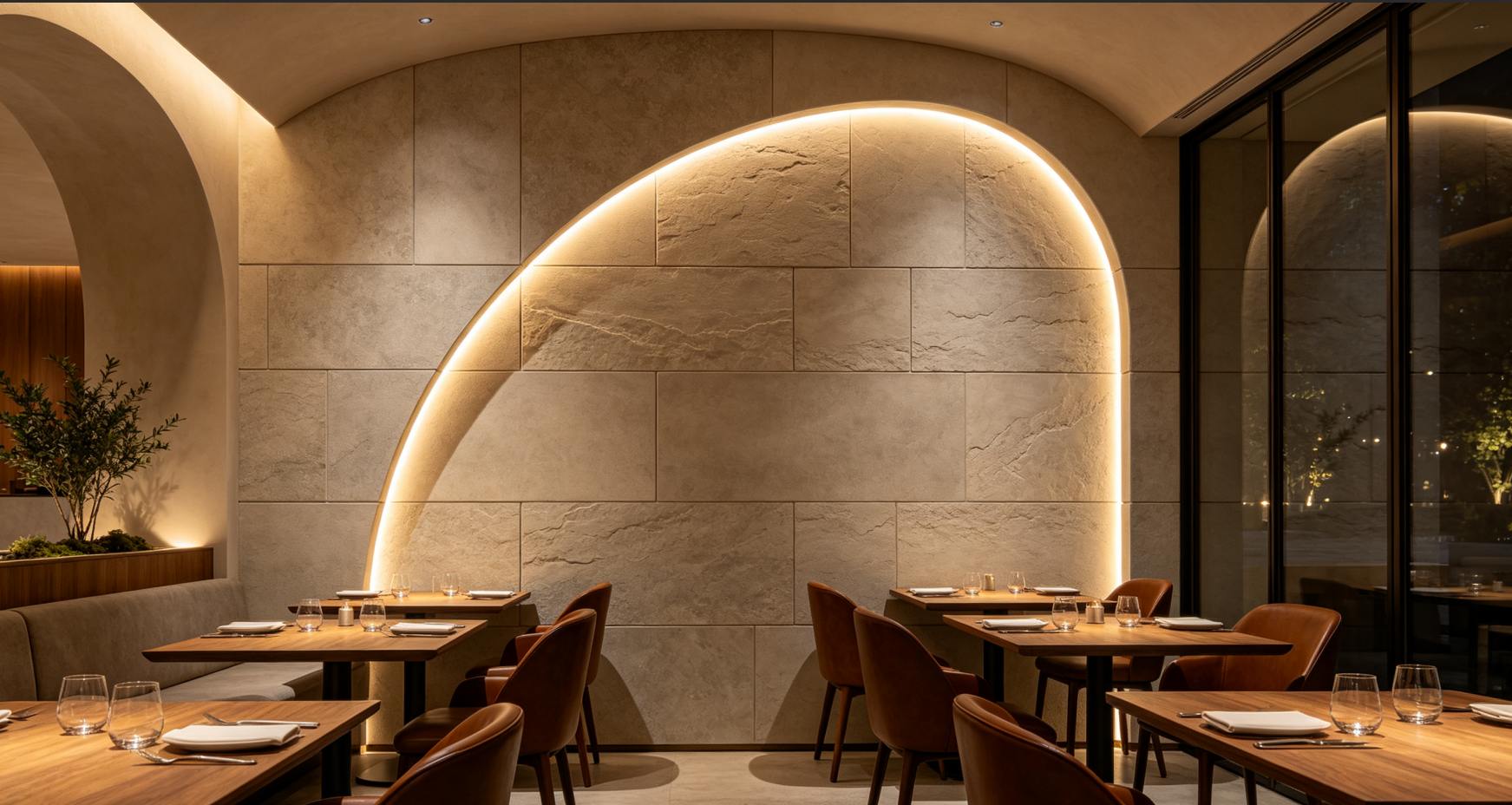
This particular variety of MCM flexible stone is primarily intended for use as wall or ceiling finishes. This stone can imitate the effects of travertine, sandstone, rammed earth, woven or masonry finishes while remaining lightweight and easy to cut.
Why Does Flexible Stone Possess Bendability?
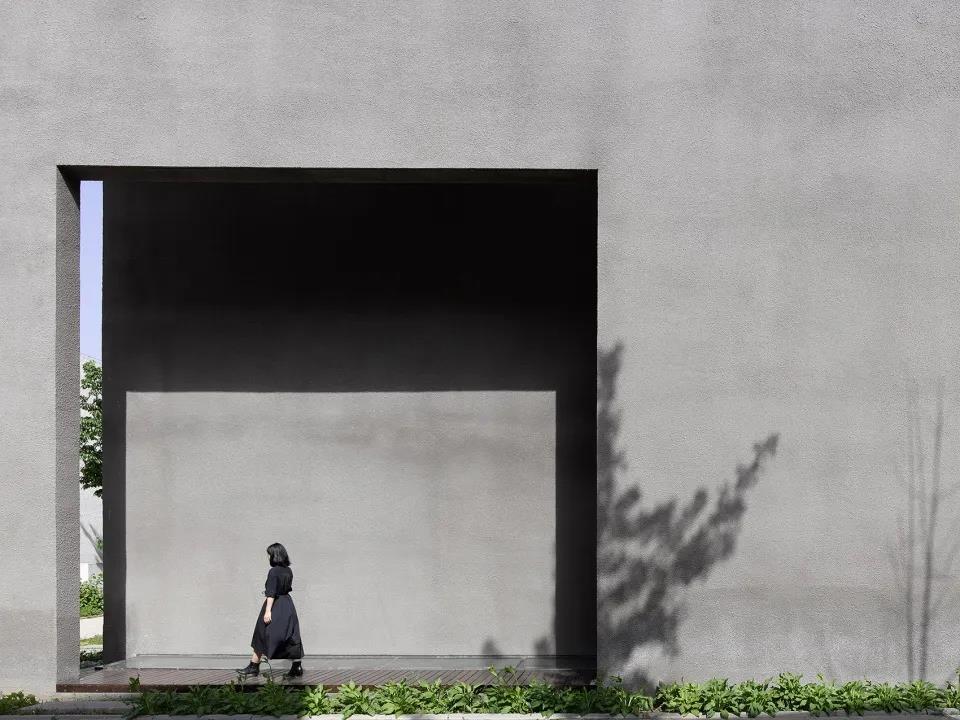
Several elements work together to produce a bendable stone veneer. Poor thickness control, weak reinforcement, or an unbalanced binder can leave a sheet too stiff, too soft, or likely to split.
Thin Geometry Lowers Bending Resistance
Thickness strongly affects how a sheet reacts to bending. A thick stone slab has a rigid cross-section. When force is applied, one face is compressed while the opposite face is pulled in tension. Because stone does not tolerate high tensile stress well, a slab tends to crack rather than curve.
A thin flexible stone veneer behaves differently. With a thickness of only a few millimeters, the distance between the compressed and stretched faces is smaller. Less force is needed to form a gentle curve, so the surface can follow a rounded substrate without the deep internal stress found in solid stone.
Flexible stone thickness and minimum bending radius must therefore be considered together. A sheet may wrap around a broad hotel column but still be unsuitable for a sharp corner. “Flexible” means controlled bending, not folding.
Polymer Binder Forms an Elastic Matrix
Mineral powder alone would remain brittle. The polymer binder in flexible stone turns loose particles into a continuous flexible mineral composite. It holds the grains together while permitting tiny movements between them as the sheet curves.
The binder spreads stress across a wider area, reducing concentration at one weak point during transport, cutting, and installation. Depending on the formula, it may also support adhesion, water resistance, weather resistance, and color stability.
Fiber Mesh Controls Cracks
Reinforcing mesh acts as a supporting skeleton in many soft stone veneer products. Fiber layers are embedded in the mineral-polymer mix and carry part of the tensile load on the outside of a curve.
The mesh helps to:
- keep the flexible stone sheet intact during handling;
- spread pulling forces across the panel;
- limit the growth of small cracks.
This reinforcement creates a more crack-resistant stone veneer than an unsupported mineral sheet.
Fine Particles and Controlled Curing Add Stability
Fine mineral powder and modified clay mix evenly with polymer emulsion and additives. The mixture is formed on textured molds, reinforced, cured, cut, and finished. Controlled curing helps create a balance between surface hardness and flexibility; poor curing may cause weak edges, delamination, or uneven bending.
Flexible Stone Compared with Traditional Stone
Both materials can produce a stone-like finish, but they solve different construction problems.
| Fator de projeto | Revestimento de pedra flexível | Traditional stone slab |
| Format | Thin, bendable sheet | Thick, rigid piece |
| Peso | Easier to carry | Often needs heavy handling |
| Curves | Follows suitable radii | Needs cutting or fabrication |
| Corte | Common site tools may work | Stone tools are usually needed |
| Renovation | Adds relatively little load | May need stronger support |
| Aparência | Mineral and stone-inspired textures | Natural quarried variation |
Traditional stone remains valuable where mass and solid construction matter. Flexible stone is often a better fit when surfaces curve, access is limited, or heavy cladding is unsuitable.
Where Bendable Stone Veneer Works Best
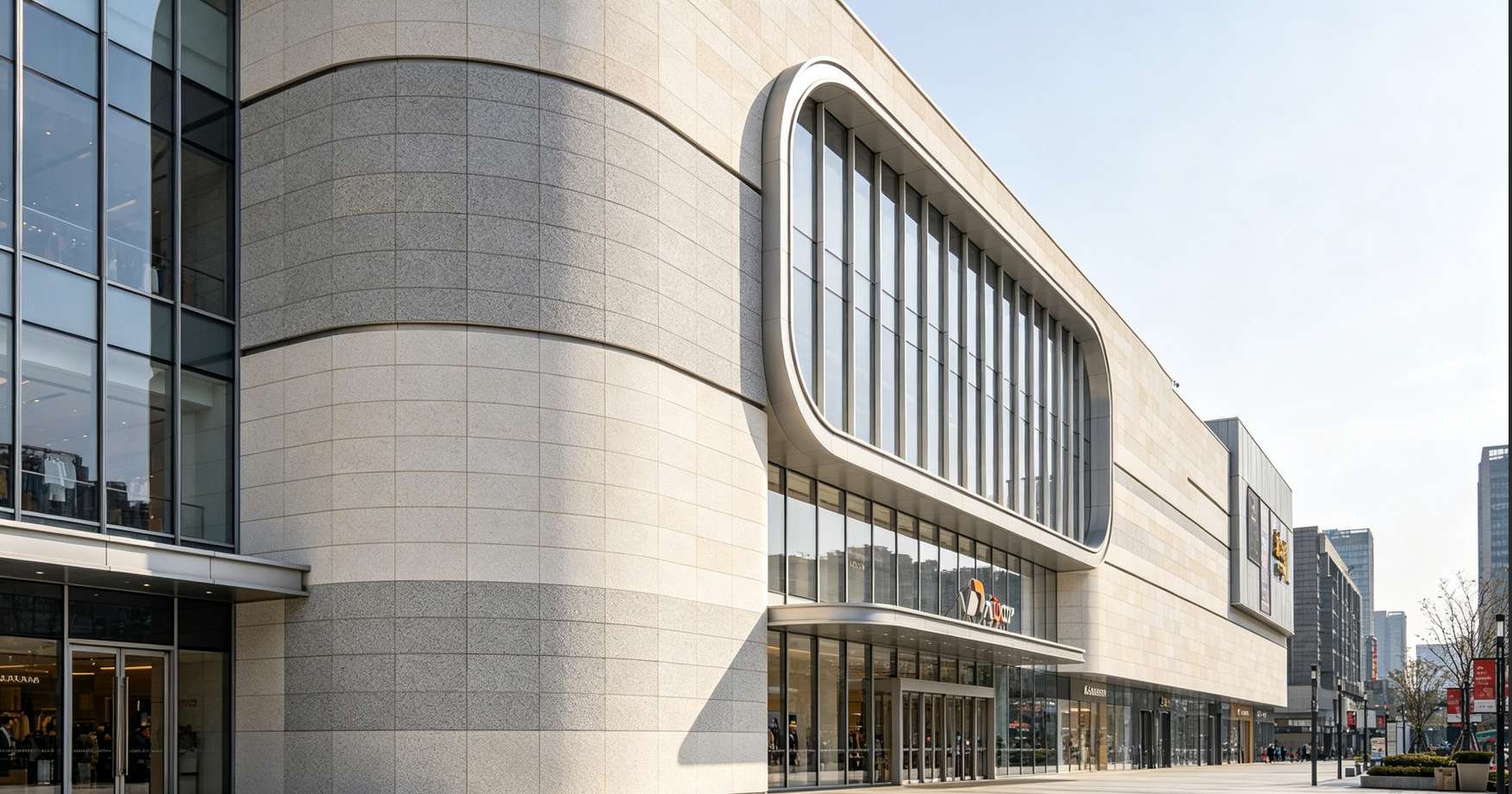
Flexible stone applications are most useful when the material solves a real geometric or construction problem.
Curved Walls, Columns, and Arches
In a hotel lobby, flexible stone for columns can cover round supports without dividing the surface into many narrow strips. On an arched shop entrance, it can follow the change from a vertical wall to a curved soffit. Around a restaurant reception desk, it can wrap a broad radius while keeping the texture visually continuous.
Flexible stone for curved walls also suits elevator surrounds, display plinths, recessed niches, and villa entrances. Seams, texture direction, edges, and bending radius still require planning.
Interior and Exterior Wall Cladding
Internally, thin stonework can bring texture to accent walls, give height to lobbies, bedrooms, retail spaces, and receptions. Thinness is an asset for installing around doorways, outlets, coving, and built-in furniture.
Flexible stone exterior wall cladding needs closer review. The sheet, adhesive, substrate, joints, and finish must suit rain, heat, freeze-thaw exposure, wind, and fire rules. Sincere’s flexible stone range includes products intended for both interior and exterior wall applications, but project conditions still need individual assessment.
Practical Selection and Installation Checks
Good flexible stone installation starts with the substrate and a sample test, especially on curved features.
- Confirm thickness, weight, minimum bending radius, and intended application.
- Match primer and adhesive to the substrate.
- Keep the surface flat, dry, clean, and sound.
- Plan joints and texture direction before cutting.
- Use broad, even pressure to remove trapped air.
- Request relevant fire, water, weathering, and environmental reports.
- Test custom flexible stone panels before a full order.
Outdoor work should follow the supplier’s curing and rain-protection instructions. Tight curves, cold conditions, dirty walls, and incomplete adhesive coverage can increase the risk of lifting or cracking.
Foshan Sincere Building Materials Co., Ltd.
Foshan Sincere Building Materials Co., Ltd. is an international company that specializes in the supply of flexible stones and is based in China. The firm offers flexible stones, tiles, wall panels, and SPC floors for commercial and residential buildings to foreign markets. Foshan Sincere Building Materials Co., Ltd. claims to have 18 years of experience in the sales of building materials and collaboration with clients from 98 nations.
Some examples of the flexible stones available include stone effect, woven, earth texture, and masonry stones for walls and ceilings. The potential buyers can look at case studies and video presentations, request samples, and consult on the issue of size, color, finish, packaging, and exportation.
Conclusão
Flexible stone bends because it is built as a thin composite rather than used as a conventional slab. Reduced thickness lowers bending resistance, polymer binders allow small particle movement, and fiber reinforcement distributes tensile stress. Fine particles and controlled curing complete the structure.
For curved walls, columns, arches, renovations, and lightweight wall cladding, bendable stone veneer can solve problems that rigid materials handle poorly. The final result still depends on a suitable radius, sound substrate, compatible adhesive, and verified test data. Samples and a small installation trial are sensible before buying flexible stone veneer for a large project.
Perguntas frequentes
Why is flexible stone bendable?
Flexible stone is bendable because its mineral layer is thin and supported by an elastic polymer matrix and fiber reinforcement. These layers distribute stress and let the sheet follow a curve without behaving like a thick, brittle slab.
Can flexible stone wrap around a round column?
Yes, flexible stone for columns can follow many round surfaces. The diameter must stay within the approved bending radius, and installers should test sheet direction, adhesive coverage, seam position, and edge treatment first.
Will flexible stone crack when bent?
It can still crack if folded too sharply, installed in low temperatures, applied over an uneven wall, or bent beyond its stated limit. Correct handling and substrate preparation reduce that risk.
Can flexible stone be used outdoors?
Some flexible stone exterior wall products are made for outdoor use. Suitability depends on the complete system, including substrate, adhesive, joints, coating, climate exposure, and local fire and façade rules.


