

Common SPC Flooring Problems and Practical Fixes
2026-08-07
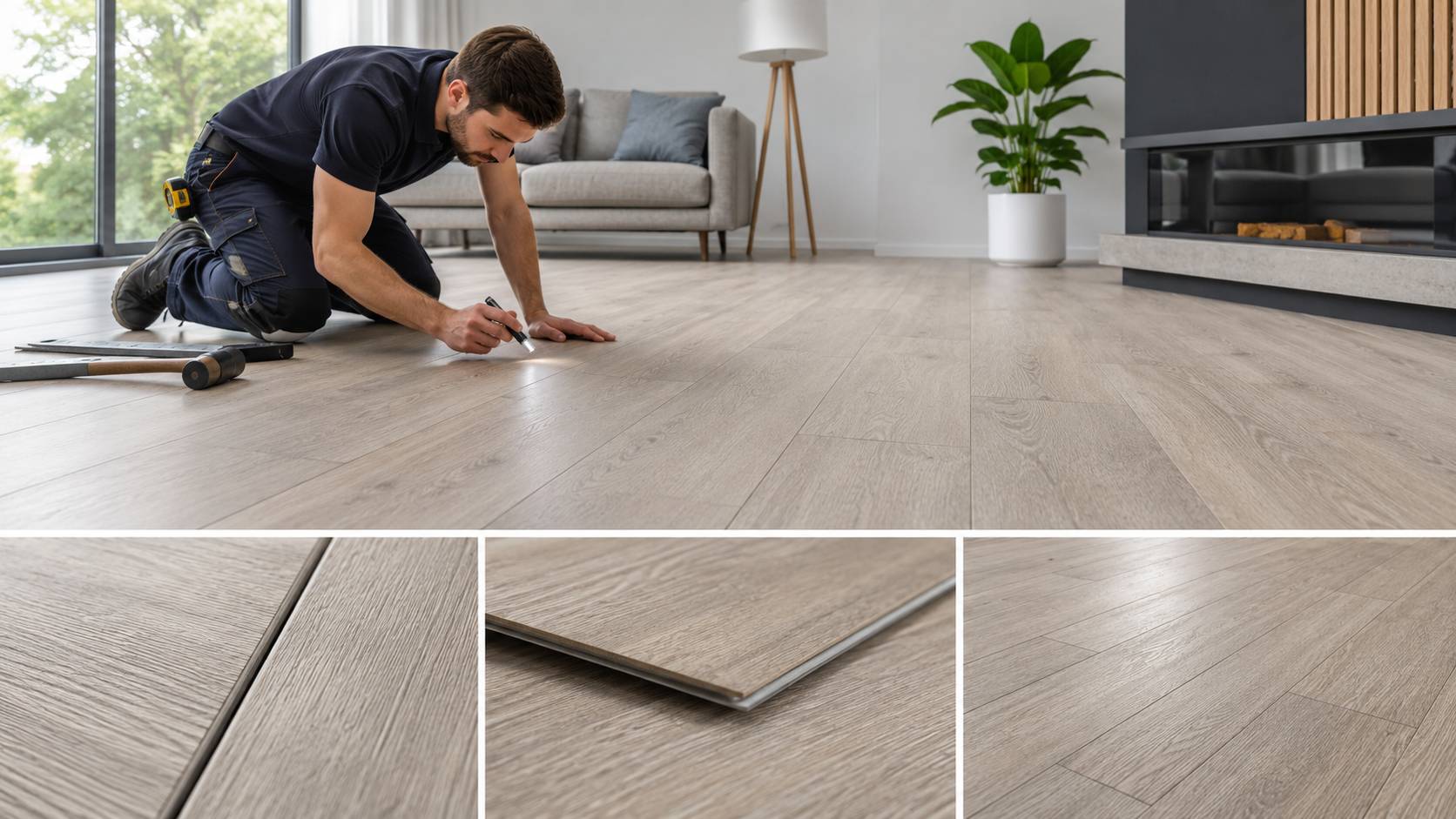
Suelos SPC is used in kitchens, apartments, shops, offices, and renovation projects because its rigid core handles daily traffic well and its click-lock system supports fast installation. Still, waterproof SPC flooring is not immune to trouble. Gaps, lifted edges, clicking sounds, scratches, and moisture odors often point to a problem below the surface.
A lasting repair starts with the cause. Filling a moving joint or forcing a raised plank flat may hide the symptom, but it often returns. This guide covers the most common SPC flooring problems and practical fixes.
Quick SPC Flooring Troubleshooting Guide
Inspect room edges, doorways, heavy furniture, and the subfloor before removing planks.
| Problem | Likely cause | First action |
|---|---|---|
| Gaps | Loose or damaged locks | Check the joint |
| Buckling | Missing expansion space | Inspect the perimeter |
| Clicking noise | Uneven subfloor or debris | Locate the noisy section |
| Scratches | Grit or dragging | Assess scratch depth |
| Odor | Water below the floor | Stop the moisture source |
Why SPC Flooring Problems Develop

SPC has a dense stone-plastic composite core. That rigidity gives the plank strong dimensional stability, but it makes floor preparation important. A rigid plank can bridge a dip, flex under footsteps, and stress its locking system.
Common causes include:
- uneven, dirty, damp, or loose subfloors;
- no expansion gap around walls, pipes, or door frames;
- fixed cabinets installed over a floating floor;
- damaged click-lock edges or debris inside a joint;
- unsuitable underlayment;
- strong sunlight or sharp temperature changes;
- abrasive cleaning and unprotected furniture feet.
Common SPC Flooring Issues and How to Fix Them
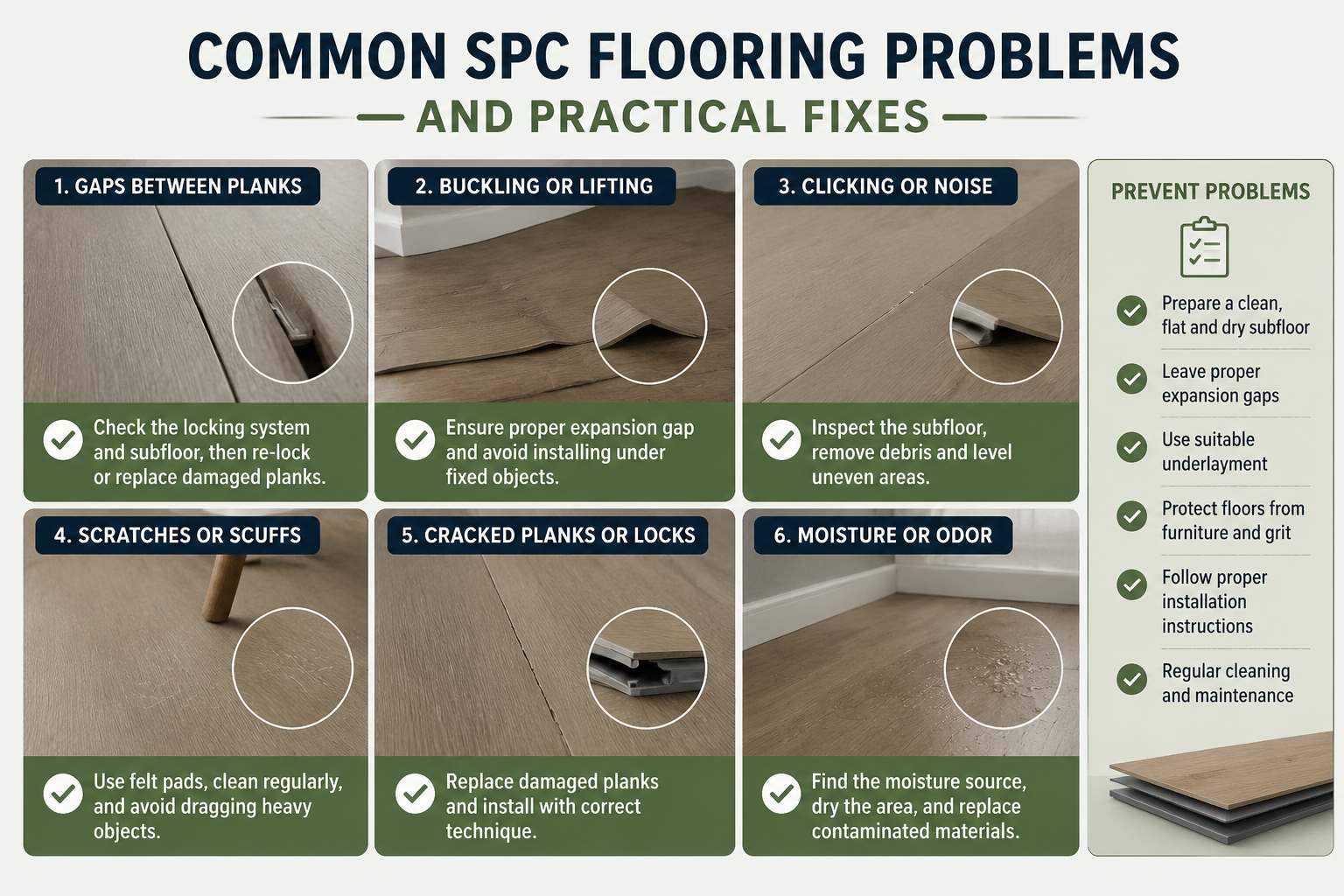
A visible defect rarely tells the full story. The same gap may come from a broken joint, a low spot in concrete, or pressure from the opposite wall.
Gaps or Separation Between SPC Planks
SPC flooring gaps may appear along a long side or at an end joint. A gap that grows or returns after being closed usually means the floor is moving.
Check for debris, a short plank, a chipped lock, or a subfloor dip. Where access is possible, disassemble the floor to the affected row, clean the joint, correct the low spot, and reconnect the planks. Replace boards with cracked locks. Flexible filler is not a lasting answer for active SPC flooring separation.
Buckling, Peaking, or Floor Lifting
SPC flooring buckling often appears in warm rooms, sunny shopfronts, or places where the floating floor is squeezed beneath trim. When an edge touches a wall, cabinet, pipe, or door frame, pressure can build until a seam rises.
Remove the skirting and check the clearance. Trim tight edges, clear debris, and fix the trim to the wall rather than the floor. Replace severely bent planks. Blinds or UV-control film can reduce heat stress in sunny rooms.
Clicking, Popping, or Creaking Sounds
A click under every step usually signals vertical movement. The plank drops into a shallow hollow, then springs back. Loose joints, trapped grit, or soft underlayment can sound similar.
Mark the noisy area and place a long straightedge across it. Look for rocking, daylight, or a high point. Lift the planks, vacuum the base, and patch or grind the subfloor. Do not add a second soft pad; excess compression can weaken the click-lock connection.
Uneven or Bouncy SPC Flooring
Bouncy SPC flooring is common over rough concrete, deep tile grout lines, loose plywood, or poor repairs. Repeated flex can open joints or crack locking edges.
Secure loose wood panels. Fill joints and depressions with a compatible patching compound. Grind isolated concrete ridges rather than covering them with thick foam. The surface need not be level across the building, but it must be flat within the flooring specification.
Scratches, Scuffs, and Premature Wear
Sand at an entrance acts like fine abrasive paper. Metal chair legs, pet claws, rolling chairs, and dragged appliances can leave SPC flooring scratches or dull traffic lanes.
Sweep grit before damp cleaning. Use felt pads and a hard-floor chair mat. Lift appliances instead of pulling them. Light marks may fade after cleaning with an approved product, but deep cuts through the print film cannot be polished away.
Wear layer thickness should match the room. Sincere offers SPC flooring of different thicknesses and wear layers from 0.3 to 0.7 mm for different interior traffic levels.
Cracked Planks or Broken Locking Edges
Cracks often start at a point load or an unsupported joint. A narrow furniture leg over a subfloor hollow can focus pressure on a small area. Rough handling may also damage the locking lip.
Replace the cracked plank and inspect the base beneath it. Use wide protectors under heavy furniture. Connect planks at the stated angle and use a tapping block where required. Direct hammer blows can deform the joint and create gaps later.
Moisture, Odor, or Mold Below the Floor
Is SPC flooring waterproof? The plank core is highly resistant to water, but water from a leaking pipe, damp concrete, an exterior doorway, or flooding can pass through perimeter gaps and joints. It may stay trapped below, where dust, underlayment, wood, or wall materials can support odor and mold.
Stop the leak first. Lift the affected floor, dry the base, and replace contaminated porous materials. A returning musty smell needs investigation. For concrete installations, settle moisture testing and vapor control before laying the first row.
How to Prevent SPC Flooring Problems
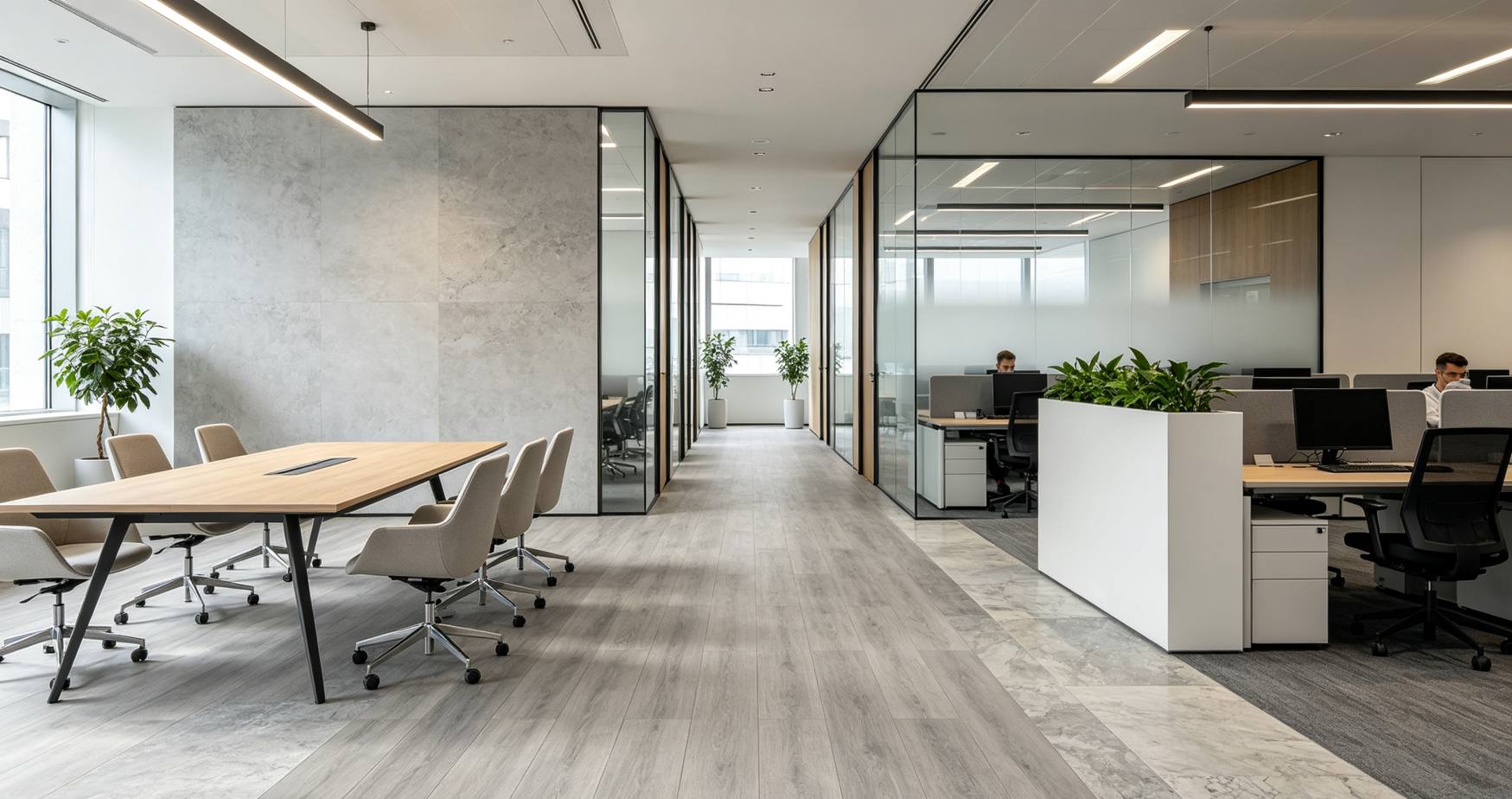
Most failures are cheaper to prevent than repair. Match the specification to the room, traffic, sunlight, cleaning routine, and subfloor.
Use this site checklist:
- inspect planks and locking edges;
- mix boards from several cartons;
- clean and flatten the subfloor;
- test concrete where moisture may be present;
- leave expansion space around fixed objects;
- keep floating flooring free beneath built-in units;
- use compatible underlayment;
- protect entrances, chair zones, and heavy furniture;
- keep spare planks from the same batch.
These steps matter in homes, hotels, offices, shops, and display areas. A showroom may face concentrated walking routes, movable sample racks, and frequent cleaning. Its specification should reflect that use. Reviewing similar building material applications can also help project teams match a flooring build to actual site conditions.
Foshan Sincere Building Materials Co., Ltd. as an SPC Flooring Supplier
Foshan Sincere Building Materials Co., Ltd. was established in 2007 and supplies indoor and outdoor wall and floor materials to international markets. Its SPC flooring range includes waterproof, wear-resistant, sound-reducing, and anti-slip locking floors for interior projects.
The company reports customer relationships across 98 countries and holds quality, environmental, and occupational health and safety management certifications. Buyers can review the broader building material product range, completed applications, product videos, and practical articles in the news center before ordering.
Importers, distributors, contractors, and project buyers should state the installation area, traffic, subfloor type, wear layer, color direction, quantity, destination, and delivery schedule when requesting a quote. This helps the SPC flooring supplier suggest a suitable build.
Conclusión
Common SPC flooring problems usually begin with poor flatness, restricted movement, damaged locks, harsh cleaning, or hidden water. Treat the cause before replacing a plank. Careful subfloor work, correct expansion space, suitable wear protection, and routine checks can keep a click-lock floor stable.
Preguntas frecuentes
Can SPC flooring gaps be repaired?
Yes, when the locking edges are sound. Open the floor to the loose row, clean it, and reconnect the planks. Recurring gaps call for checks of flatness, perimeter pressure, and damaged joints.
Why does SPC flooring make a clicking noise?
SPC flooring clicking noise commonly comes from a low spot, debris, an incomplete joint, or compressible underlayment. Mark the noisy area and inspect the base instead of adding filler from above.
What causes SPC flooring buckling?
Typical causes are missing expansion space, fixed objects trapping the floor, strong heat, or an uneven base. Releasing perimeter pressure may solve mild lifting; deformed planks often need replacement.


