
WPC Flooring Styles and Where They Work Best
2026-07-30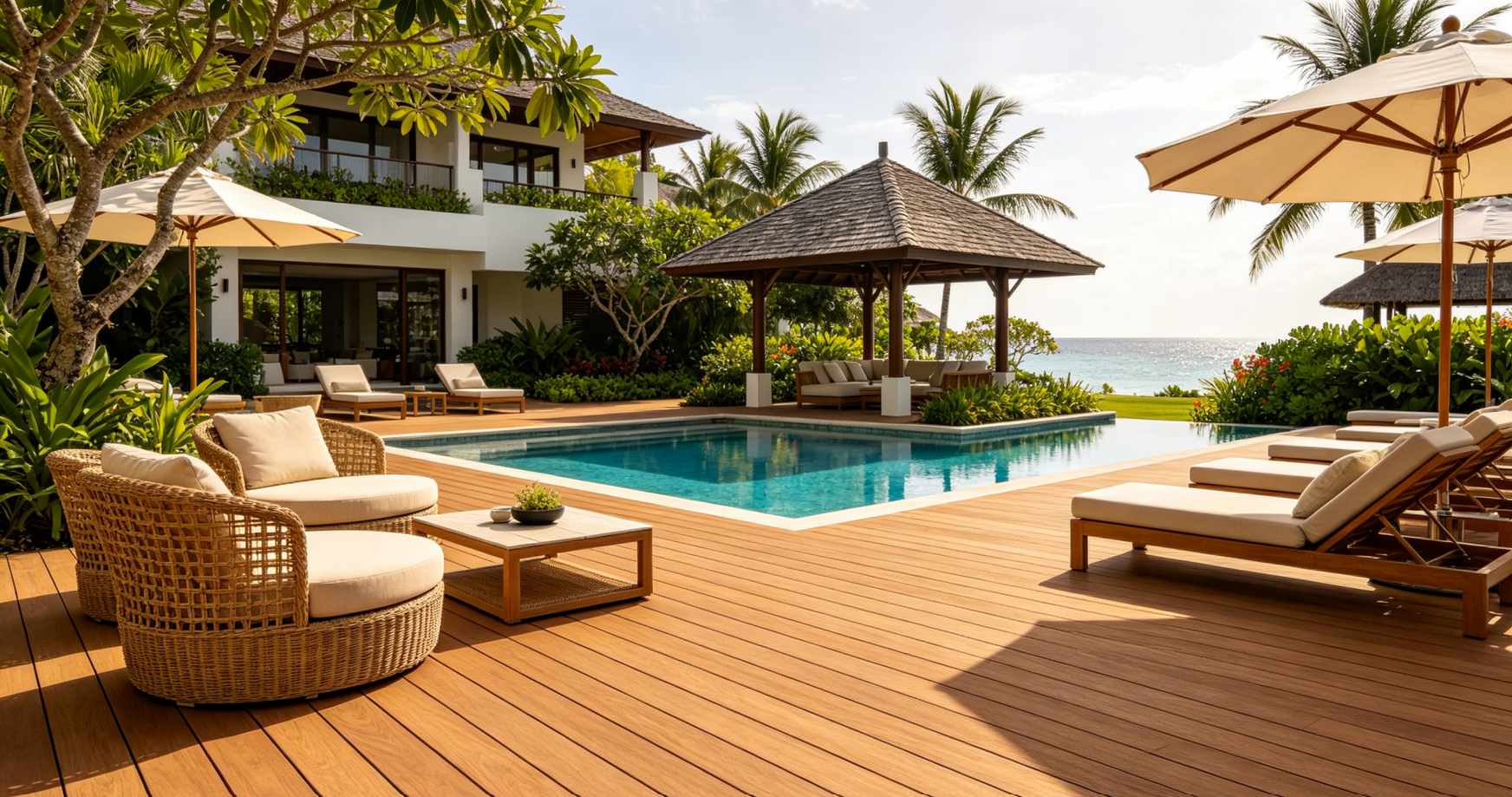
Outdoor flooring must be ready to withstand many problems. These include rain, high sun exposure, accumulation of dust, moving furniture, and drastic changes in temperature. Wood provides natural warmth and coziness. However, it needs to be sealed, stained, and maintained in other ways on a regular basis. WPC flooring is another option, which can be used outdoors. It consists of wood fibers combined with plastic resins and other materials.
Selecting outdoor WPC flooring involves more than selecting the color you like most. Each area has its own requirements, including pool decks, rooftops, terraces, balconies, and restaurant patios. The strength of the boards, their slip resistance, drainage possibilities, methods of installation, and expected traffic level are important factors to consider. Proper planning includes assessing the area carefully. The exposure to water, sunlight, foundation, usage, and cleaning regime influence the result.
What Is Outdoor WPC Flooring?
Another name for Outdoor WPC flooring is “WPC decking” and “wood plastic composite flooring”. Manufacturers use wood fibers/wood flour combined with plastic resin to create the material. Manufacturers add colorants and stabilizers to make the material more attractive and resistant to outdoor conditions. This material is made in form of hollow/solid long boards.
Do not confuse Outdoor WPC composite flooring with Indoor WPC rigid core flooring. Usually, indoor floors are made in floating form and have the clicking mechanism for installation. While outdoor composite flooring has a special support structure and some space is left between boards for expansion/contraction of boards with changes in temperature.
This material is perfect for use in outdoor locations. It provides greater resistance to warping than regular wood. Homeowners and builders often pick it for projects that need good looks with less daily work.
Common Styles of WPC Flooring
Styles of WPC flooring group together by surface design, internal build, and outer protection layer. Each detail changes the final look, how easy the boards are to handle, installation steps, and best project matches.
Wood-Grain WPC Flooring
Wood-grain WPC flooring copies the natural patterns and color changes found in real timber. Light shades feel right for small balconies. Walnut tones or dark browns look nice around gardens and dining zones. Gray wood-look composite decking fits modern building sides and rooftop terraces especially well.
Deeper embossed grain helps big decks appear more natural. Always check samples in real outdoor light. Sun can shift colors after hours of direct exposure.
Grooved and Textured WPC Decking
Grooved WPC decking features narrow or wider channels along the board top. These lines add visual direction and often improve grip underfoot. You see this style frequently on garden paths, stairs, pool edges, and service walkways.
Grooves do not solve every drainage issue by themselves. Water still needs clear ways to run off. Dirt must not collect in the channels. For busy wet public areas, request specific slip-resistance test results instead of general claims.
3D-Embossed Composite Decking
3D-embossed WPC decking offers a deeper and more varied surface than standard wood-grain boards. It performs well where people view and walk closely. Villa patios, café terraces, and outdoor lounge areas suit this texture. The pattern can hide light dust and small marks. Very textured boards sometimes take longer to clean thoroughly.
Hollow, Solid, and Capped Boards
The internal shape changes weight, stiffness, and installation ease. Hollow WPC decking contains open chambers. This cuts down weight and makes carrying simpler. Solid WPC decking feels much denser. Capped boards add a protective outer layer.
Here is a quick comparison:
| Board style | Main advantage | Common project fit |
| Hollow WPC decking | Lower weight and easier handling | Balconies, gardens, residential patios |
| Solid WPC decking | Dense profile for demanding layouts | Commercial terraces and busy walkways |
| Capped WPC decking | Added surface protection | Dining areas, hotels, stain-prone spaces |
No profile works perfectly everywhere. Hollow boards suit many home decks. Solid versions handle heavier use. Capped or co-extrusion WPC decking helps where spills happen often and cleaning is frequent. Check load numbers, safe span limits, and the supplier guide every time.
Where WPC Flooring Is Commonly Used
WPC flooring appears in many settings. It offers timber-like looks, consistent sizes, and real outdoor practicality. The actual location should still guide final choices.
Gardens, Patios, and Backyard Decks
Garden composite decking creates a smooth link from indoor rooms to lawns or barbecue spaces. On compact decks, boards running parallel to the main view can make areas feel wider. Mid-brown wood grain hides dry soil and leaves without much notice.
A steady base remains key. Joists need to stay above standing water. Air must flow freely below. Expansion gaps must follow exact instructions so the deck stays even through seasons.
Balconies and Rooftop Terraces
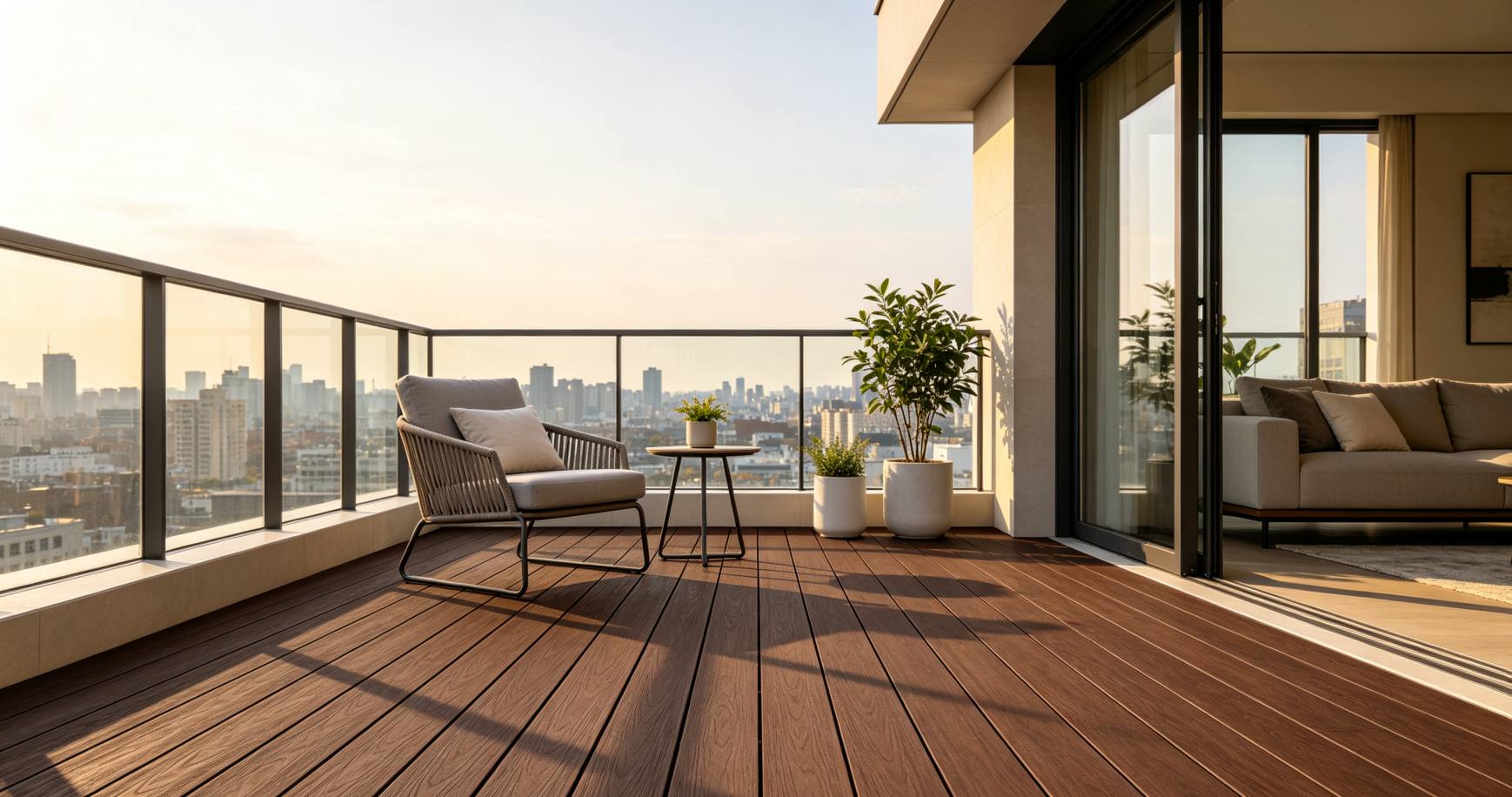
WPC flooring for balconies installs dry over frames. Individual boards can often be taken out later if repairs come up. Hollow styles reduce lifting effort. Still, professionals should review structural loads.
Rooftop terrace flooring needs focus on wind, waterproof layers, drainage outlets, and future roof access. Strong edge fixing grows especially important at heights for safety.
Poolsides and Waterfront Areas
WPC decking near pools needs strong water resistance plus more. Surface grip, fast drainage, barefoot comfort, chlorine tolerance, and neat edges affect everyday use. Lighter colors tend to stay cooler in full sun.
Boards should guide water away instead of trapping it. Removable parts near pumps or drains simplify maintenance work.
Hotels, Restaurants, and Public Walkways
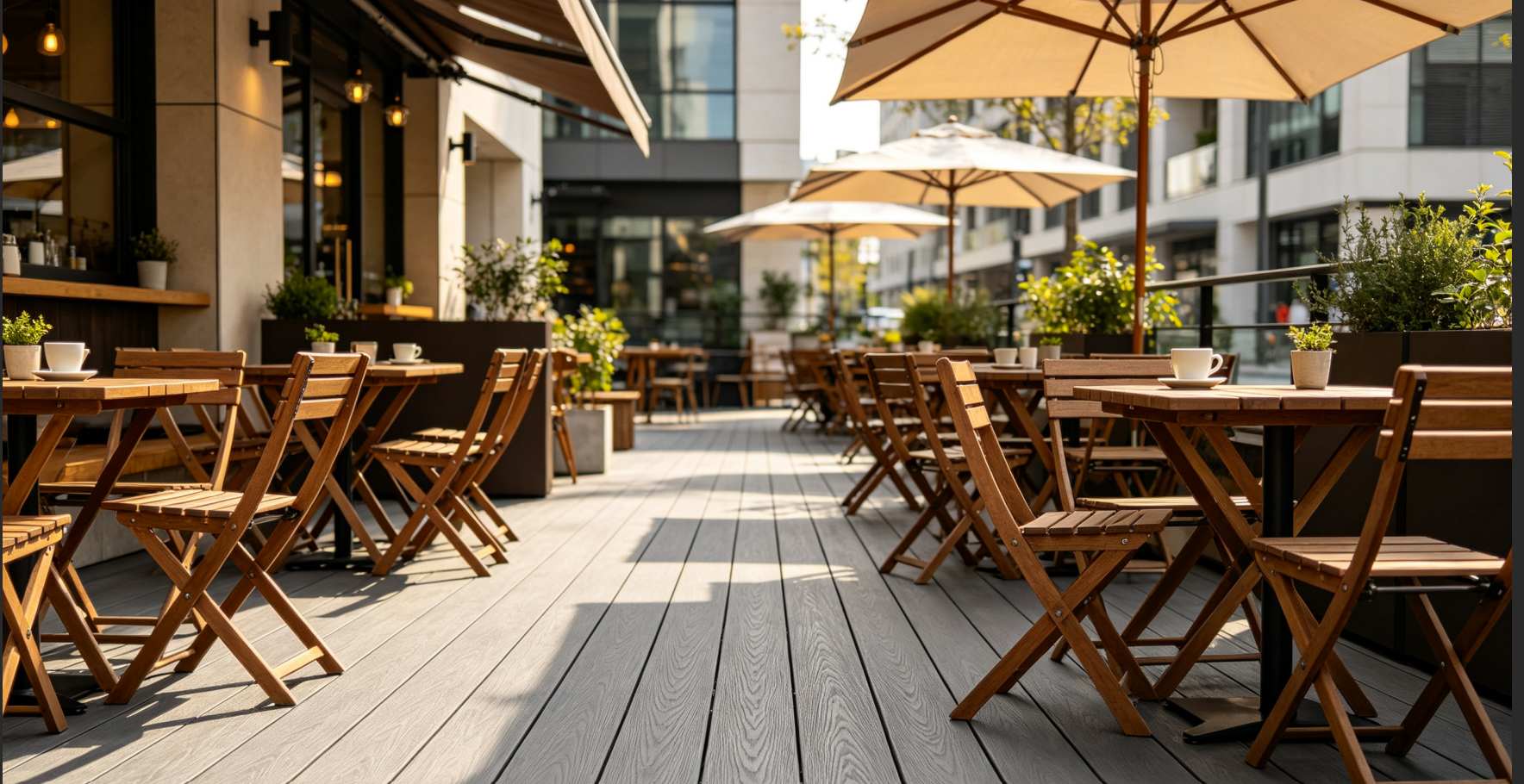
Commercial WPC flooring serves hotel terraces, resort paths, restaurant decks, and public walkways. These spots see chair shifts, luggage wheels, drink spills, and heavy daily traffic. Verified performance data and proper installation matter more than product labels.
For commercial projects, review these items closely:
- Expected traffic levels and point loads
- Slip resistance in both wet and dry conditions
- Fire ratings required by local codes
- Easy replacement options and spare stock plans
- Approved cleaning methods and full warranty terms
These checks help the deck stay safe and attractive longer.
How to Choose the Right WPC Flooring
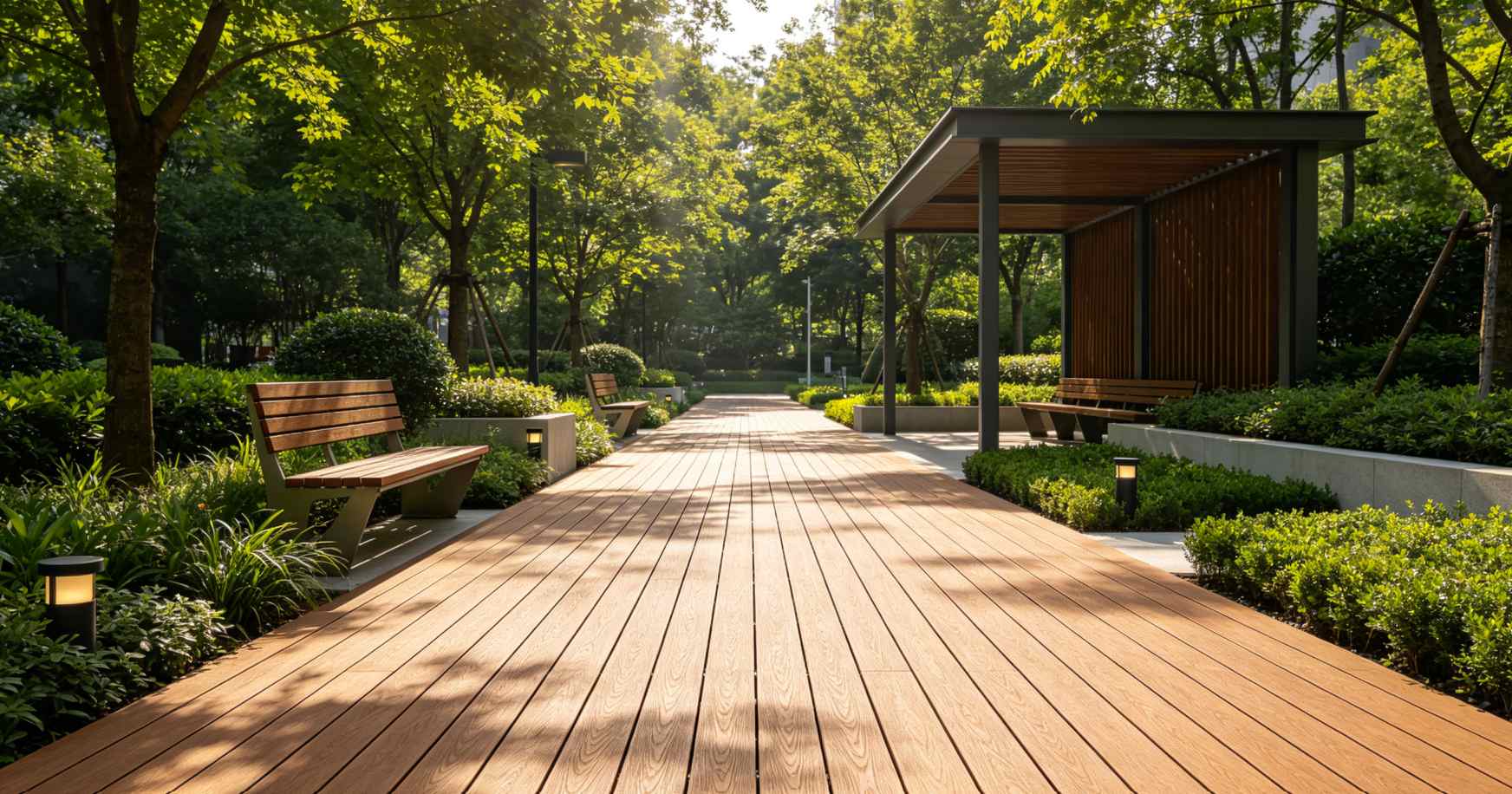
The best outdoor WPC decking fits the specific site instead of offering the most features. Start with local climate and main purpose. A shaded home balcony creates different needs than a coastal walkway or sunny restaurant terrace.
Compare thickness, internal profile, joist spacing, clip types, texture, board lengths, and test reports. Place samples outside for real testing. Walk on them with wet shoes. Notice how dirt leaves the grooves under normal light.
Good WPC decking installation always allows drainage, airflow underneath, room for temperature movement, secure edges, and straight alignment. Cutting boards too tight between walls can lead to problems when heat increases.
Foshan Sincere Building Materials Co., Ltd. as a WPC Floor Supplier
Foshan Sincere Building Materials Co., Ltd. began in 2007. It supplies indoor and outdoor wall plus floor materials. The lineup includes WPC flooring, tiles, wall panels, SPC flooring, and flexible stone. International business reaches South America, Europe, Southeast Asia, the Middle East, and Africa. The company holds ISO 9001, ISO 14001, and ISO 45001 certifications.
Contractors and distributors benefit from one source for multiple materials. This simplifies projects needing matching finishes. Product info, real cases, videos, and contact channels support talks about surfaces, installation, and order sizes.
Conclusion
WPC flooring comes with wood-grain, grooved, embossed, hollow, solid, and capped options. The right selection depends on weather exposure, traffic, surface demands, and support structure. Real samples, technical data, and installation guides prove more helpful than color alone.
FAQs About WPC Flooring
What are the most common styles of WPC flooring?
The types include wood grain WPC flooring, grooved boards, 3D embossing surface, hollow profile, solid profile, and capping or co-extrusion WPC decking. Single boards tend to have multiple properties combined.
Is WPC flooring suitable for outdoor use?
Yes, it is. The outdoor WPC flooring is applicable in decks, patios, balconies, terraces, walkways, among other exposed places. However, success is dependent on the right specification and installation.
Is hollow or solid WPC decking better?
Hollow WPC decking stays lighter and suits residential areas well. Solid WPC decking offers density for tougher jobs. Load needs, joist spacing, edge details, and supplier data should make the choice.
How much maintenance does WPC decking need?
Routine care includes sweeping, washing with mild approved cleaners, clearing gaps, and quick spill removal.


