
WPC Flooring for Commercial Outdoor Spaces
2026-07-09
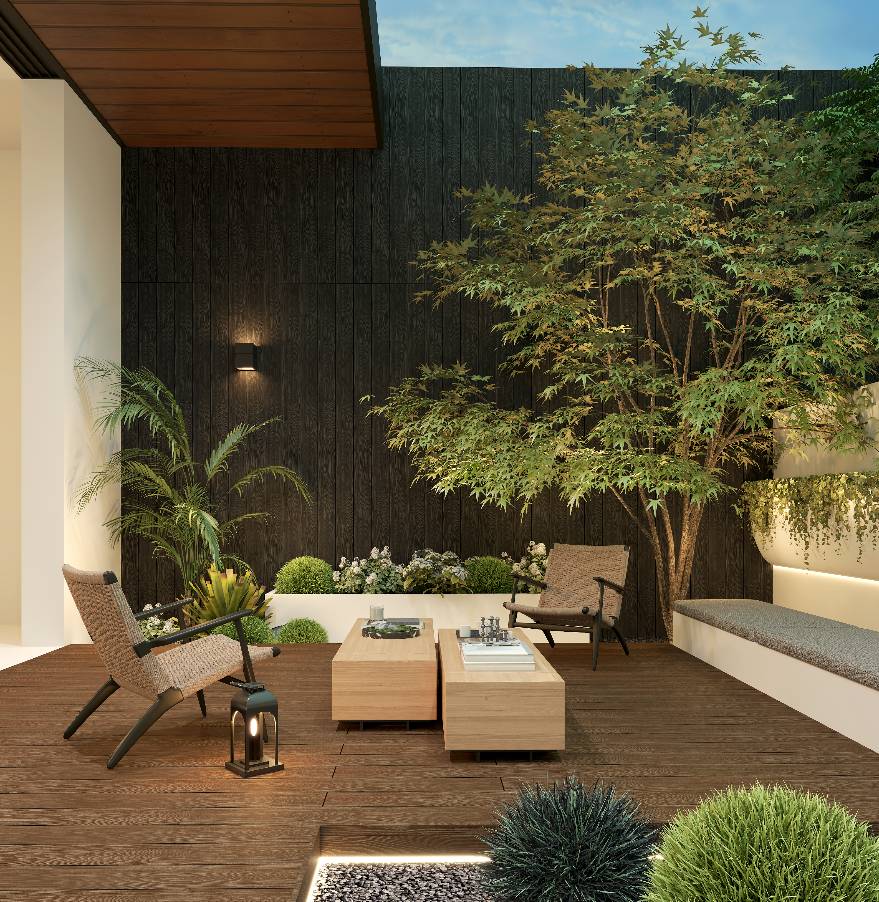
Commercial outdoor floors work harder than they look. A restaurant’s outdoor seating area can consist of chairs sliding back and forth on the floor all day long. Hotel outdoor spaces such as rooftop terraces are exposed to all kinds of objects including wet footwear, service trolleys, luggage, potted plants and intense sunshine. Boardwalks near the water are susceptible to high levels of moisture, grit and sand as well as constant footfall.
WPC flooring, stands for Wood Plastic Composite flooring. Made from a mix of wood fiber and plastic with some additives, the flooring mimics the look of real wood and has better properties when it comes to moisture and cleaning than natural timber. Provided that the right quality, adequate anti-slip surface texture, suitable subfloor as well as an effective drainage system are selected, commercial grade WPC flooring can be successfully implemented in Restaurants, Hotel Terraces, Boardwalks, Public Areas and Walkways, Lobbies, Corridors and selected Guest Rooms.
What Makes WPC Flooring Useful for Commercial Projects?
The type of flooring used for outdoor, commercial applications will experience exposure to rain, high levels of foot traffic, movement of furniture, high levels of cleaning water, and exposure to sunlight. Some natural wood floor coverings have a very nice appearance and can require; sanding, sealing, staining and/or repainting. Ceramic tiles and stone have high durability but can be very hard underfoot; some finishes can be slippery; and require special care around the grout and substrate for movement.
WPC flooring is a great option to sit between Hard floor coverings such as stone and timber floor coverings. It offers a pleasant tactile feel similar to wood flooring, yet is easier to maintain. It also provides a great natural outdoor look for use in hospitality and public area’s.
Common Commercial Uses
Best results are achieved by matching the board to the application rather than using a single product across all sites.
| Area | Main pressure | Why WPC flooring fits |
| Restaurant patios | Spills, chairs, wet cleaning | Waterproof surface and easy care |
| Hotel terraces | Sun, luggage, guest traffic | Warm design and low maintenance |
| Boardwalks | Moisture, sand, foot traffic | Weather-resistant outdoor flooring |
| Public walkways | Safety, drainage, wear | Anti-slip WPC flooring options |
| Lobbies and corridors | Rolling loads, cleaning | Durable transition surface |
| Guest rooms | Comfort and appearance | Wood-look flooring with simple upkeep |
Restaurants and Outdoor Dining Areas
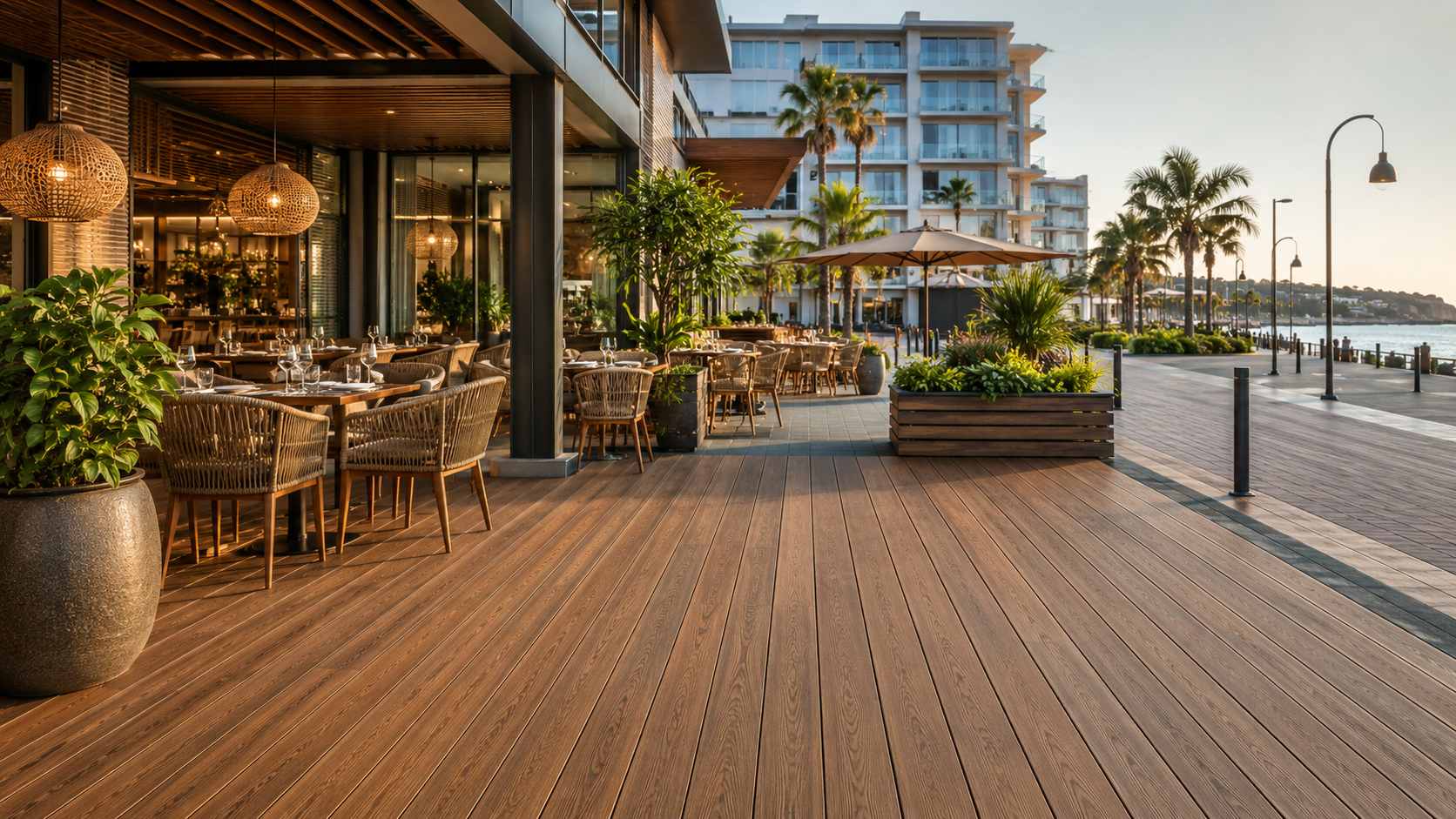
The floor of a restaurant needs to be aesthetically pleasing yet be able to withstand the demands of being very messy. Whether it’s outdoor dining in the morning when people are having coffee, or during lunch when there’s a lot of sauce and oil, or late at night when people are having wine and soft drinks, there are going to be spills and the surface needs to be able to be quickly cleaned between turns of the tables. The guests don’t want to walk on a floor that feels slippery or is unstable.
What Restaurant Owners Should Check
WPC decking for restaurants: It can bring a warm wood-like feel to areas that require minimal maintenance to natural hard woods. The patios of café’s can turn a small frontage into a relaxed area. The large outdoor spaces of rooftop bars can be softened up by WPC decking around the metal railings and glass walls. Restaurants near the water can use WPC outdoor flooring with a waterproof coating. This type of flooring can withstand the humid and wet conditions of such areas and the occasional splashes.
For restaurant outdoor dining, several details matter:
- Choose anti-slip texture for wet areas and steps.
- Leave correct gaps for water drainage and board movement.
- Use a stain-resistant surface where food and drinks are common.
- Select colors that hide dust without absorbing too much heat.
- Check local fire and safety rules before purchase.
When choosing a floor for a busy restaurant it is as important to consider the surface profile, joist spacing, edge trim and maintenance/cleaning requirements as the color.
Hotel Terraces, Rooftops, and Resort Decks
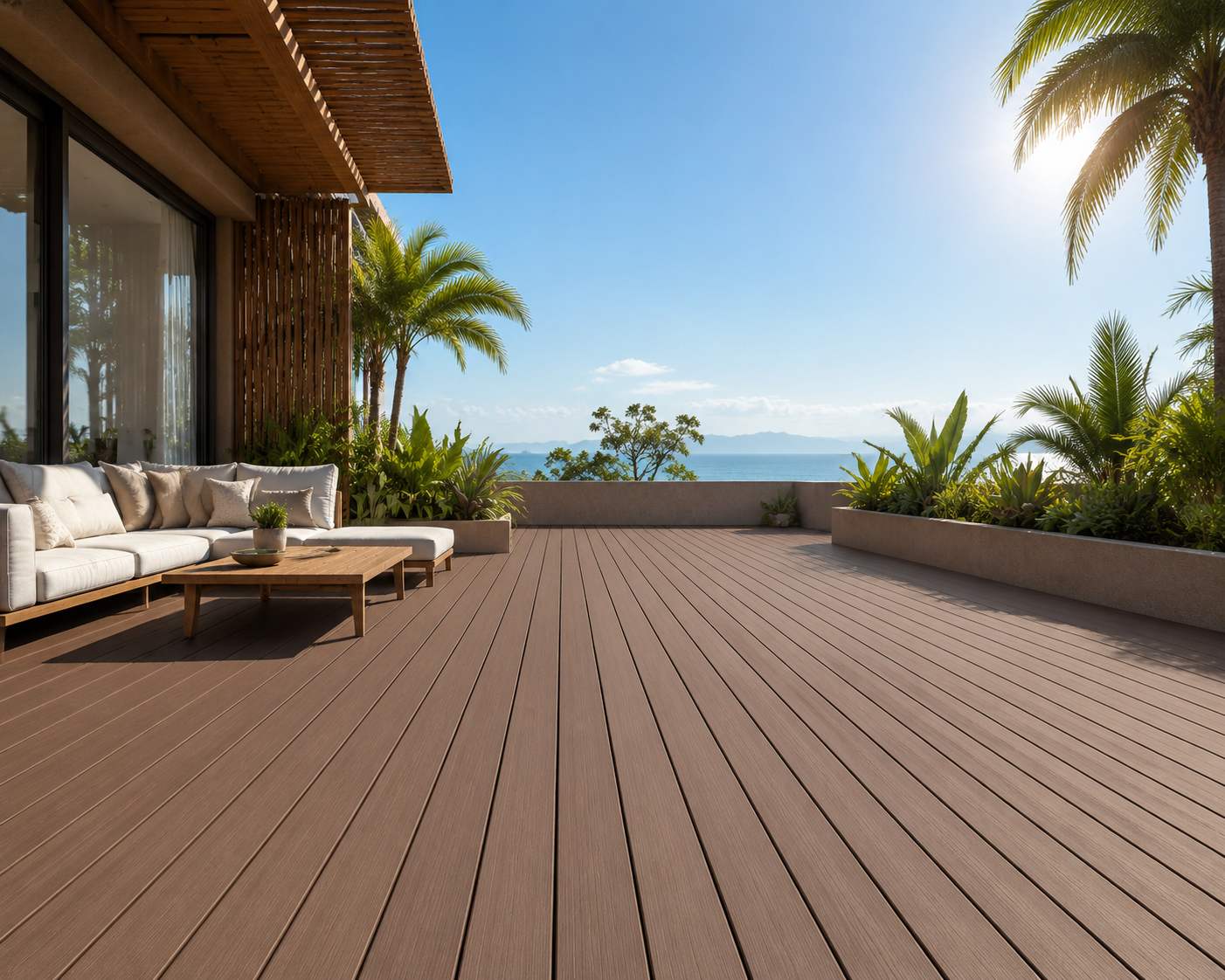
Whether used for the operation of a hotel or as a feature to be enjoyed by its guests, outdoor hotel terrace flooring can look so peaceful in images taken for hotel websites, blogs etc but in reality they are in constant use for breakfast service, for guests with luggage, housekeeping carts and bags, wet towels, and for evening events etc. WPC flooring for hotel terraces is an ideal solution because they provide a wooden look and feel but are very easy to maintain.
Design and Daily Operation
Our WPC decking creates warm terraces, balconies, lounges, spa decks and resort walkways that are much nicer than bare concrete or cold and harsh tiles. It also creates a smooth transition between your indoor living spaces and your outdoor leisure areas.
First choose based on experience and practical considerations. In warm weather, a light-colored deck will feel cooler under bare feet than a dark-colored one made of same materials. On a rooftop deck, the most important feature is to ensure that the deck has adequate slope for drainage and a sturdy substructure.
Boardwalks and Public Walkways
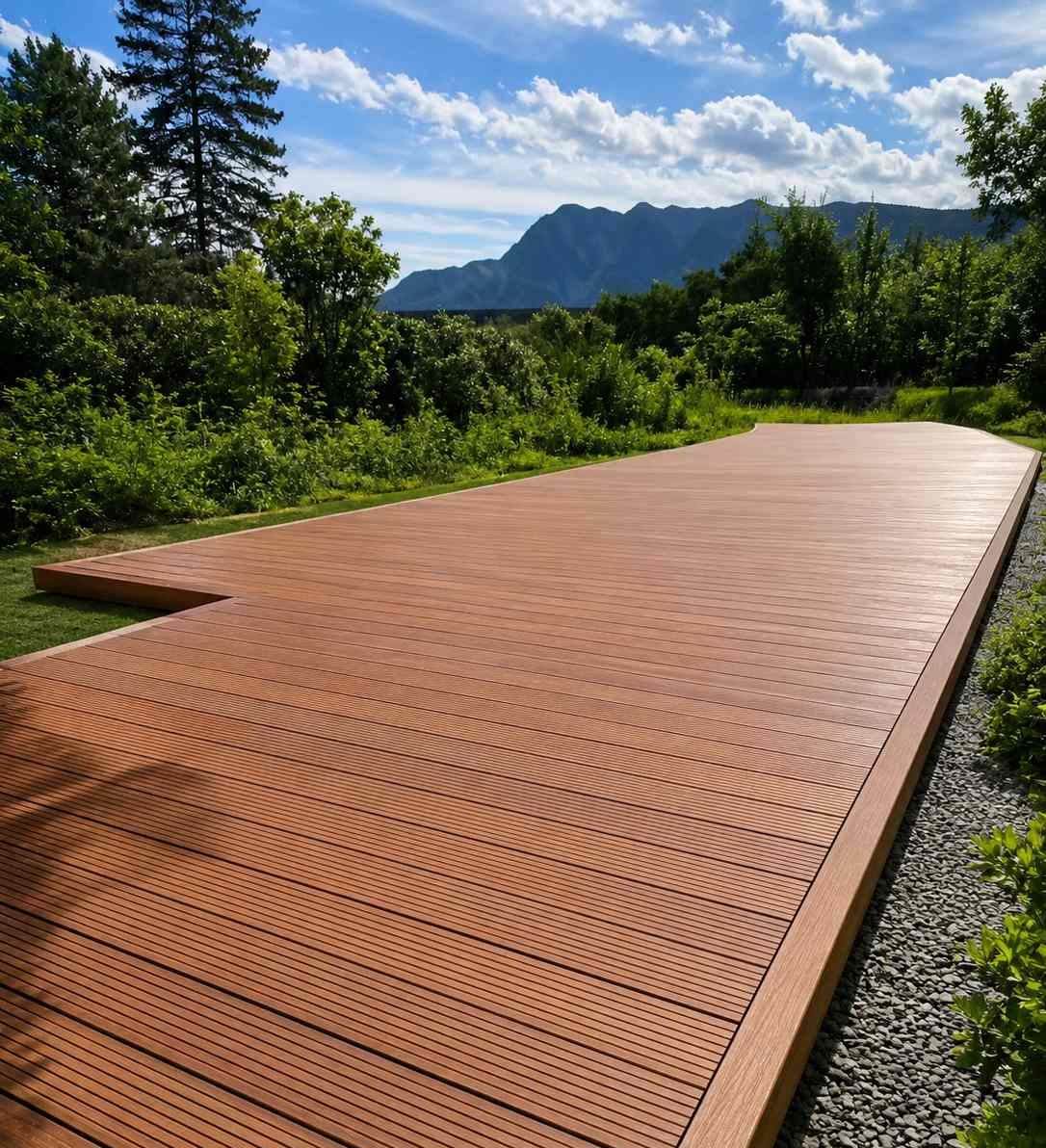
All floors in boardwalks and public walkways are subjected to greater wear and tear. Wet shoes, pulling of trolleys, rolling of strollers, dropping of sand, and even large groups of users are all issues that need to be addressed in parks, scenic areas, resorts and promenades on water. The floors must withstand the changing weather and constant cleaning.
Safety Comes Before Appearance
We offer WPC flooring for your boardwalk which looks like timber but does not rot, splinter or require painting. For public use we suggest that anti slip outdoor flooring has a textured surface, adequate drainage, stable fixing and visible edge treatment.
A boardwalk system consists of more than just deck boards. A good system includes a solid base, appropriate fasteners for corrosion resistance, access for repair, and adequate space for expansion. While we recommend using commercial-grade deck board profiles for boardwalks with heavy use, we still recommend regular cleaning of the boards in wet or shaded areas to remove leaves, dirt, algae and other food residue.
Lobbies, Corridors, and Guest Rooms
Although WPC flooring is often used for outdoor areas such as patios and pool decks, it can also be used in semi-outdoor as well as indoor transition areas such as lobbies. The floor in a lobby creates the first impression and in addition to that it has to withstand rolling suitcases, wet umbrellas and intensive cleaning. This type of flooring is suitable for a resort-style entrance of a garden hotel or other building where guests enter directly from the outdoor decks into the reception area.
Indoor and Semi-Outdoor Use
Corridors need wear resistance, clean edges, and a steady walking feel. WPC flooring for corridors can work in covered walkways, open-air hotel corridors, and commercial passages where rain or humidity may reach the floor. Guest rooms are more sensitive. WPC flooring for guest rooms should be selected only when the product type matches indoor comfort, acoustic needs, and cleaning routines. In fully indoor rooms, SPC flooring, porcelain tiles, or other interior flooring may also be compared.
WPC Flooring Compared with Wood, Tile, and Stone
Like any other commercial flooring product on the market today, WPC products have their trade-offs. No single flooring product is selected for commercial interior or exterior projects because it is “perfect”—that is, capable of meeting all of the client’s needs. Rather, we chose to feature WPC because of all of the trade-offs it makes in balancing a lot of demands of using a flooring product for commercial applications.
Practical Differences
WPC flooring generally requires less preparation than natural wood i.e. less sanding and painting etc and less than ceramic tiles i.e. less cold and less rigid underfoot. Ceramic tiles on the other hand require consideration of anti-slip rating and grout as well as a suitable substrate. Stone floors are very high end but are heavy, expensive and slippery, dependent on finish. WPC flooring is generally lighter and easier to use for raised installations.
How to Choose Commercial WPC Flooring
Selecting the correct product to specify should start with site conditions, not just a pretty catalog image. Other factors that affect product performance include high foot traffic, exposure to sunlight and moisture, cleaning chemicals, amount of furniture movement, and local regulations.
Key Buying Points
Check the thickness of the boards, slip resistance, fire retardant properties, UV stability, spacing of joists, drainage slope, fasteners, edge trims and cleaning. Special consideration should be made to wet areas, ramps, stairs and high wear commercial pedestrian areas. For high-traffic commercial applications a more robust deck board with an appropriate installation to a solid, suitable substructure will provide long term cost savings over inferior products. A cheap deck board on a substructure prone to movement will lead to premature failure through water ingress or wear.
Foshan Sincere Building Materials Co., Ltd. as a WPC Floor Supplier
Foshan Sincere Building Materials Co., Ltd is a supplier of indoor and outdoor wall and floor covering products for B2B construction projects all around the world. Products include ceramic tiles, interior wall panels, SPC flooring, Flexible stone, and outdoor WPC wall decorations and WPC flooring. The company was founded in 2007 and it has been supplying export goods for years. Foshan Sincere Building Materials is based in South China and is exporting to South America, Europe, Southeast Asia, The Middle East, Africa and many other countries and regions in the world.
As WPC Floor supplier Sincere provides high-quality wood-grain outdoor WPC flooring. The outdoor decking floor is moisture resistant, durable and withstands high usage as well as easy to install and low in maintenance. Our outdoor flooring features water-repellent, fire-repellent properties and anti-slip surface finish. These features are perfect for covering balconies, restaurant decks, hotel terraces, patios and gardens, as well as public walkways and lanes.
Mixed projects such as hotels, resorts, apartments and commercial properties can now benefit from a broader range of products to enable coordination of floorcoverings with wall coverings, and other surface finishes with exterior treatments and decorative items.
Conclusion
WPC flooring is suitable for commercial outdoor use when chosen for the correct reasons. Firstly it provides a warm area to dine in restaurants that also offers ease of cleaning, perfect for busy eateries. Additionally, hotel terraces and resort decks can provide inviting areas while decreasing the amount of time spent on routine maintenance. WPC can also be used to cover boardwalks, public walkways, lobbies, corridors and even some guest rooms, where the correct product is chosen and installed appropriately.
It’s not enough to decide on the appearance of your commercial WPC flooring alone. The success of your project also depends on other characteristics, such as the anti-slip texture, the waterproofing, the fire behavior, the tensile strength of the board, the drainage, the quality of the subfloor and the cleaning routine.
FAQs
Is WPC flooring good for commercial outdoor spaces?
Yes. WPC outdoor flooring for commercial outdoor areas such as restaurants, hotel outdoor areas, boardwalks, balconies and public walkways. Commercial quality decking boards with a good anti slip finish and proper drainage.
Can WPC decking be used for restaurants?
Yes. WPC decking for restaurants is also perfect for patios, rooftop bars, garden dining areas and café terraces. It looks like natural wood, is waterproof and very easy to clean after spills.
Is anti-slip WPC flooring safe for public walkways?
Anti-slip WPC flooring can be used for public walkways, provided the flooring has a suitable texture, adequate spacing between individual floorboards, and effective drainage. Wet areas, ramps and staircases call for additional consideration.


